Checking It Yourself
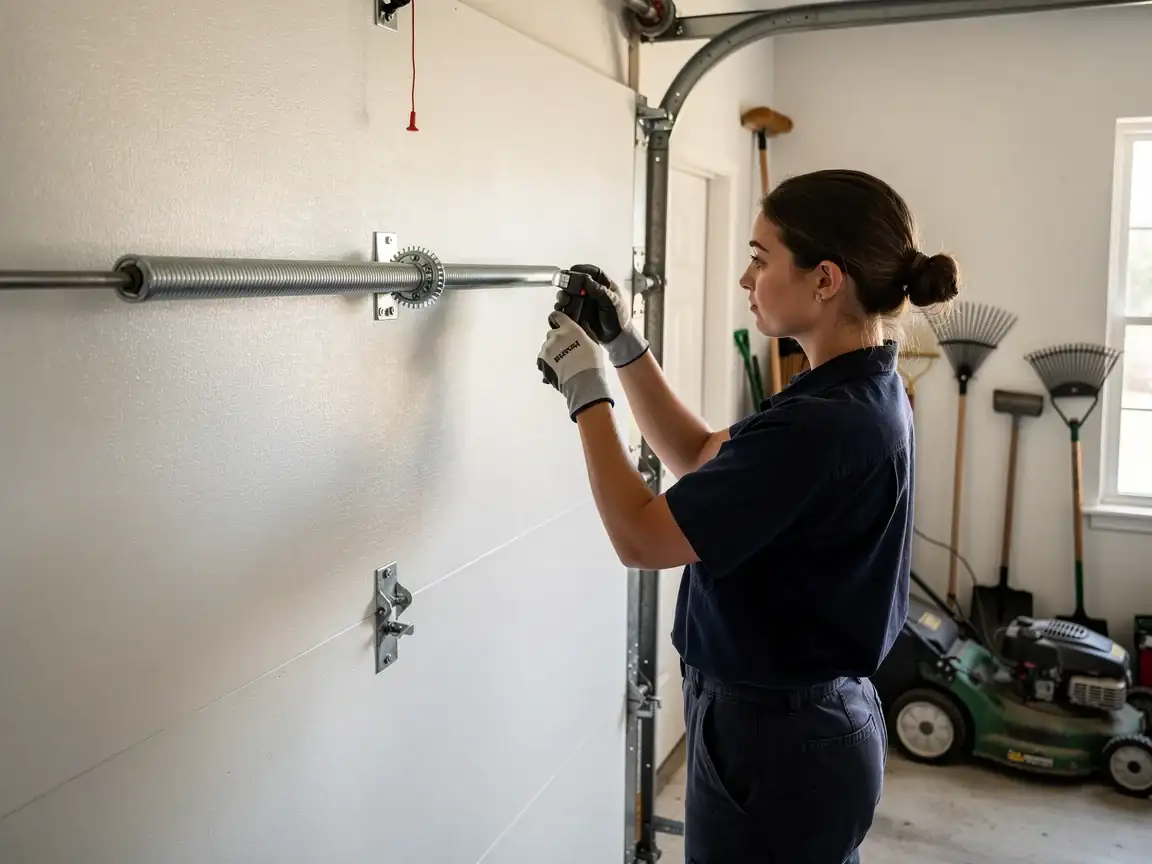
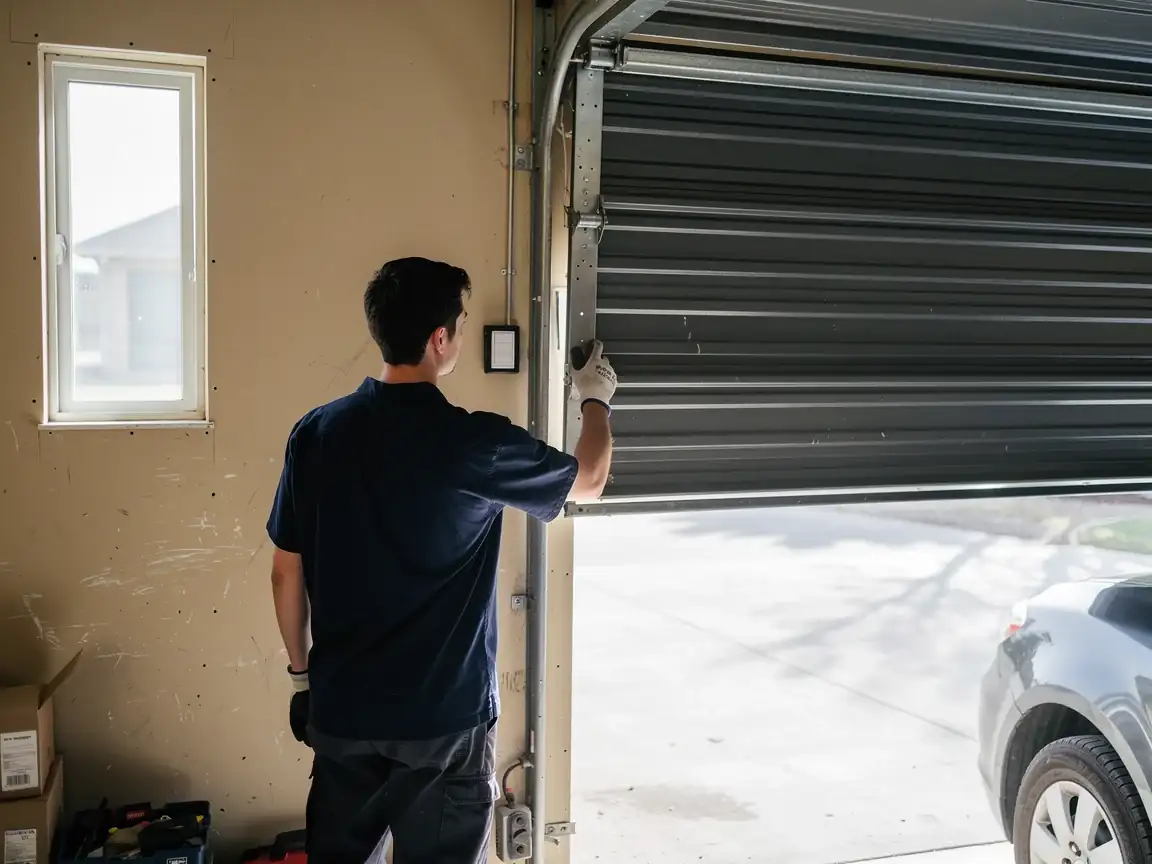
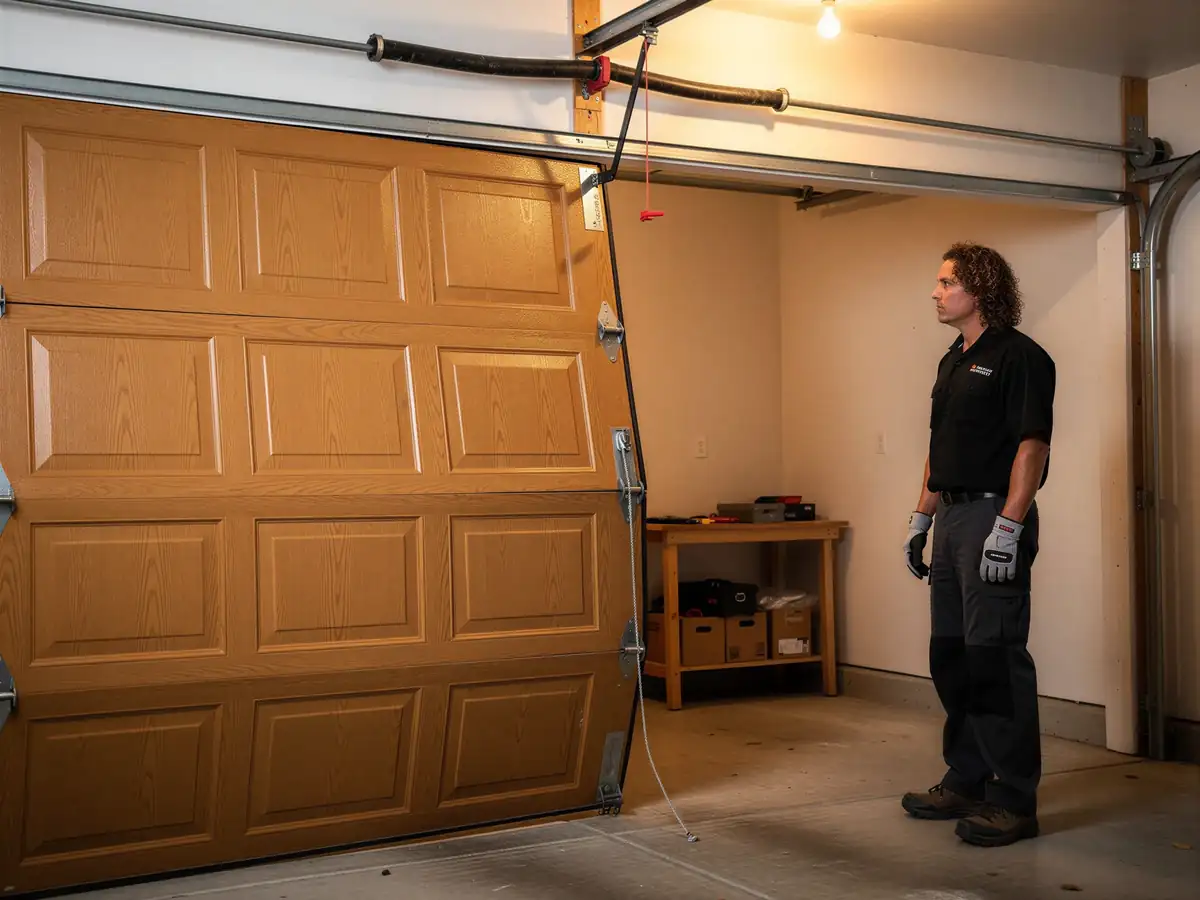
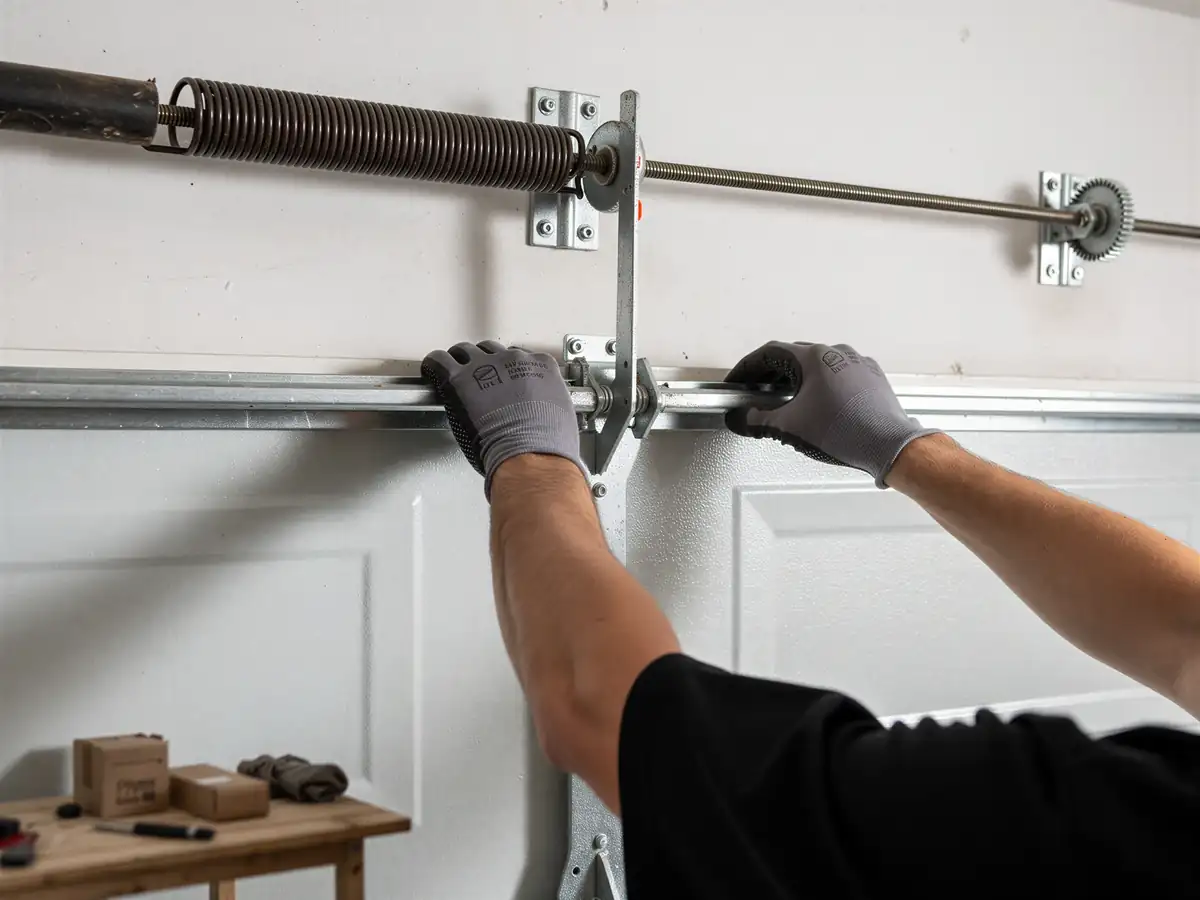
Before you call anyone, open the door halfway and look at both vertical tracks where they meet the horizontal curve near the ceiling
That's where a roller usually jumps first. Run your hand (not your fingers inside the track) along the rail and feel for a gap between the track and the wall bracket - on houses in this area built in the 1980s and 90s, those brackets were lag-bolted into framing that's had thirty-plus years to shrink and settle, and a loose bracket lets the whole rail flex sideways under load.
Check the rollers themselves
Stamped-steel rollers on the original hardware from that era wear a groove into the track over time, and once that groove gets deep enough, the roller rides up and out on anything but a dead-straight pull. Nylon replacement rollers don't do this, so if yours are still steel and the door's original to the house, that's a clue.
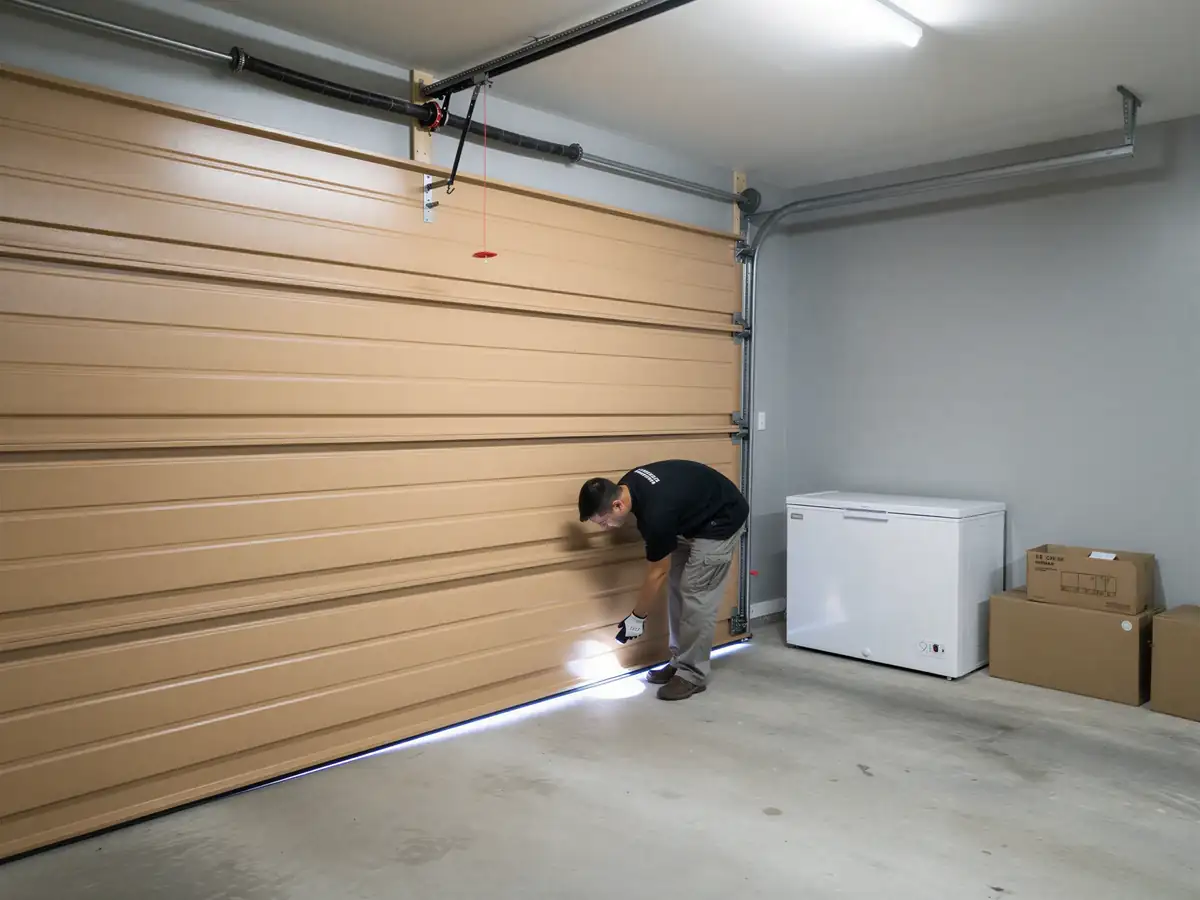
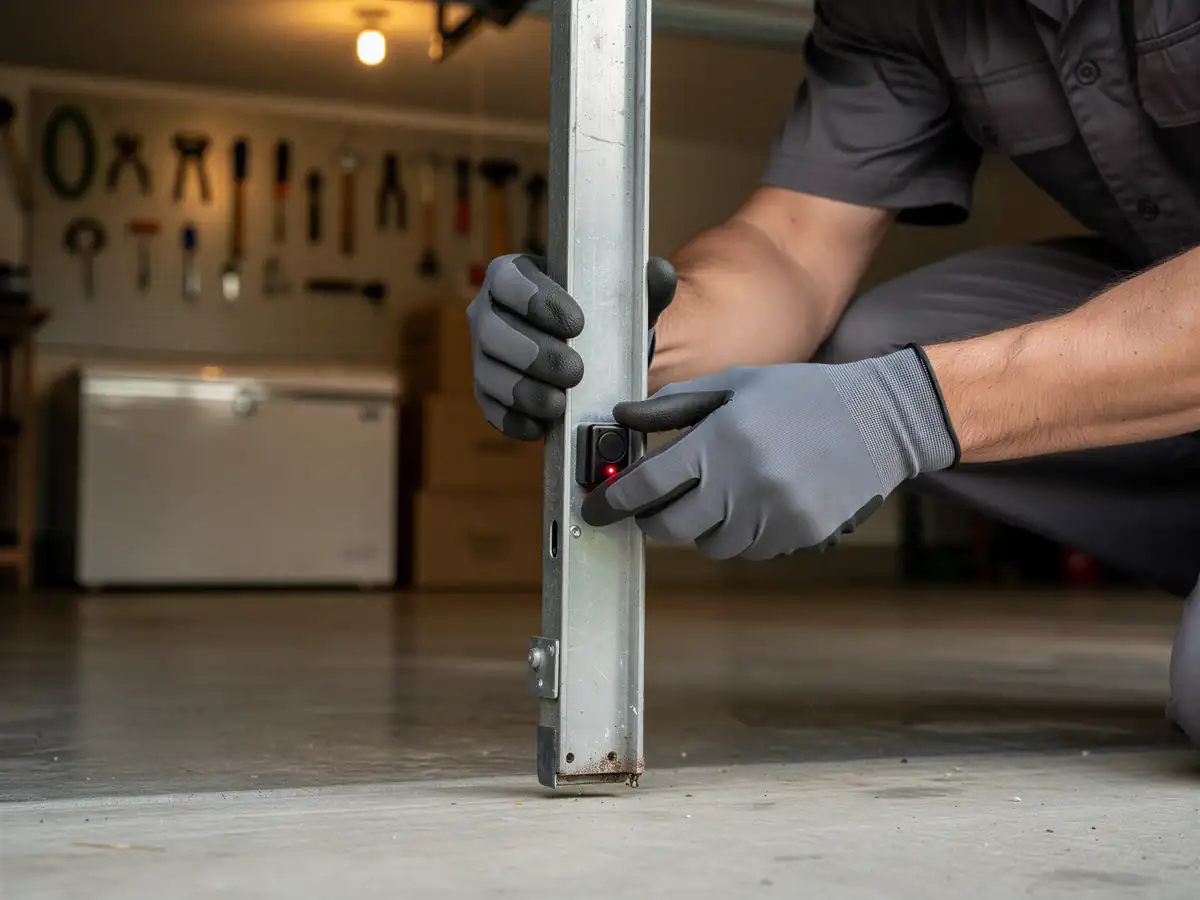
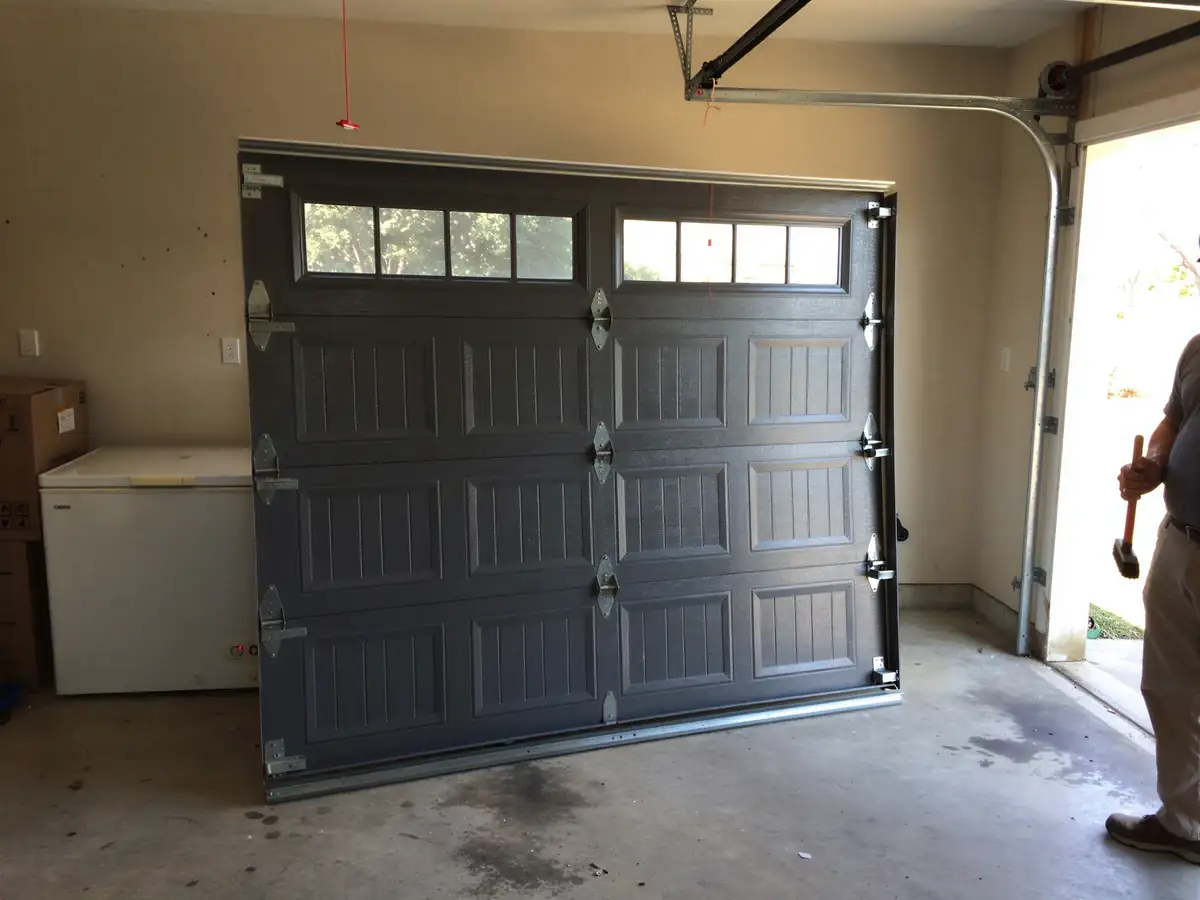
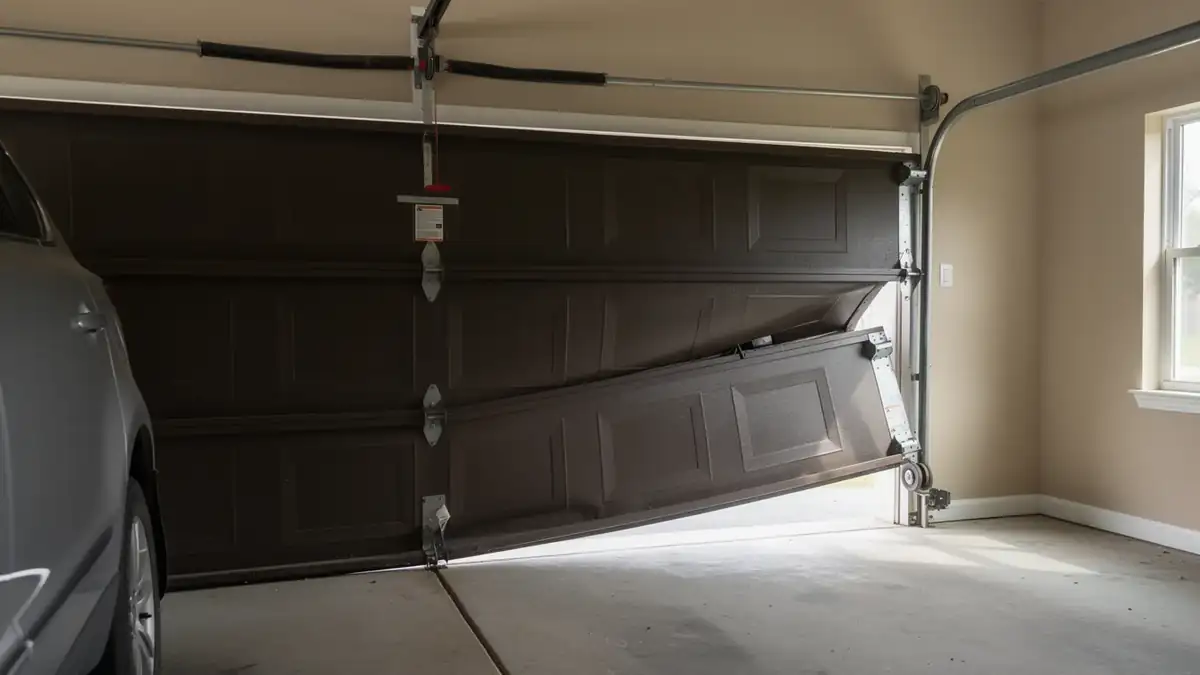
Last thing: look at the bottom corners of the door itself for a bent bracket or a cable that's gone slack on one side only
A door that's off track on just one side, lower corner, is almost always a cable problem, not a track problem, and that's a different repair.
The Problem
Most of the housing stock in this service area went up between 1959 and 2011, with the median build year around 1998, and across the 18 named areas we cover the bulk of it clusters in that 1980s-to-90s window. That matters here specifically because track hardware from that period was bolted to jamb and header framing using fasteners sized for the loads and lumber common at the time, and it was never meant to be adjusted after the fact. Nobody re-torques garage door brackets as part of normal home upkeep, so thirty-plus years later you've got hardware that's shifted a fraction of an inch at a time, every time the door cycles.
A door that's slightly off track rarely jumps all at once. It walks there - a roller riding a little high on one pass, a little higher the next, until one day it catches a weld seam or a dented spot in the rail and comes off. By the time you hear the bang, the misalignment's been building for months.
What Local Conditions Do
This area sits in a cold-moderate climate band, which means the garage sees real temperature swings between a summer afternoon and a January morning, not the extremes you'd get further north, but enough cycling to matter. Steel track expands and contracts with that swing, and so does the lumber the brackets are bolted into. Over a winter, a track bracket that was snug in August can work loose by February just from that contraction and expansion repeating itself.
Cold also stiffens the lubricant in old rollers and hinges, so a door that was running quiet in July can start grinding in December - and a roller that's grinding instead of rolling freely is a roller that's more likely to jump the rail under the extra resistance. None of this is dramatic weather. It's just enough cold, repeated enough winters, to loosen what summer heat re-tightens, and back again.
Leaving It Alone
A door that's slightly off track will still open and close
Which is exactly why people leave it. That's the honest limitation here: a mild misalignment doesn't look urgent, and in a lot of cases it isn't, for a while. But a roller riding partway off a rail puts uneven load on the opener and on whichever cable is taking more of the pull, and that uneven load is what turns a $20 roller problem into a bent track or a snapped cable.
If your door's been walking off track gradually and you catch it before it jumps clean off the rail
That's a short job - realign the track, swap worn rollers, re-torque the brackets. If it's already come off and someone's forced it back by hand, check the track itself for a bend before you assume the rollers are the whole story. A bent rail won't hold alignment no matter how many rollers you replace.