Why It Happens Here
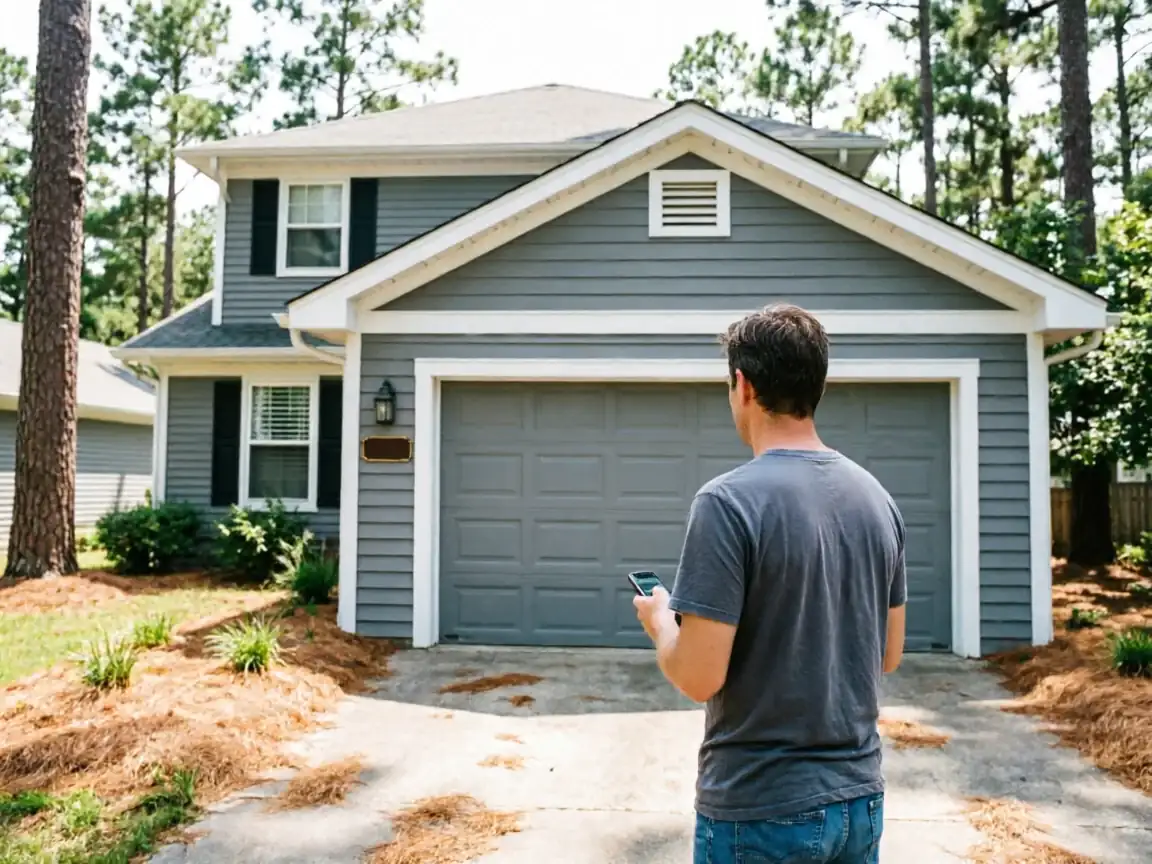
Most of the housing stock around Cornelius went up between 1959 and 2011
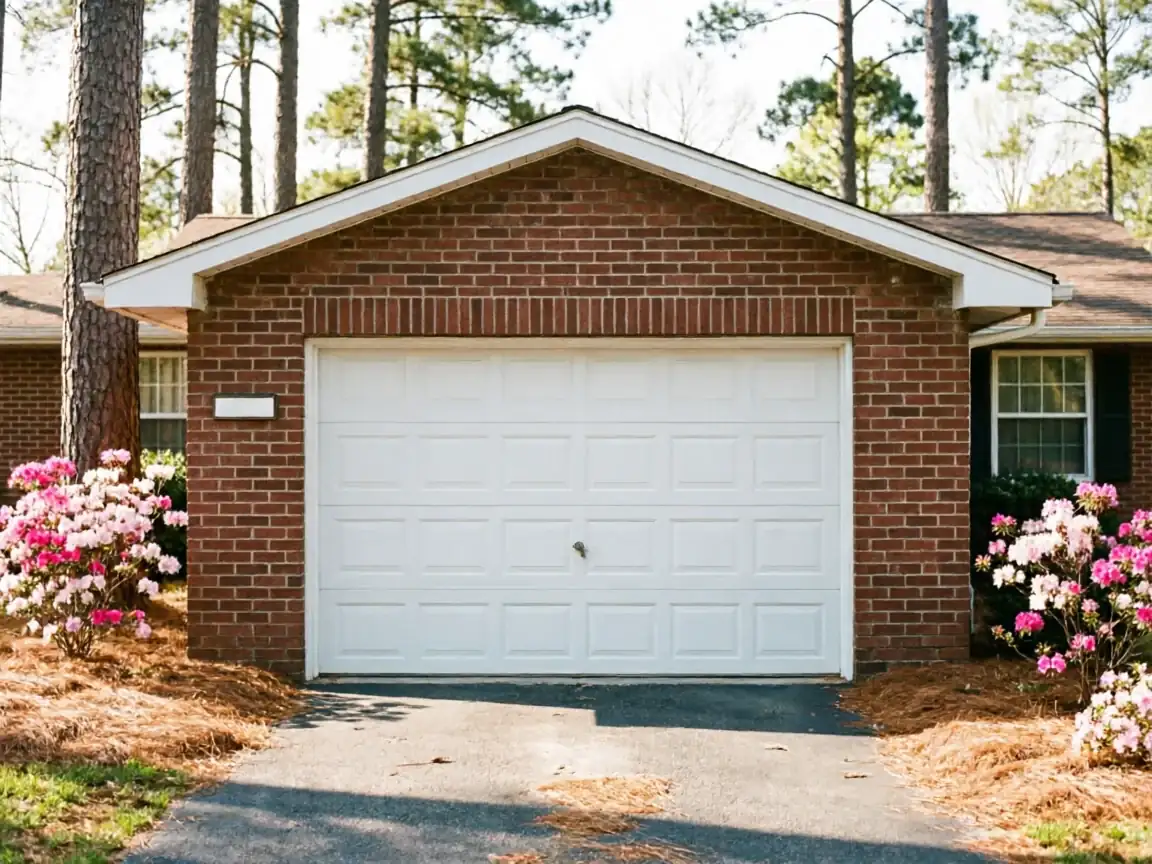
With the bulk of it built in the 1980s and 90s across the area's 18 named communities. That era of construction leaned on steel roll-formed track bolted to wood jambs, and after two to three decades the lag screws work loose, the jamb bracket shifts a fraction of an inch, and the rollers start riding the edge of the track instead of the center. You don't notice it until the door jumps the rail entirely.
The cold-moderate climate here adds to it
Track brackets expand and contract through freeze-thaw cycles each winter, and that slow movement is enough to walk a bracket out of alignment over several seasons even when nothing was ever damaged. A door that's been fine for fifteen years can start binding or popping off track with no single dramatic event behind it - just hardware that's aged out.
We also see it on doors where a cable has frayed or a roller has cracked
Pulling one side of the door down faster than the other. Once a panel racks even slightly, the rollers lose their track and the whole door can bind halfway up or down. None of this is unique to one house - it's a function of age and weather working on the same hardware thousands of homes in this area share.
What It Costs
We're not going to put a number on this page that doesn't hold up once a tech is actually looking at your door. An off-track door can mean one bent track section and a bracket re-set, or it can mean a broken roller, a frayed cable, and a bowed panel all at once - and those are different jobs with different parts. What we can tell you is what drives the cost up or down: whether the track itself is bent (replace, not bend back), whether the cable or spring is also compromised, and whether the door is a standard single or a heavier double.
The honest limitation here: if the track is badly bent or the opener has been fighting a misaligned door for a while, sometimes the cheaper long-term move is a new track and new rollers rather than patching the old setup back into place. We'll tell you which situation you're in before we start, not after.
The Symptom
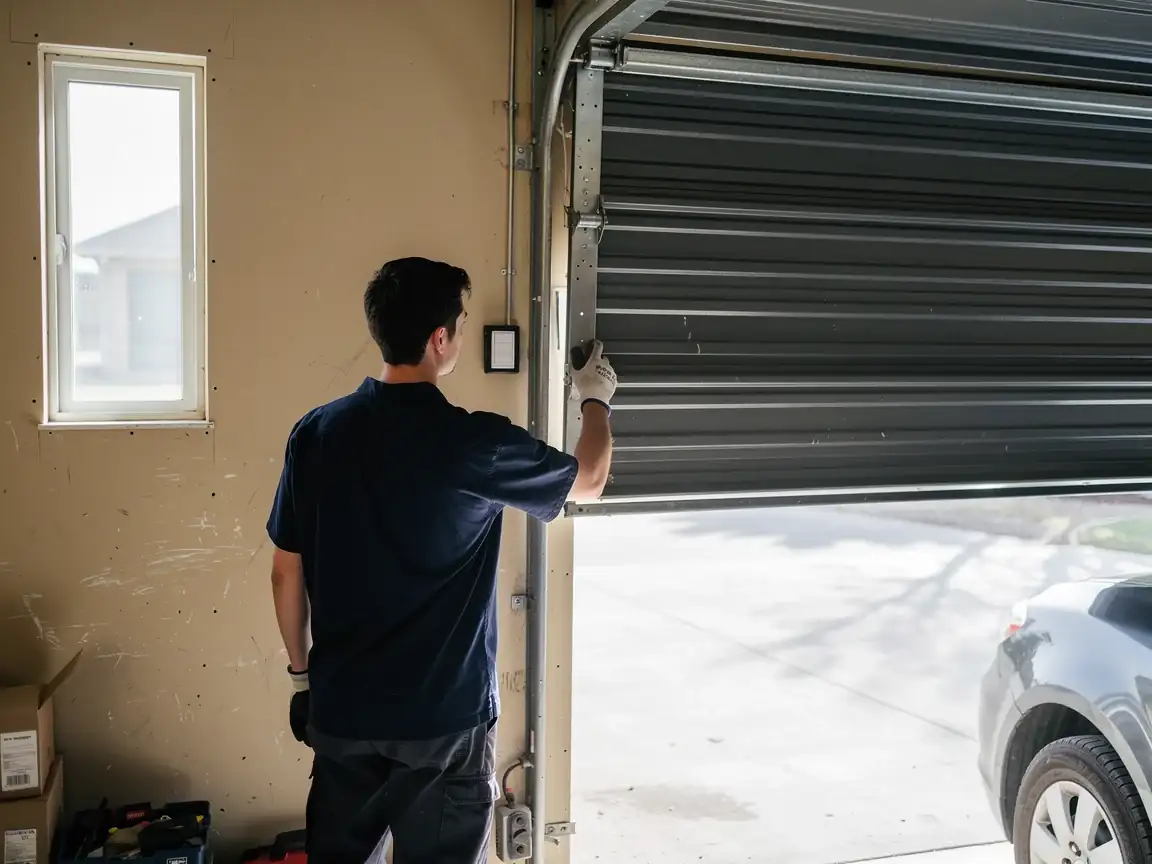
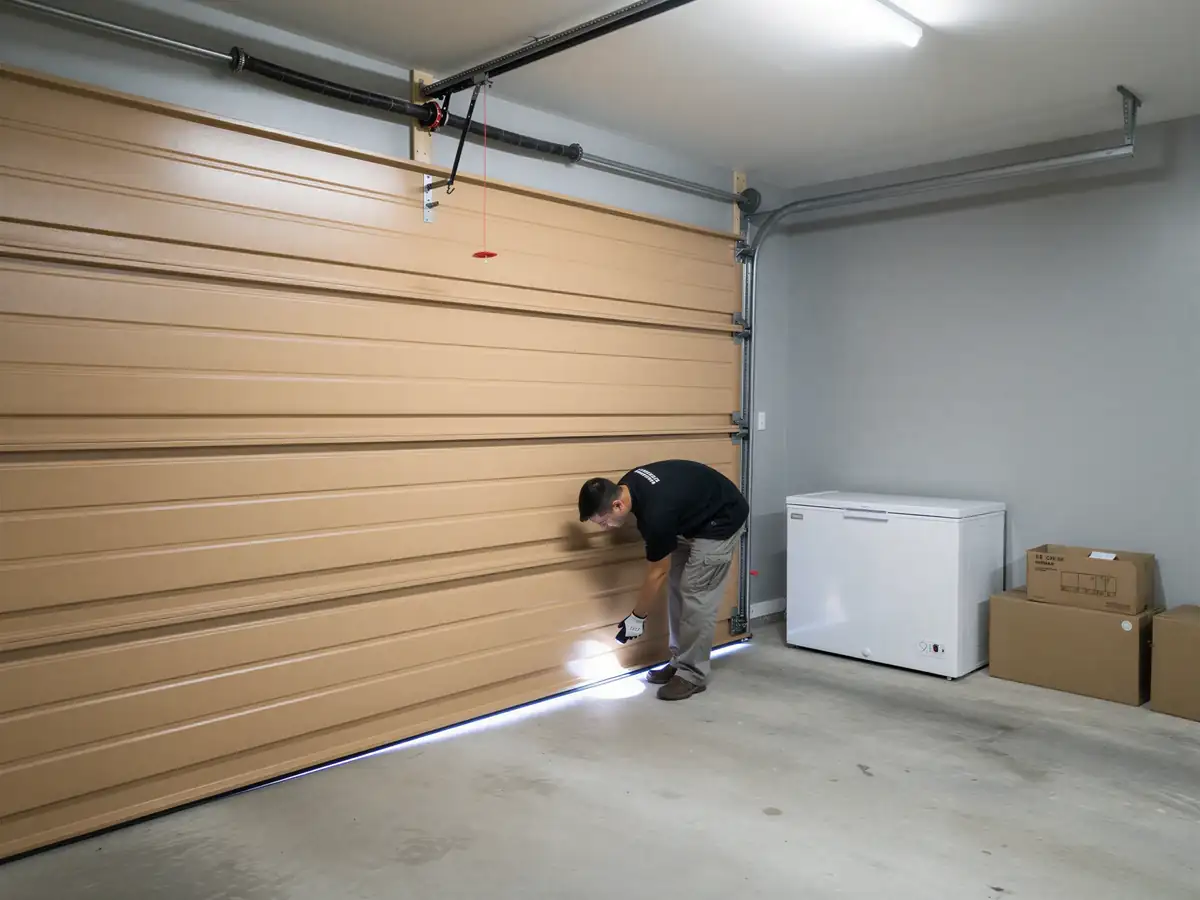
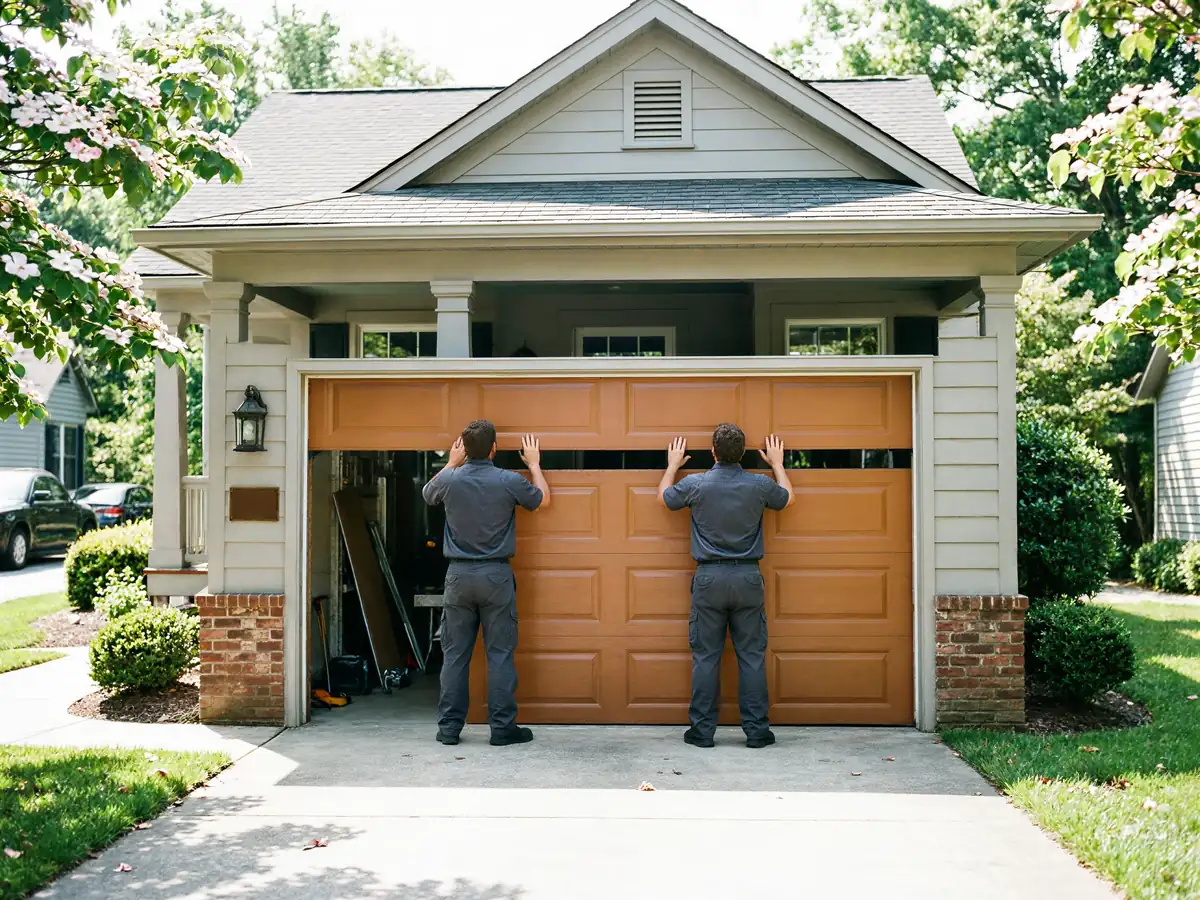
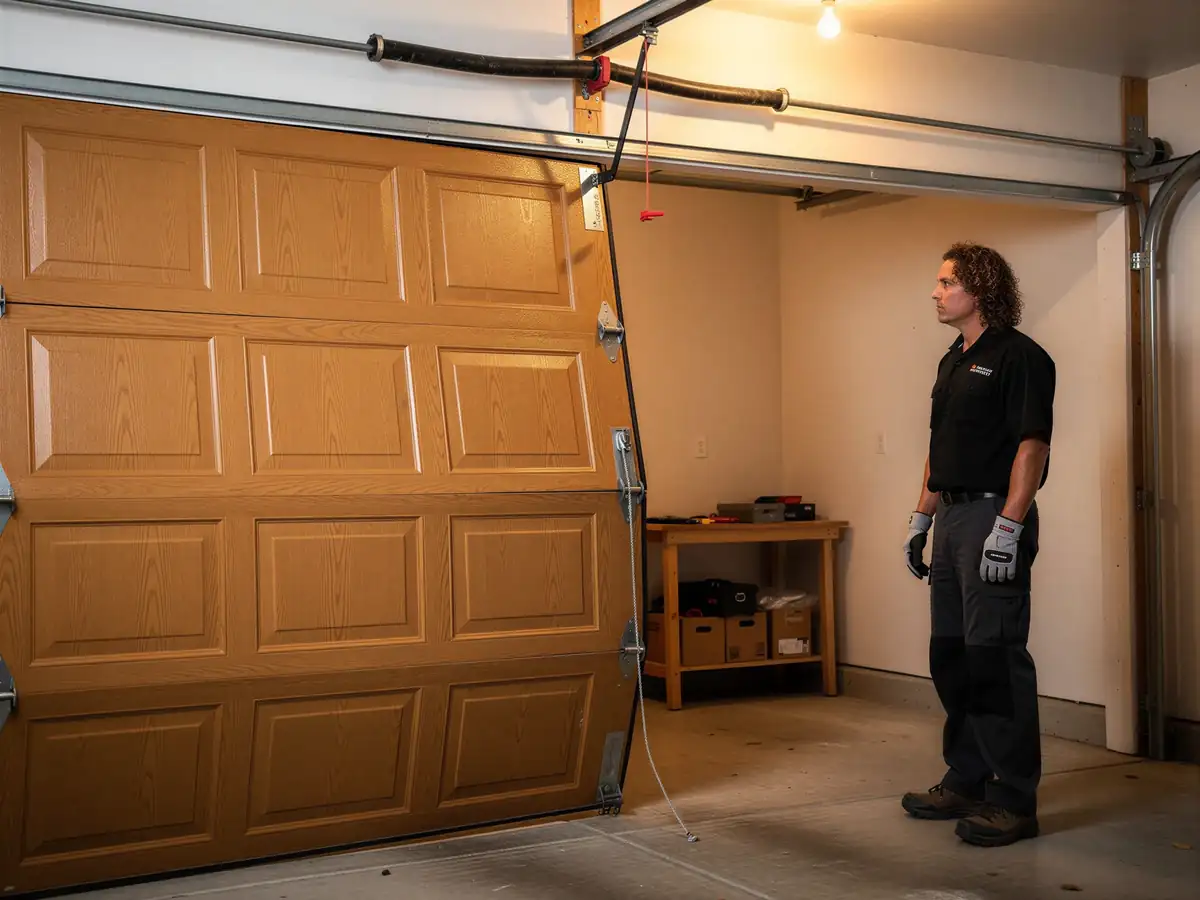
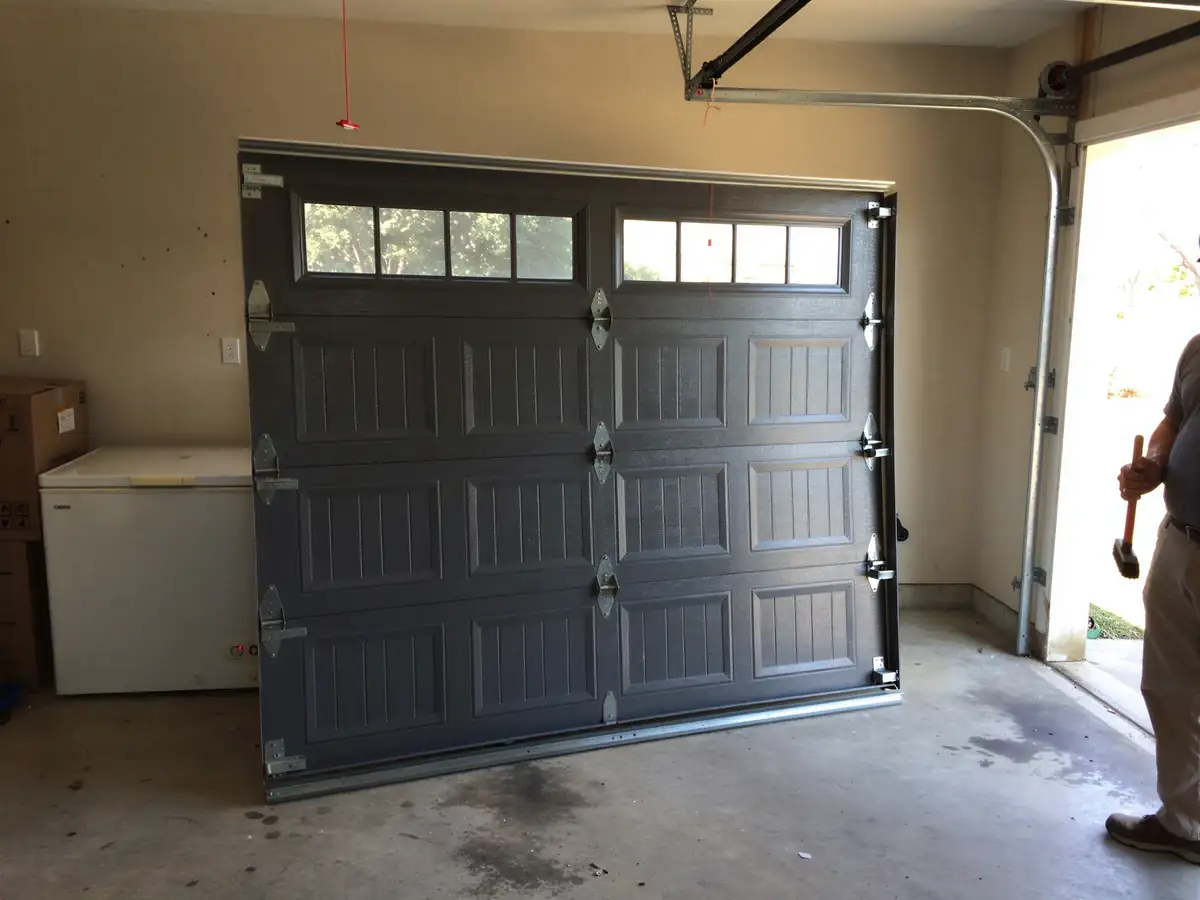
An off-track door doesn't always look dramatic. Sometimes it's just a door that stops a few inches off true, catching the frame on one side. Other times a panel is visibly out of the vertical track, tilted, or hanging on one roller while the rest of the door has come loose from the rail.
Common signs before it fully derails: a grinding or scraping noise as the door moves, a visible gap between the roller and the track on one side, the door moving unevenly - one side higher than the other - or the opener straining and reversing because it senses resistance it can't push through. If you hear a bang and the door stops moving mid-cycle, that's often a roller or cable letting go right at the track.
Don't keep running the opener once a door is visibly off track. Forcing it bends the track further, can snap more rollers, and in some cases pulls the cable drum off the shaft. Kill power to the opener and call - the longer it runs crooked, the more parts end up needing replacement instead of repair.
What Is on the Truck
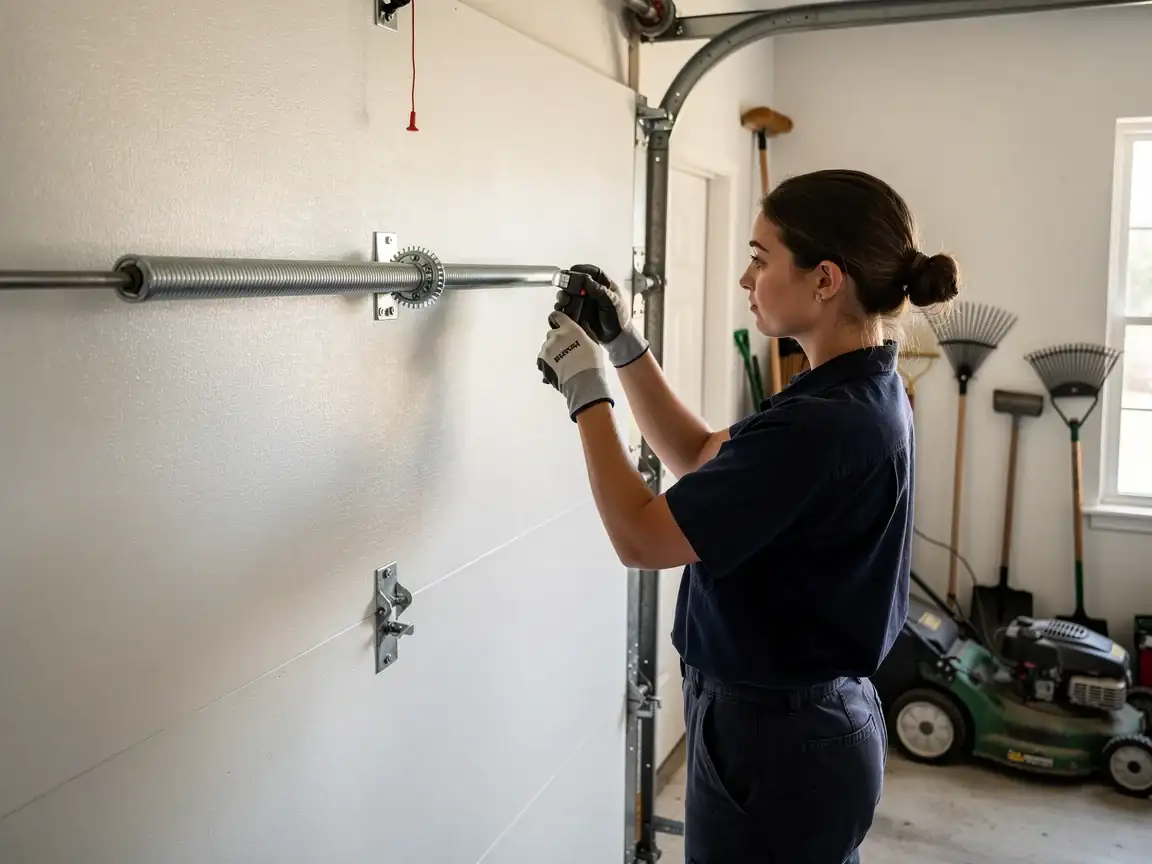
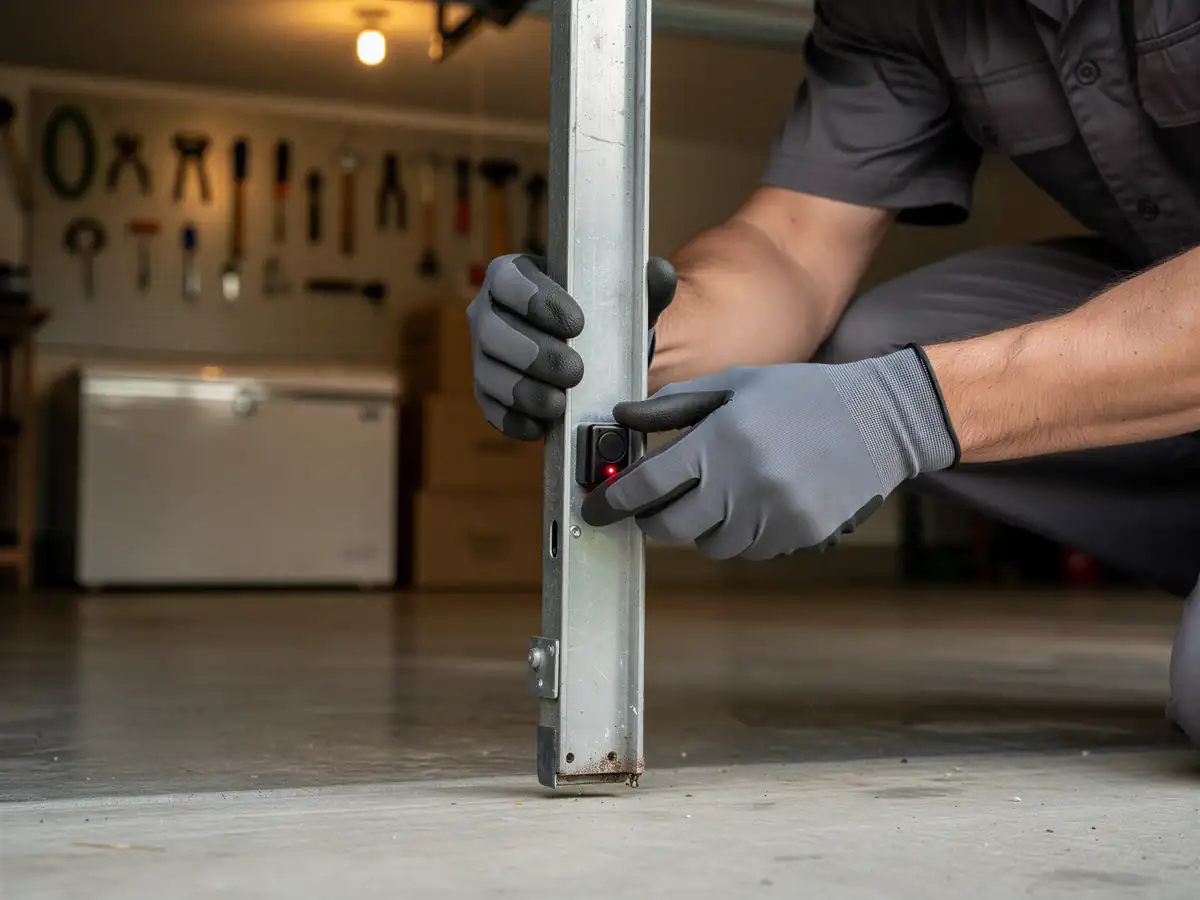
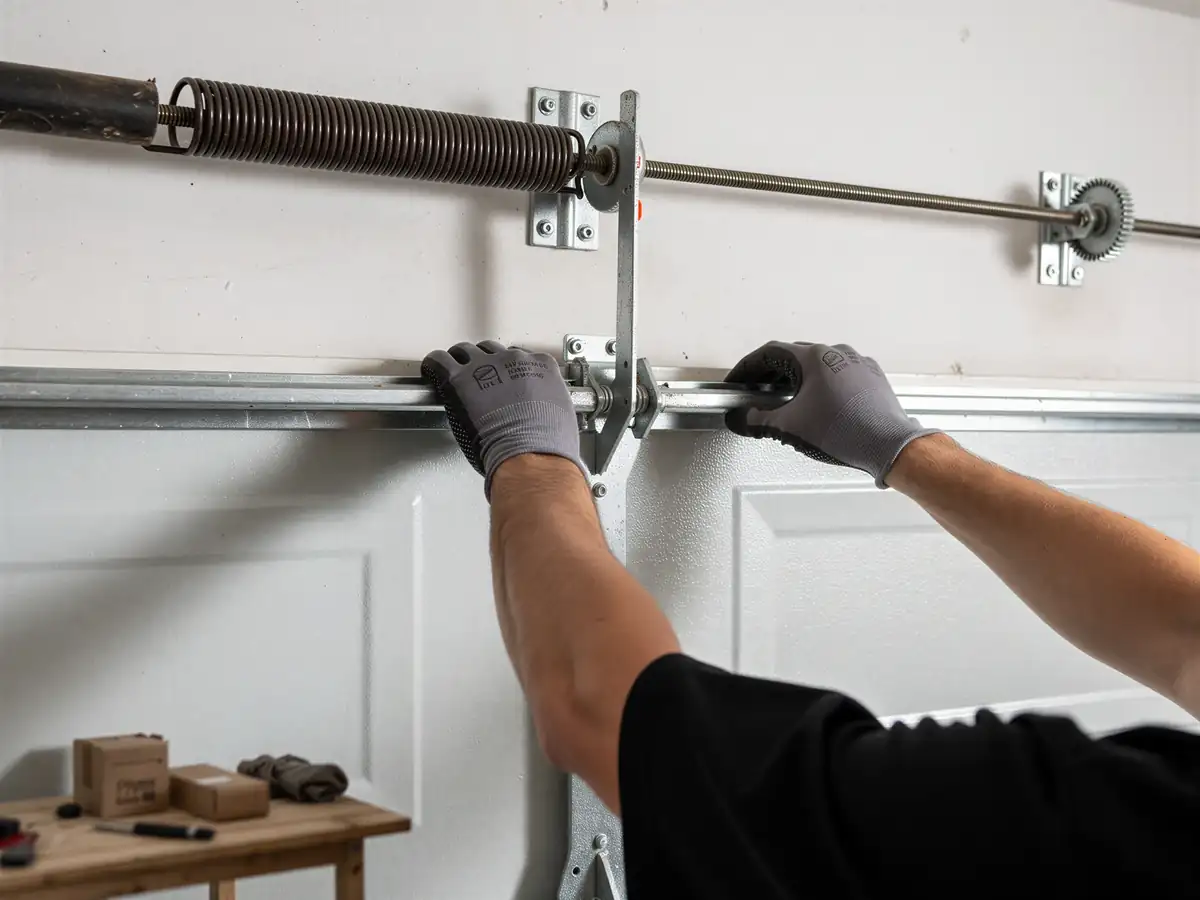
For off-track calls, the parts that matter are track sections in standard residential widths, nylon and steel rollers, lift cables, and the brackets and fasteners that hold track to the jamb
Given how much of the housing in this area dates to the 1980s and 90s, we stock the roller and bracket sizes that match that generation of door rather than only the newest hardware.
We also carry hinges
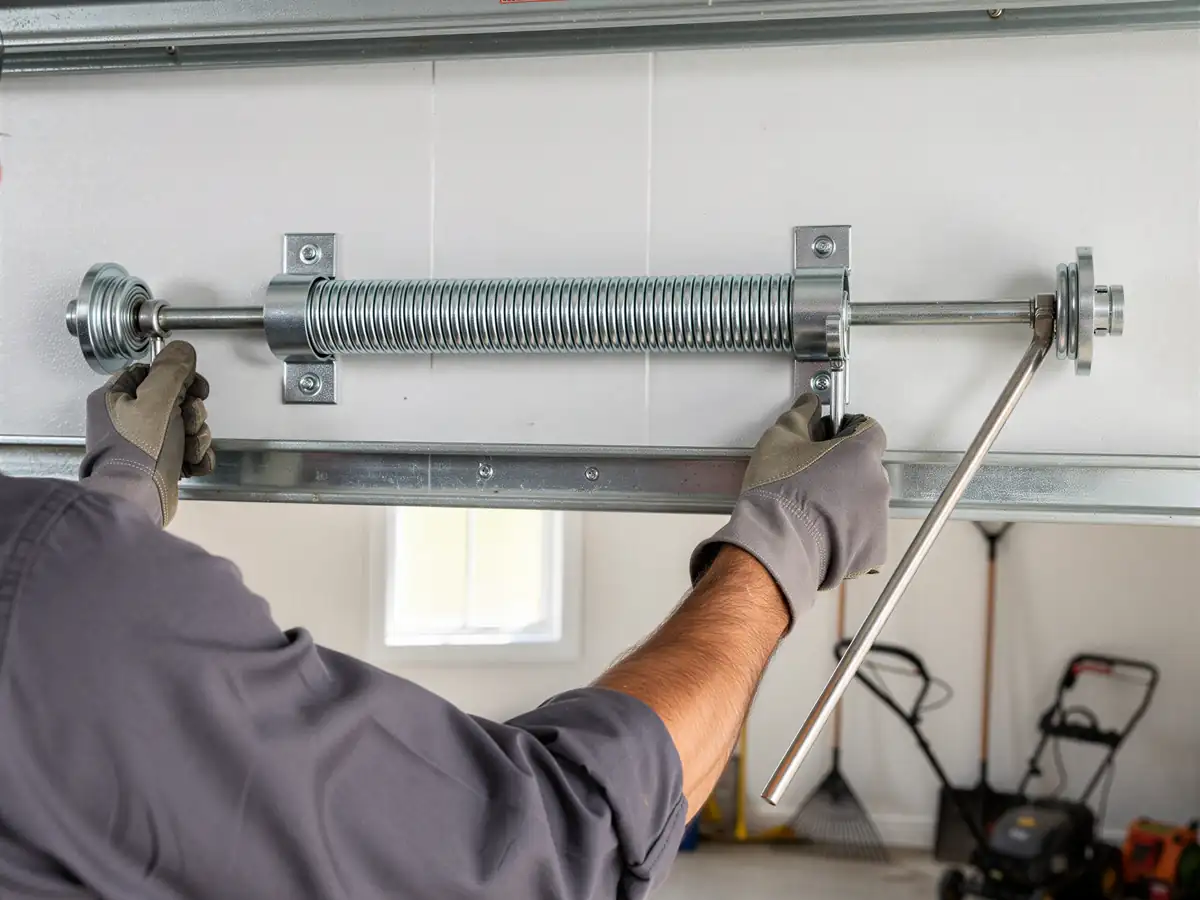
Since a cracked or bent hinge is often what let the panel shift in the first place, and a basic set of torsion and extension spring stock for when the off-track issue turns out to be spring-related rather than purely a track problem. What we don't carry on every truck is specialty or oversized track for unusual door widths - those sometimes need a call ahead so the right piece is on the truck before we show up, rather than a second trip.