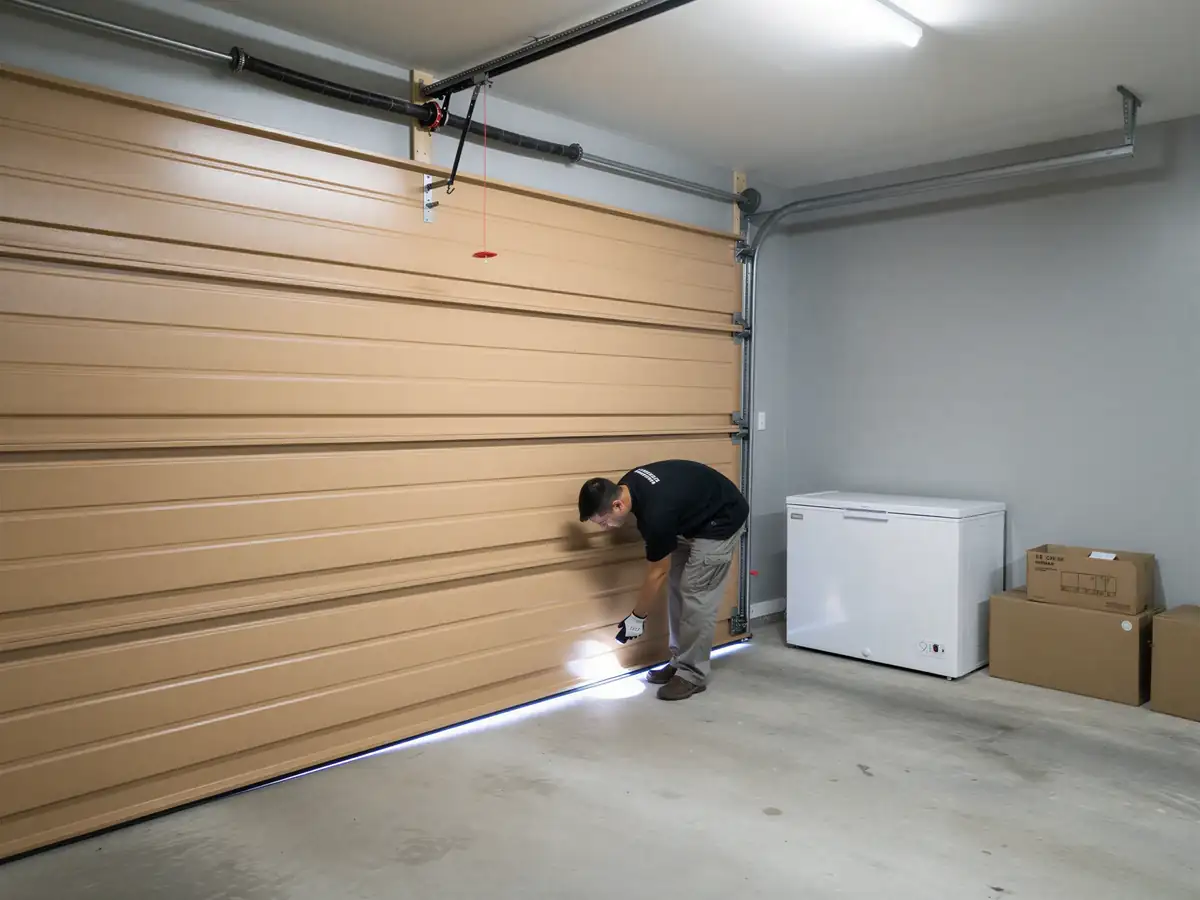
Why It Happens Here
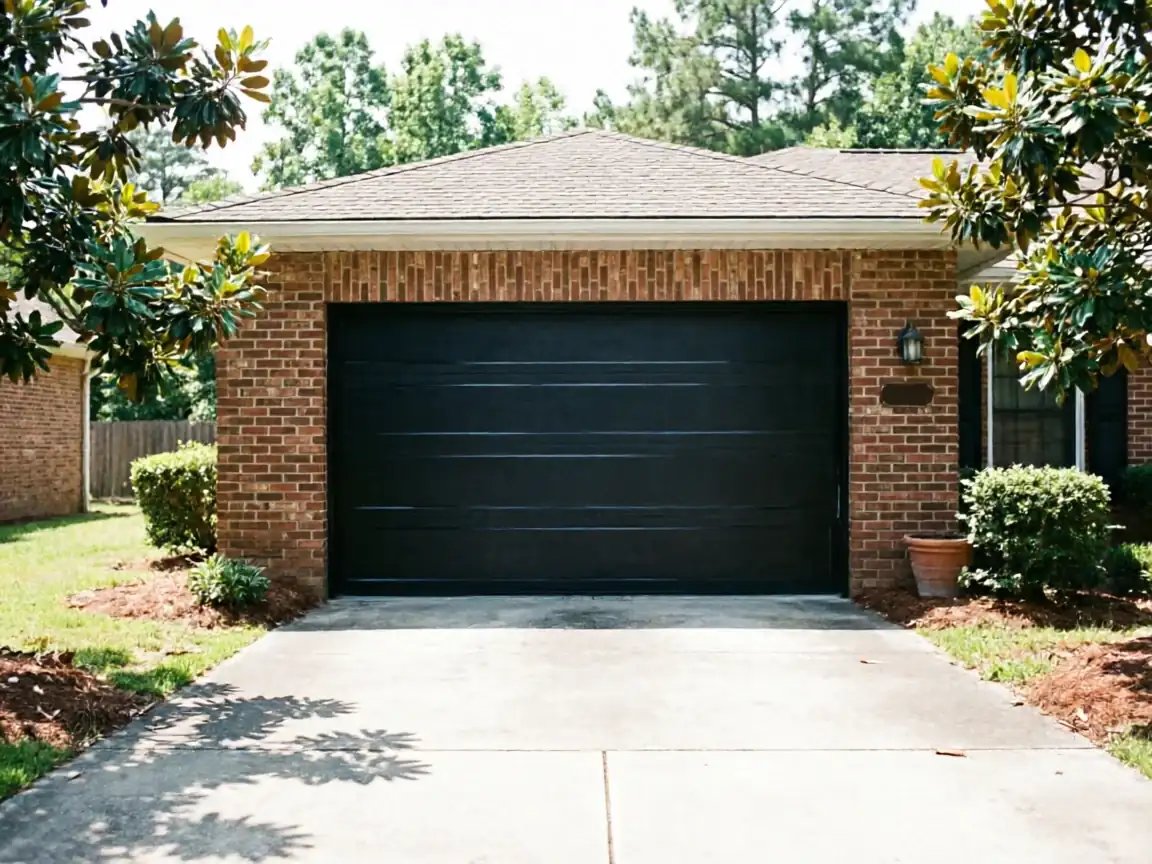
Most of the housing around Cornelius went up between 1959 and 2011
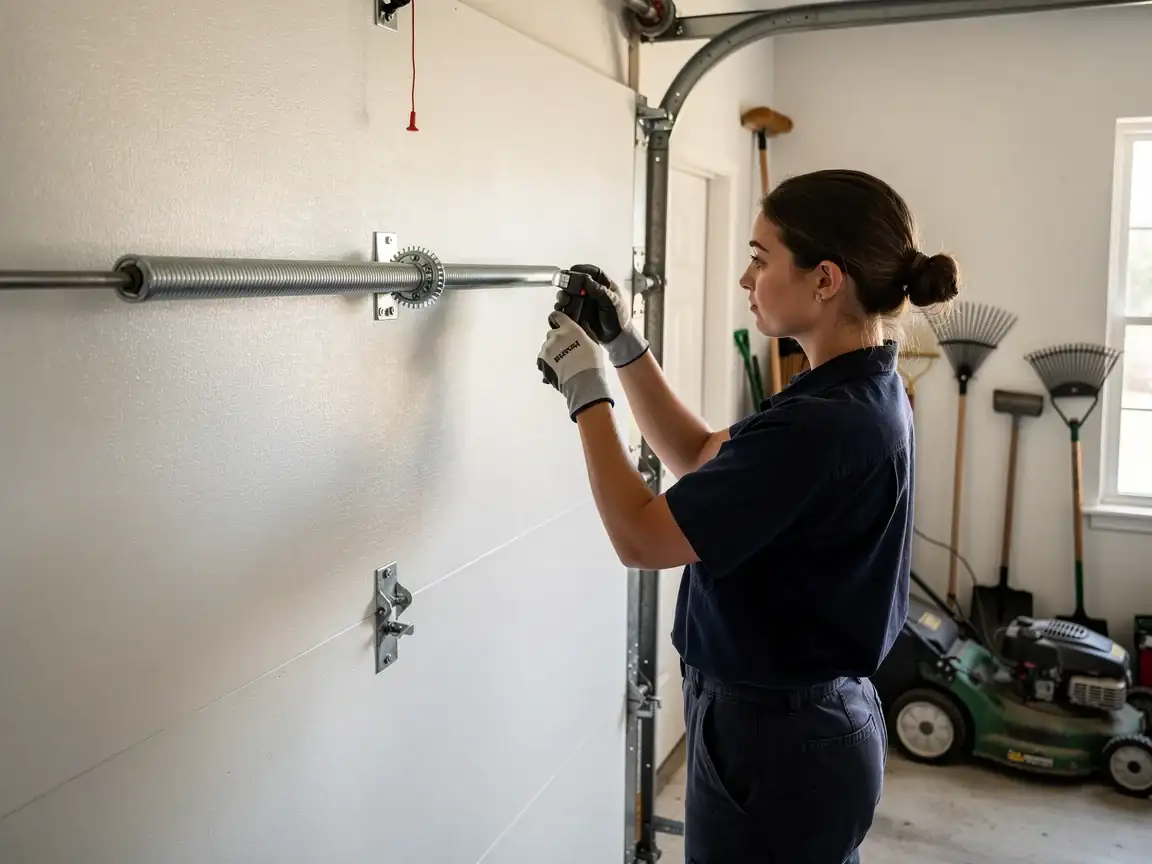
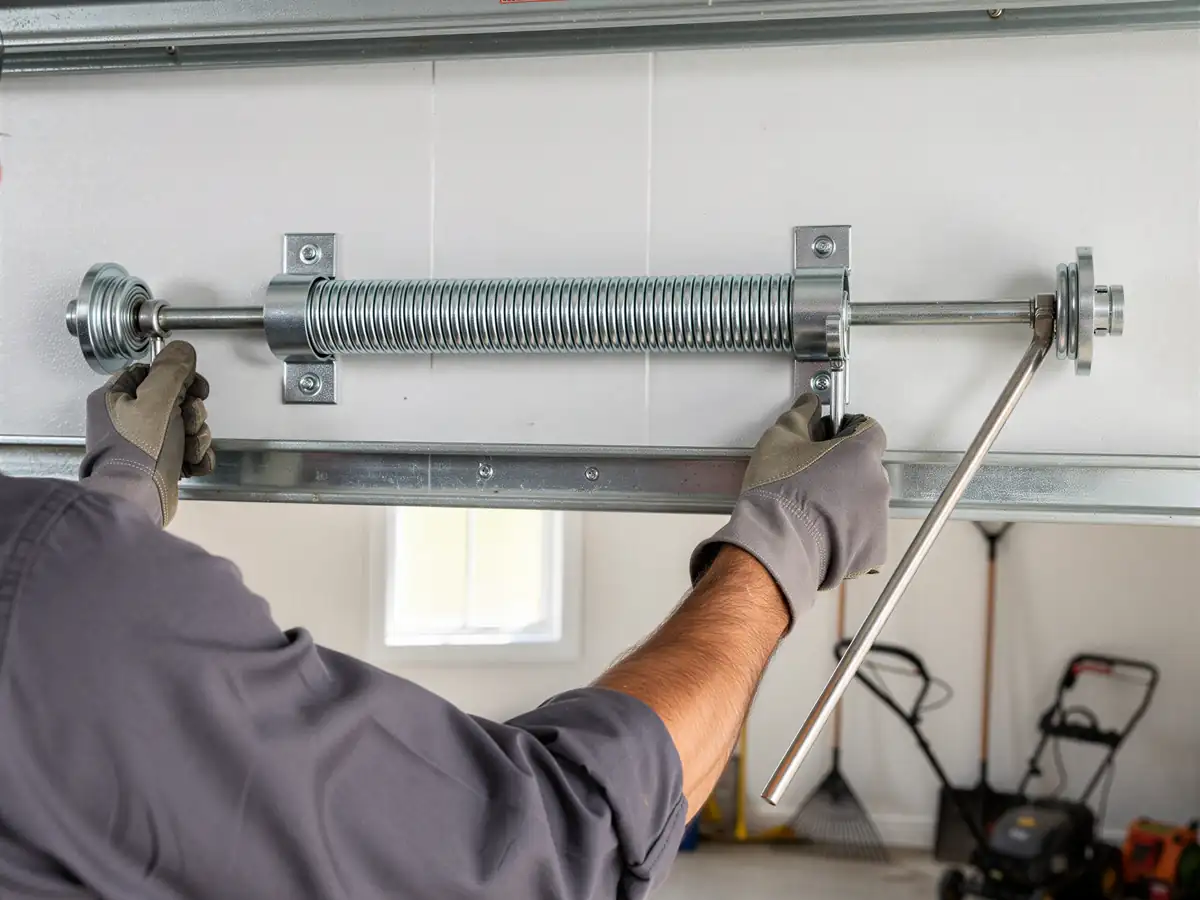
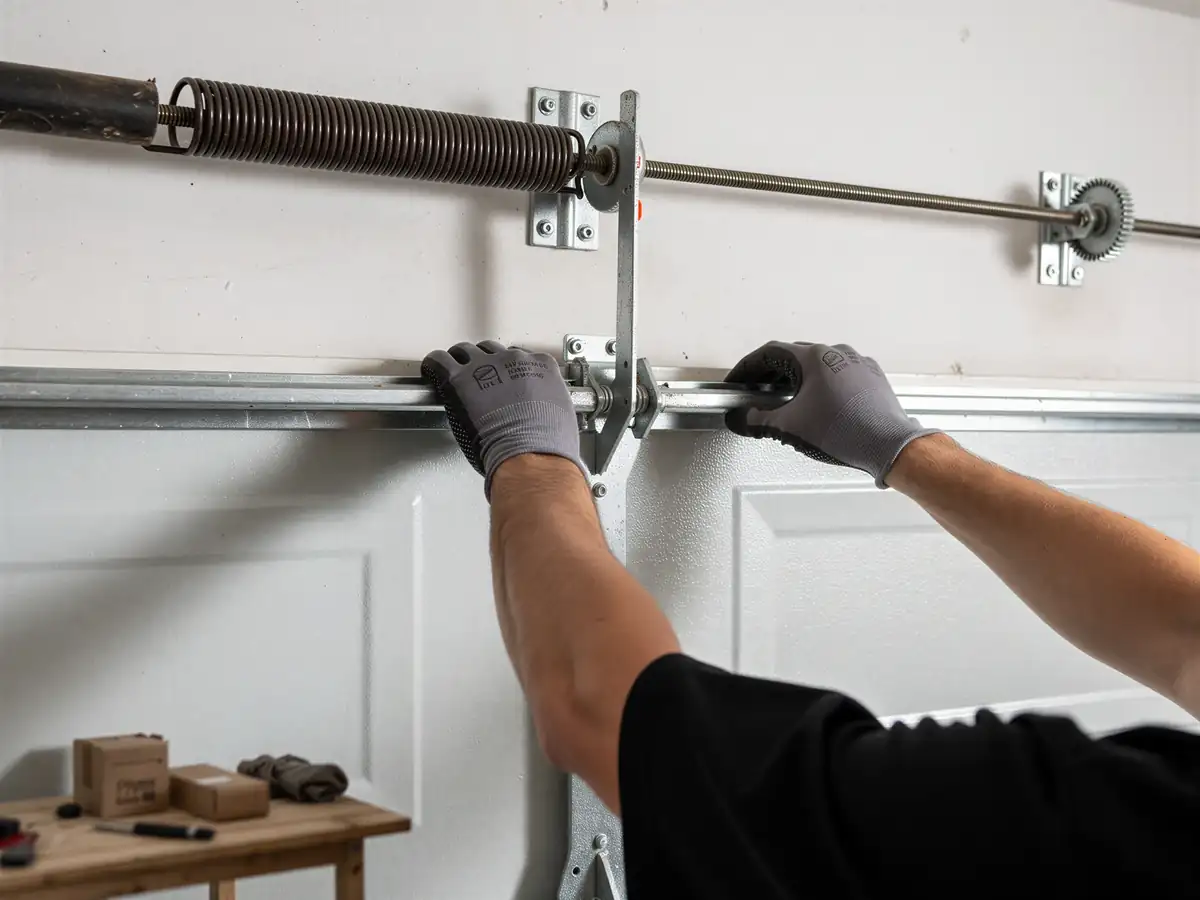
With the bulk of it dating to the 1980s and 90s building boom that filled in this part of the county. That matters for one reason: torsion springs are rated for a fixed number of open-and-close cycles, usually somewhere around 10,000, and a spring installed when a house was built in 1991 has had three decades to get there. A lot of them are past it now, or close.
Cornelius sits in a cold-moderate climate band
Which means real winter cold snaps, not extreme, but enough to matter. Steel contracts in cold weather, and a spring that's already fatigued from age is far more likely to snap on the first hard freeze than on a mild October afternoon. We see this pattern every winter: doors that worked fine in September fail the week temperatures first drop hard.
Newer sections built closer to 2011 aren't exempt either
They often shipped with steel rollers instead of nylon, and steel rollers wear faster and get noisier in this kind of weather swing. Different house, same underlying problem: the hardware ages on a schedule, and cold weather is what exposes it.
What It Costs
We're not going to put a number here that doesn't hold up once we're standing in your driveway. Spring size, door weight, and whether you've got one spring or two all change the job, and guessing at a price before we've looked at the door does nobody any favors.
What we can tell you is what drives the cost conversation in this area specifically. Homes from the 1980s and 90s building boom tend to use standard torsion spring sizes that we carry on the truck as a matter of course, which keeps most of those jobs a same-visit fix. Older homes near the lake, and the handful of newer builds from the 2000s, sometimes call for less common sizes or hardware that isn't on the truck by default, which can mean a short wait on a part.
The honest limitation: if your opener and springs are original to a house built in the late 80s, we may find more than one thing wrong once the door is open. A spring job on a system that old sometimes turns into a spring-plus-rollers job once we see the wear. We'll always tell you before we do work you didn't ask for.
The Symptom
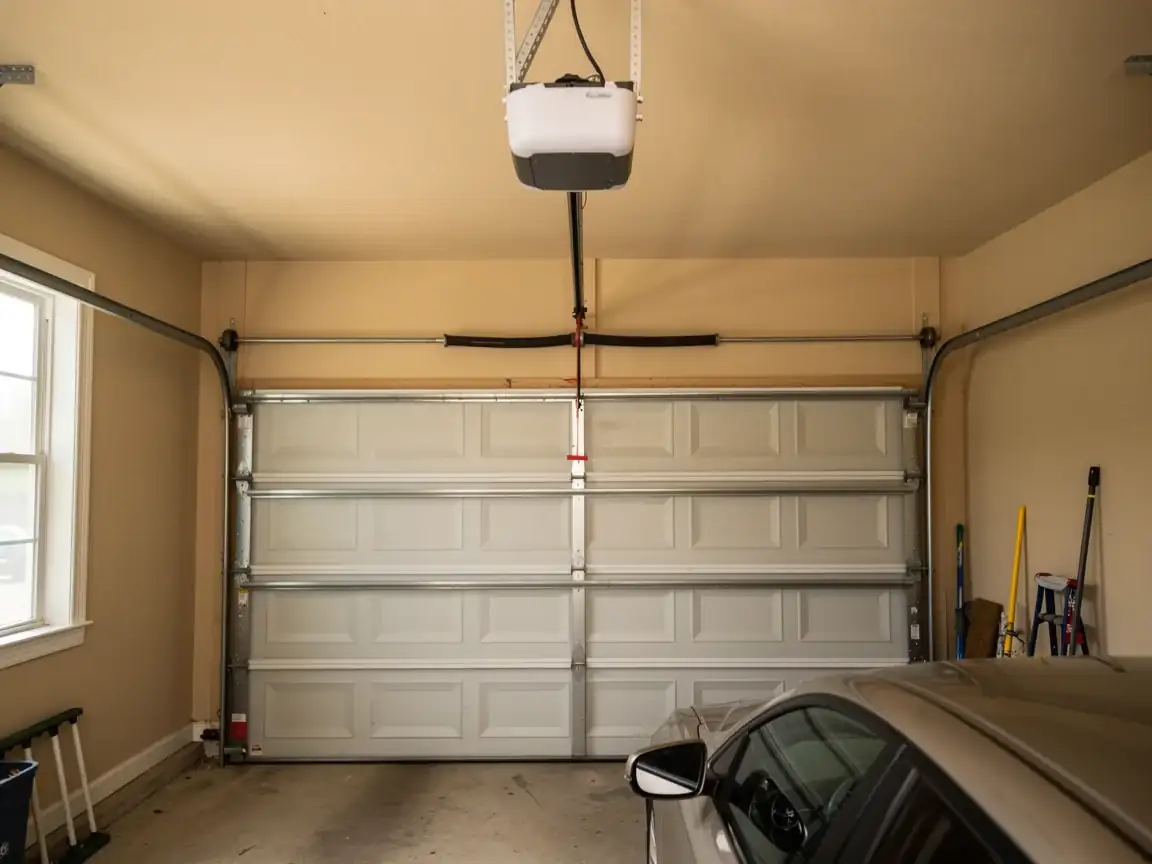
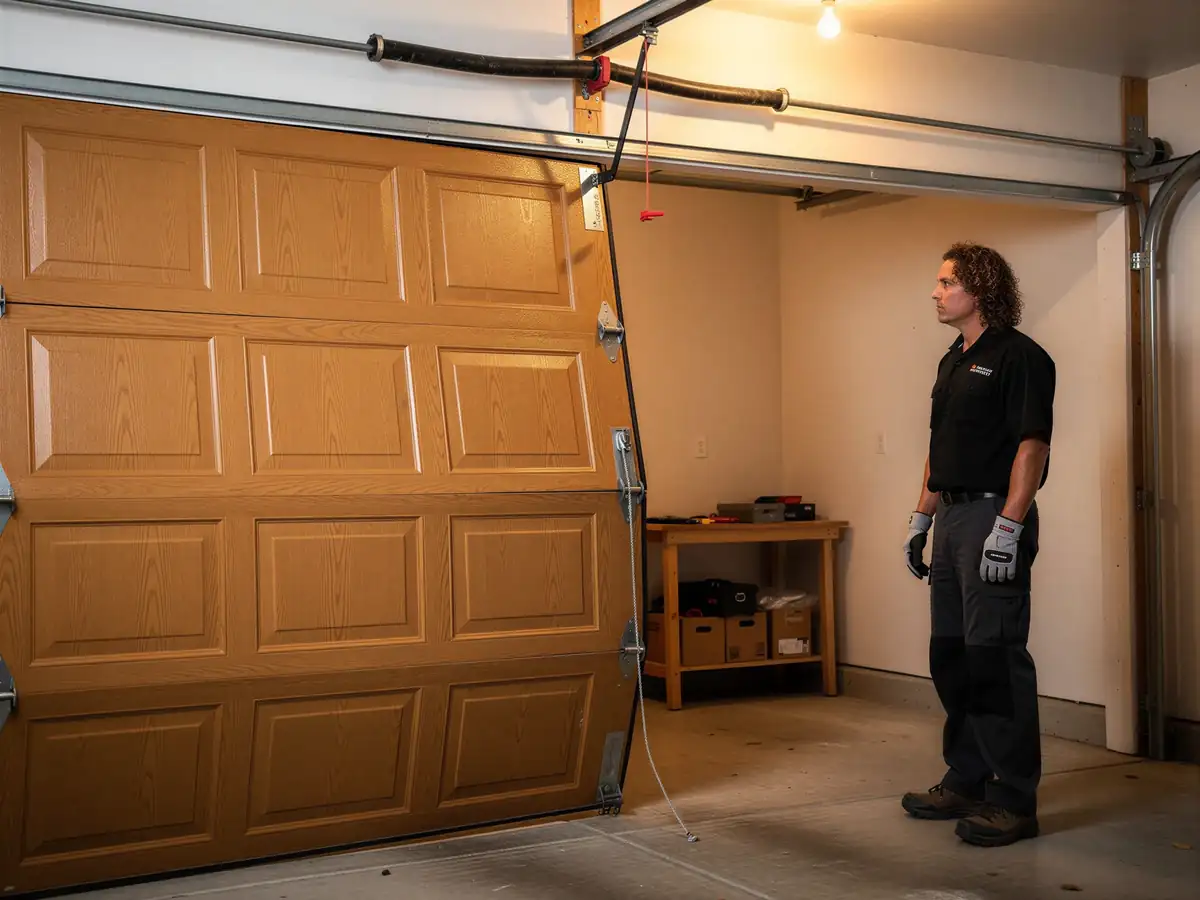
The classic sign is simple: the door won't open, or it opens a few inches and stops, and if you look up at the spring above the door you'll see a visible gap where it's snapped in two. Sometimes it happens with a bang loud enough that neighbors mention it.
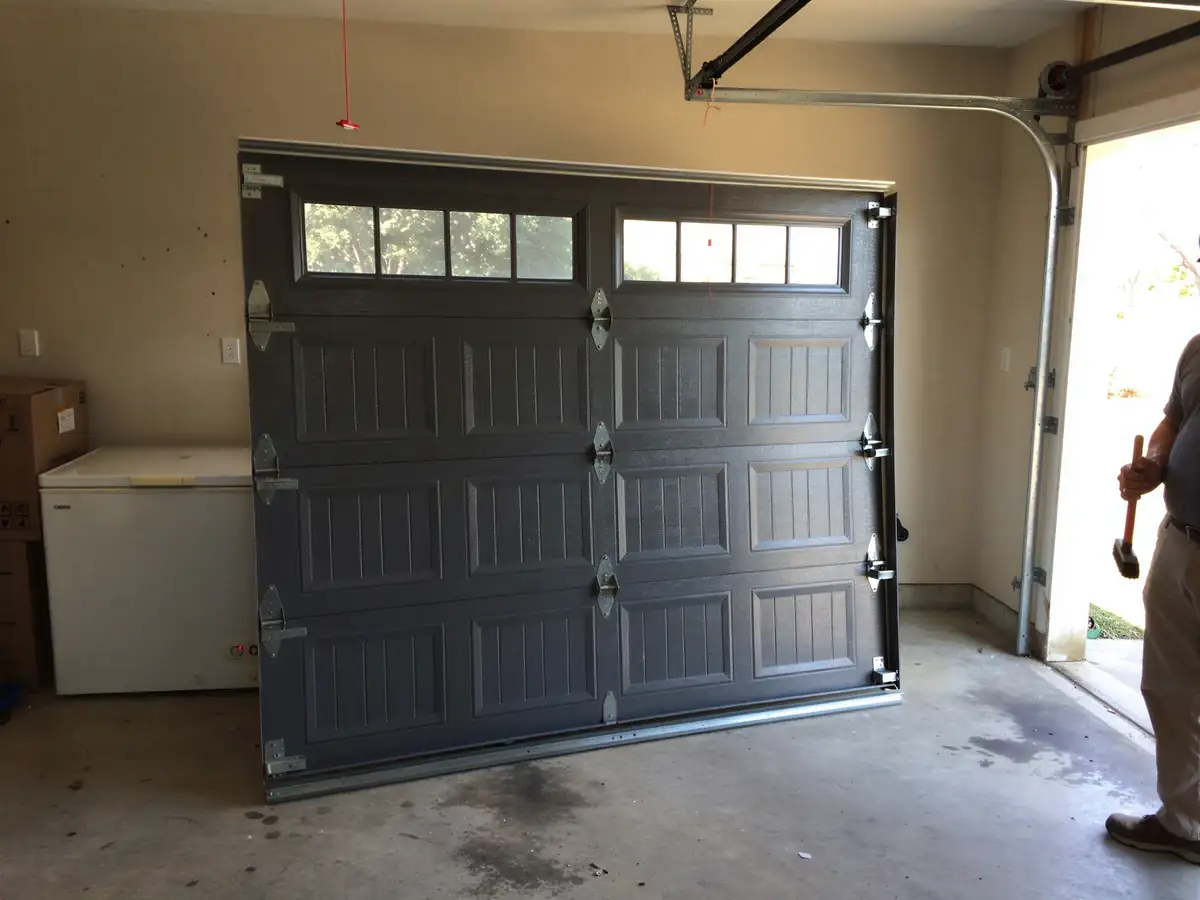
A second version is quieter. The door still opens, but it's heavier than it used to be, the opener strains and makes a new grinding sound, or it opens unevenly with one side dropping faster than the other. That's usually a spring that hasn't fully gone yet but is close, or a cable starting to fray under the extra load the weak spring is putting on it.
In homes with the steel rollers common in the newer end of this area's housing, you'll sometimes hear a harsh metallic scrape instead, especially in colder weather when the metal contracts slightly in the track. That's a different fix than a spring, and it's worth telling us which sound you're hearing when you call, because it changes what we load on the truck before we head out.
What Is on the Truck
Because the housing stock here runs heavily to that 1980s-90s construction window
Our truck carries the torsion spring sizes that match standard single and double doors from that era as a default stock item, not a special order. That's the job we run into most often, and it's the one we're set up to close in one visit.
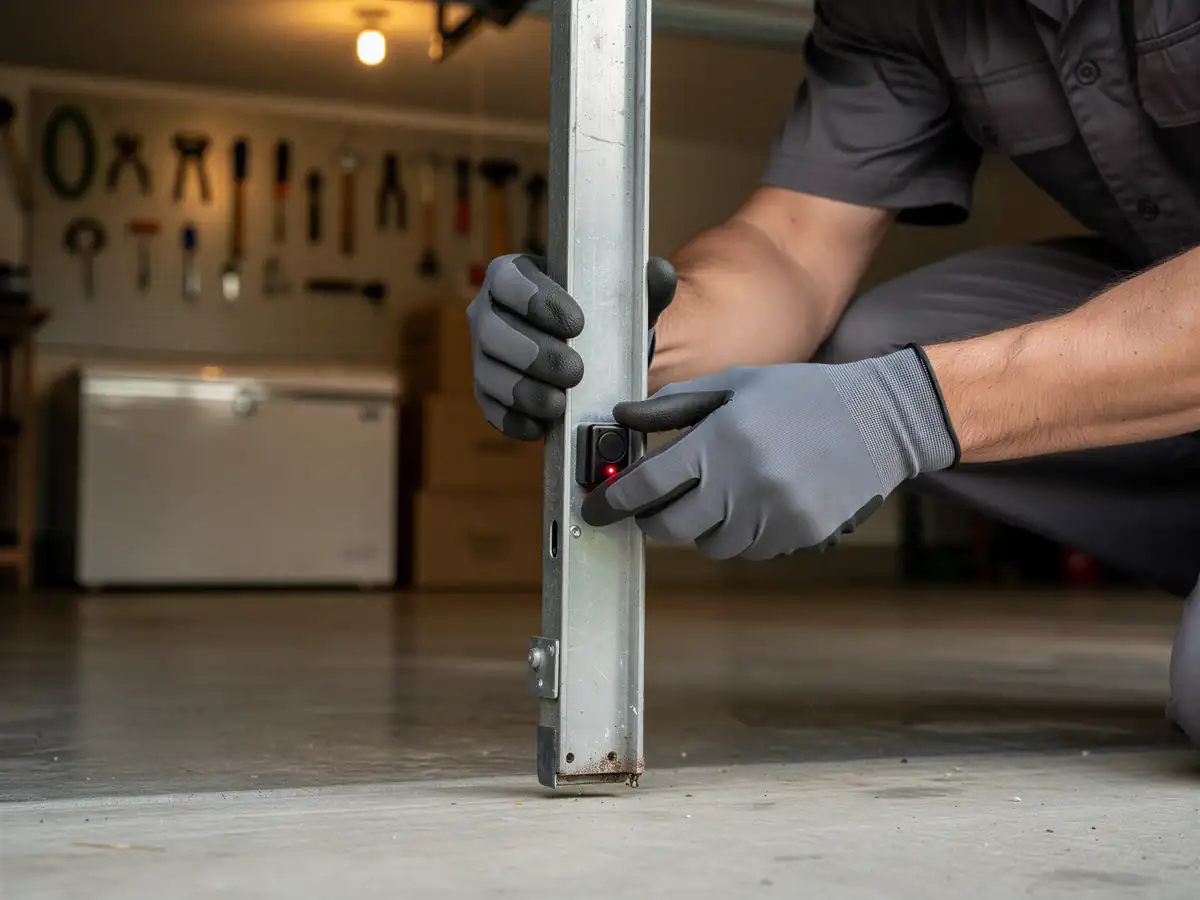
We also carry nylon rollers to swap out the steel ones common on doors from the later end of the building range
Since nylon handles the cold-weather contraction better and runs quieter. Cables, drums, and standard hinges round out what's standard.
Where we sometimes have to come back is hardware tied to a less common door size or an older opener mechanism that isn't part of the usual run for this area
It doesn't happen often, but when it does, we'll tell you on the spot rather than make you guess. Whether you're calling from right here in town or from Davidson a few minutes up the road, the truck that shows up is stocked for the same housing patterns, because that's what most of the doors in this corner of the county have in common.