Why It Happens Here
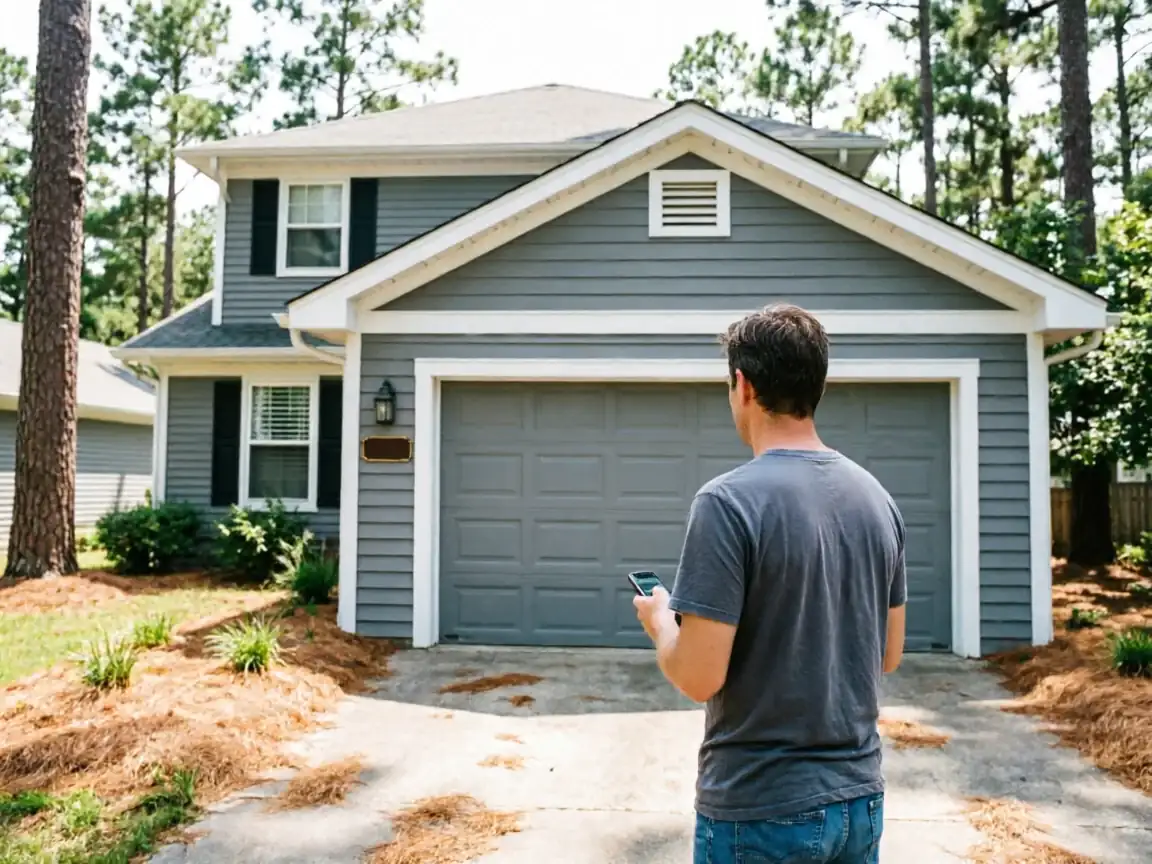
Most houses in this stretch of the Lake Norman area, Cornelius included, went up between 1959 and 2011
With the median build year sitting around 1998. That means a big share of openers out there were installed when the house went up, during the 1980s and 90s building wave that defined these neighborhoods. An opener has a working life, and gears, capacitors, and circuit boards from that era are now 25 to 40 years old.
- 40 years
Cold weather makes it worse
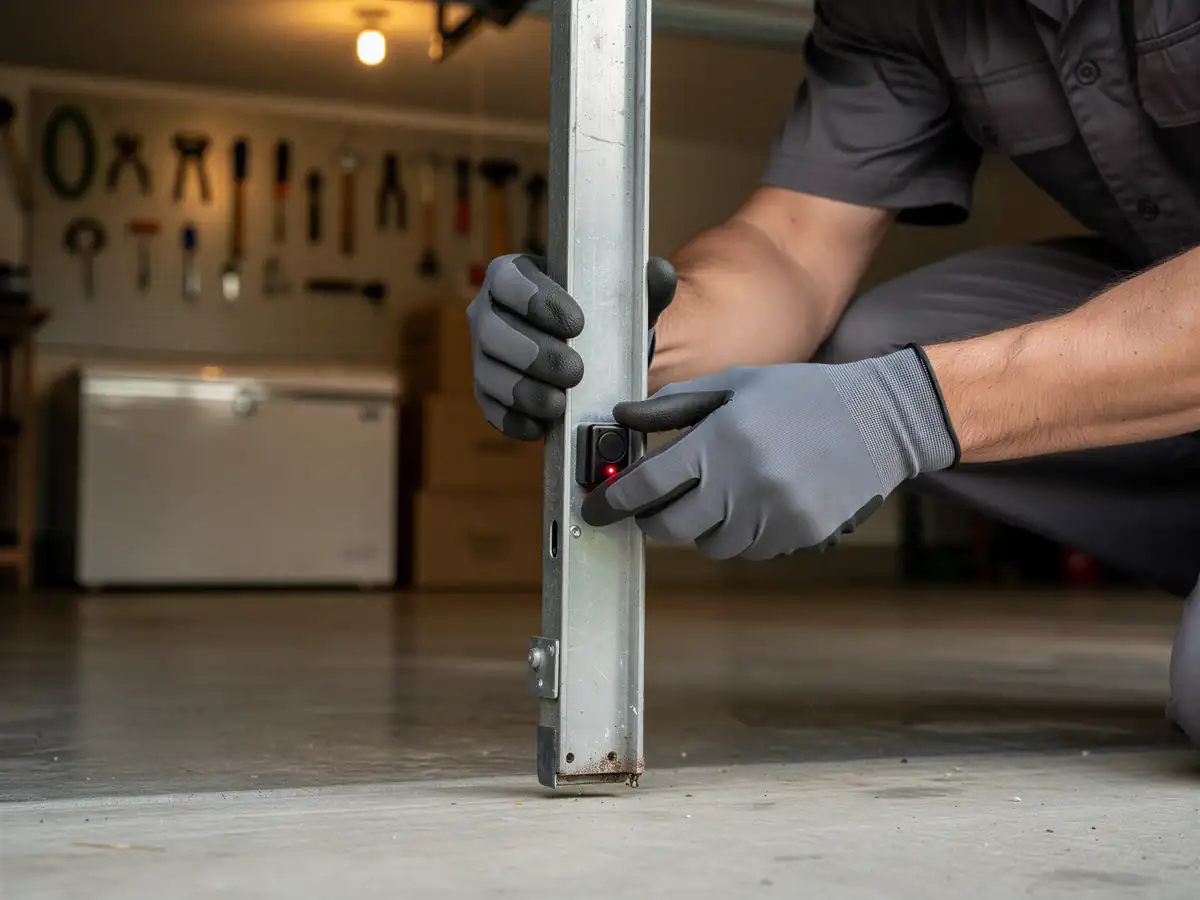
This area sits in a moderate cold climate band, so winters bring stretches of hard freeze overnight. Grease inside the drive gear thickens in the cold, which makes the motor strain harder on every cycle. Photo-eye sensors mounted low near the floor pick up condensation and frost, which can trip a false auto-reverse before the door even touches the ground. None of this is dramatic - it's wear, timed to the season and the age of the unit.
We see this pattern across Davidson, Westport, Lowesville, and the other towns around here that share the same housing stock and the same winters
A unit that ran fine for 20 years doesn't fail because something freak happened. It fails because the parts inside finally wore down to where cold air and age tip them over.
- 20 years
What It Costs
We're not going to put a number here that isn't backed by anything - every opener job is different depending on what's actually wrong. A stuck limit switch is a quick adjustment. A fried logic board on a unit from the 1990s is a different conversation, and sometimes the honest answer is that a new opener costs less than chasing parts for one that old.
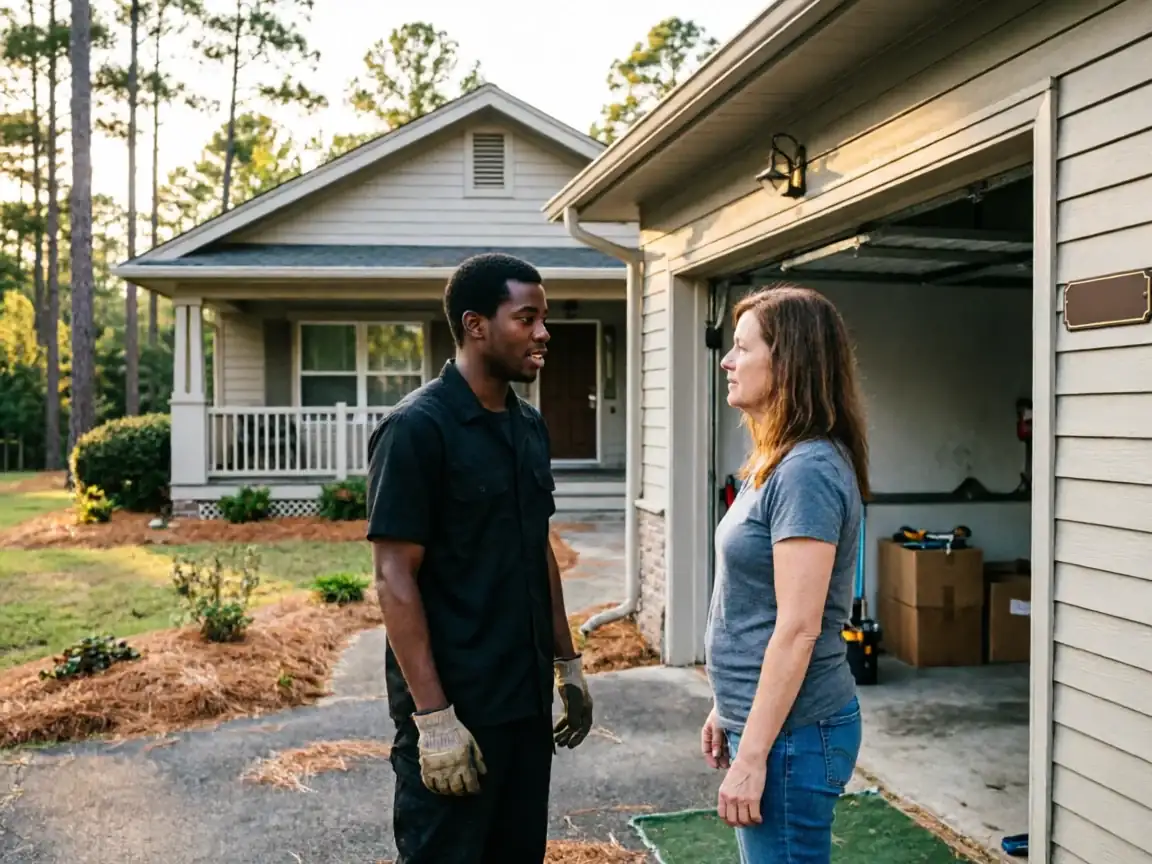
What we can tell you is what drives the cost: whether the part is still made, whether it's the motor, the board, or just a sensor, and whether the opener is old enough that a second failure is likely within the year. We'll look at the unit, tell you what's actually broken, and give you the choice between a repair and a replacement before any work starts. If a repair doesn't make sense for the age of the unit, we'll say so instead of running up a bill. That's the one straight answer we can give without seeing the opener in person.
The Symptom
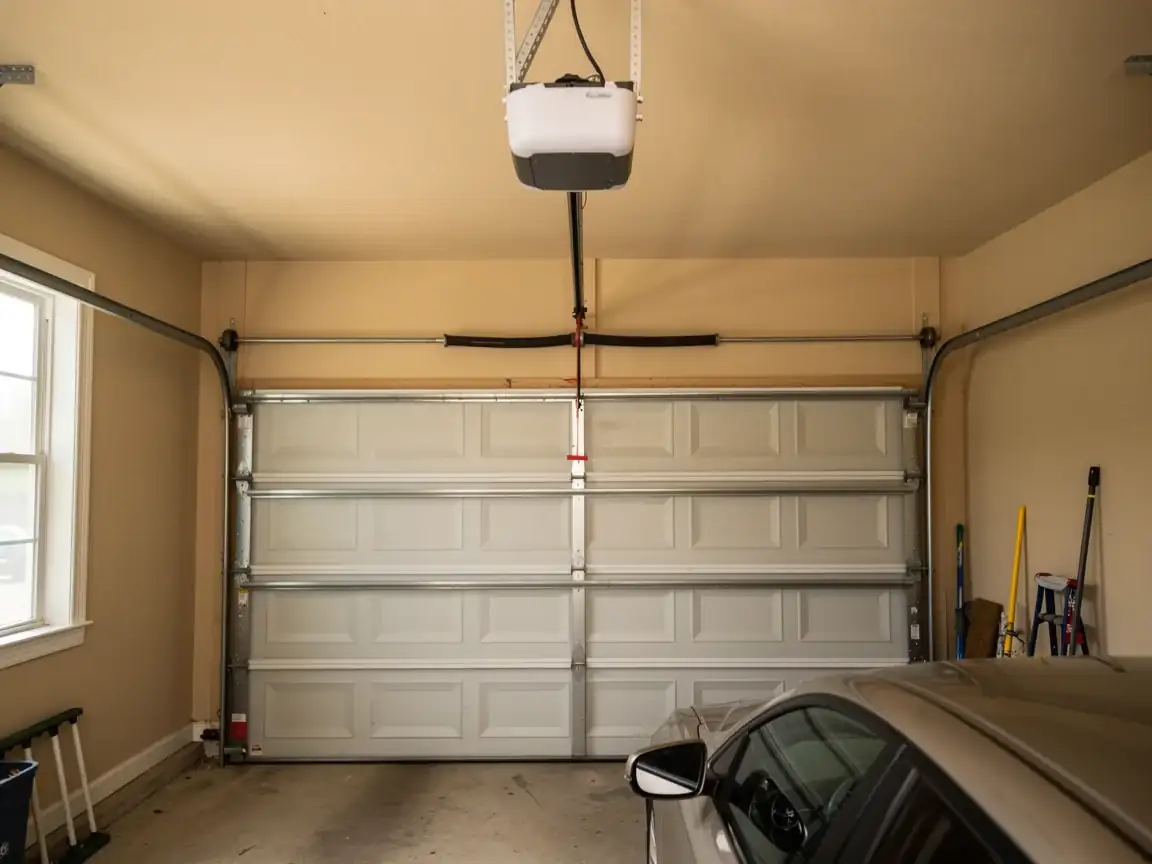
The call usually starts the same few ways. The opener motor runs but the door doesn't move - that's almost always a stripped drive gear, the plastic part that wears out first on older chain and belt units. The remote stopped working from one spot in the driveway but works fine up close - that's a weakening antenna or a dying logic board, not a dead remote battery.
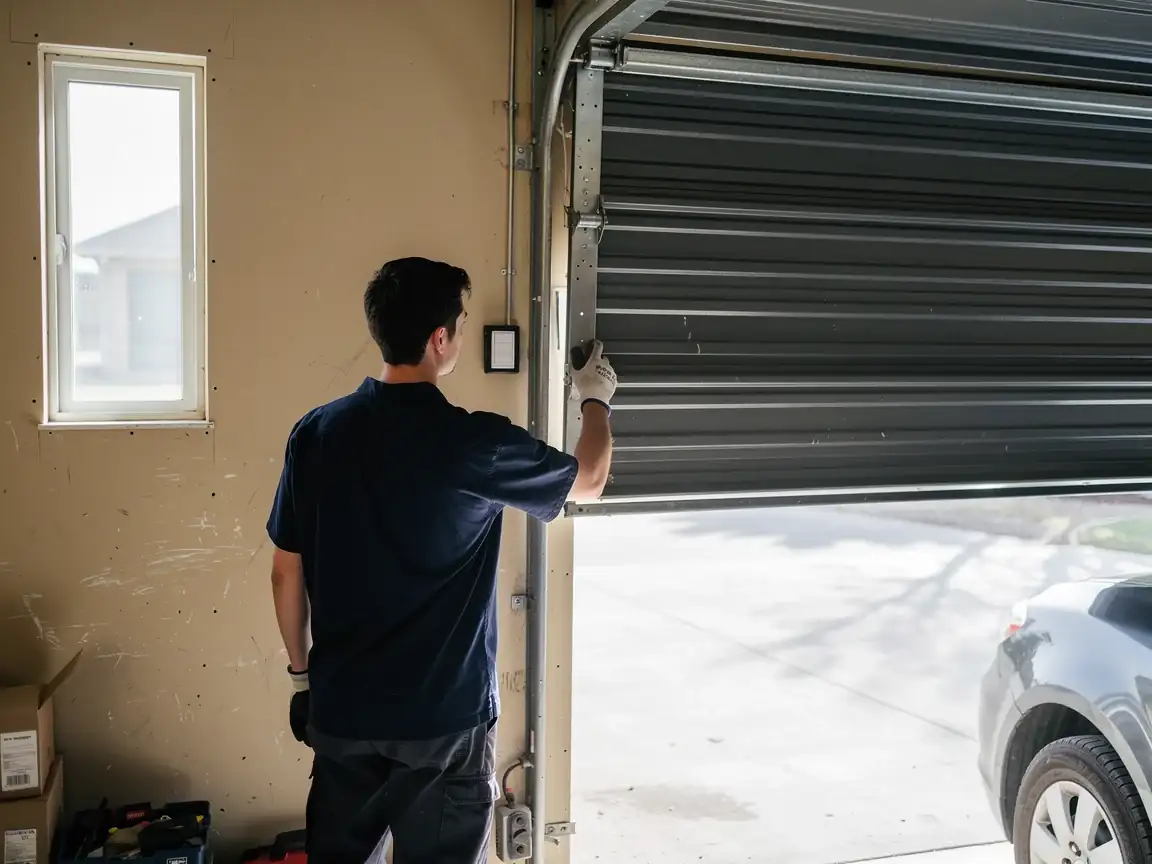
Sometimes it's the safety reverse: the door starts down, hits something it shouldn't, and goes back up, or it won't close at all and the wall console blinks. That's the photo-eye sensors, usually dirty, knocked out of alignment, or fooled by cold-weather condensation on the lens. Other times the opener just hums without moving anything - a capacitor going out, which is common on units that have run through a decade or more of winters.
If your opener is making noise it didn't used to make, grinding or clicking on the way up, that's worth a call before it strands the door halfway open. These symptoms rarely fix themselves, and waiting usually means the part fails completely instead of partially.
What Is on the Truck
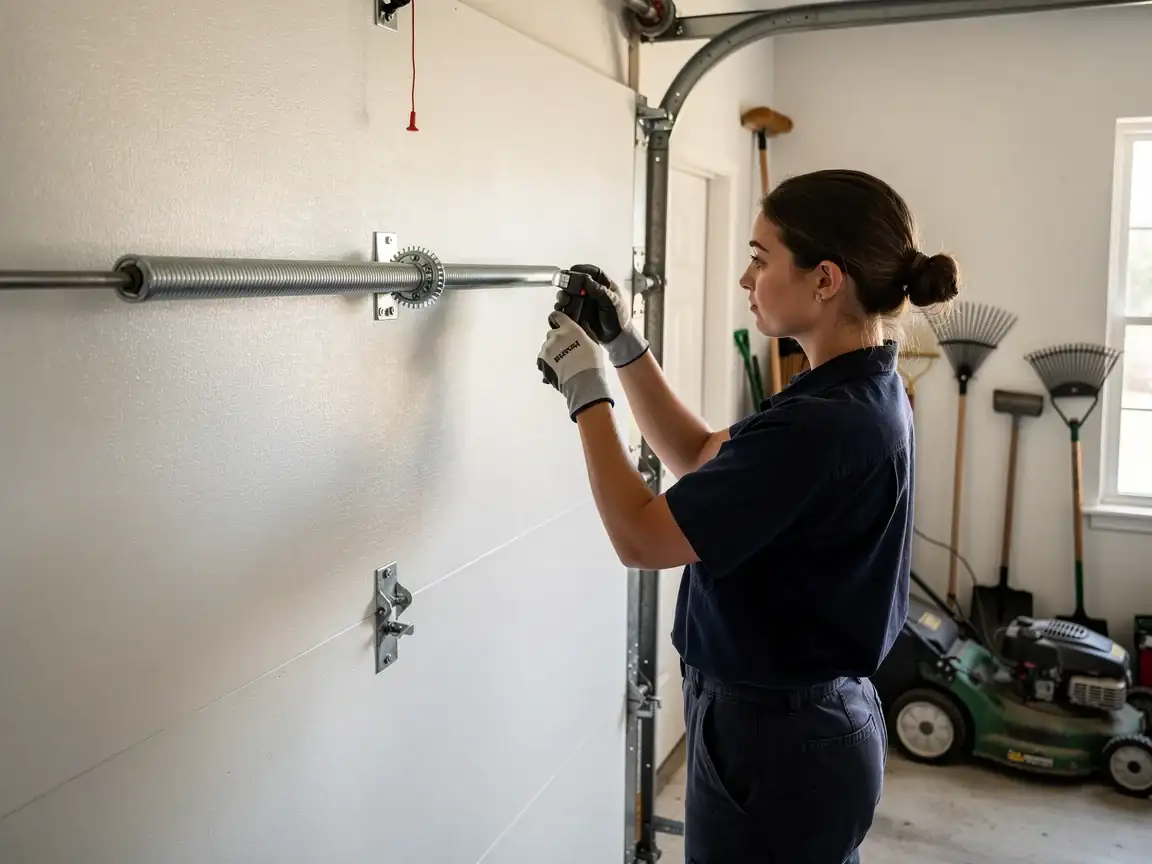
For opener calls we carry drive gears and sprocket kits for chain and belt units
Replacement logic boards for the common drive models still running in homes from the 80s and 90s building wave, photo-eye sensor pairs, wall console units, and capacitors sized for residential 1/2 and 3/4 horsepower motors. We also carry remotes and keypads to match most existing systems without having to replace the whole unit.
What we don't always have on the truck is a board for a long-discontinued model
Some manufacturers stopped making parts for units over 20 years old, and in that case we'll tell you straight that replacement is the faster and often cheaper path rather than waiting on a special order.
- 20 years
We carry stock sized for this service area
Cornelius, Davidson, Westport, Lowesville, Lake Norman of Catawba, Denver, Enochville, and the rest of the towns within a short drive, so most opener repairs get done in one visit rather than a return trip for parts.