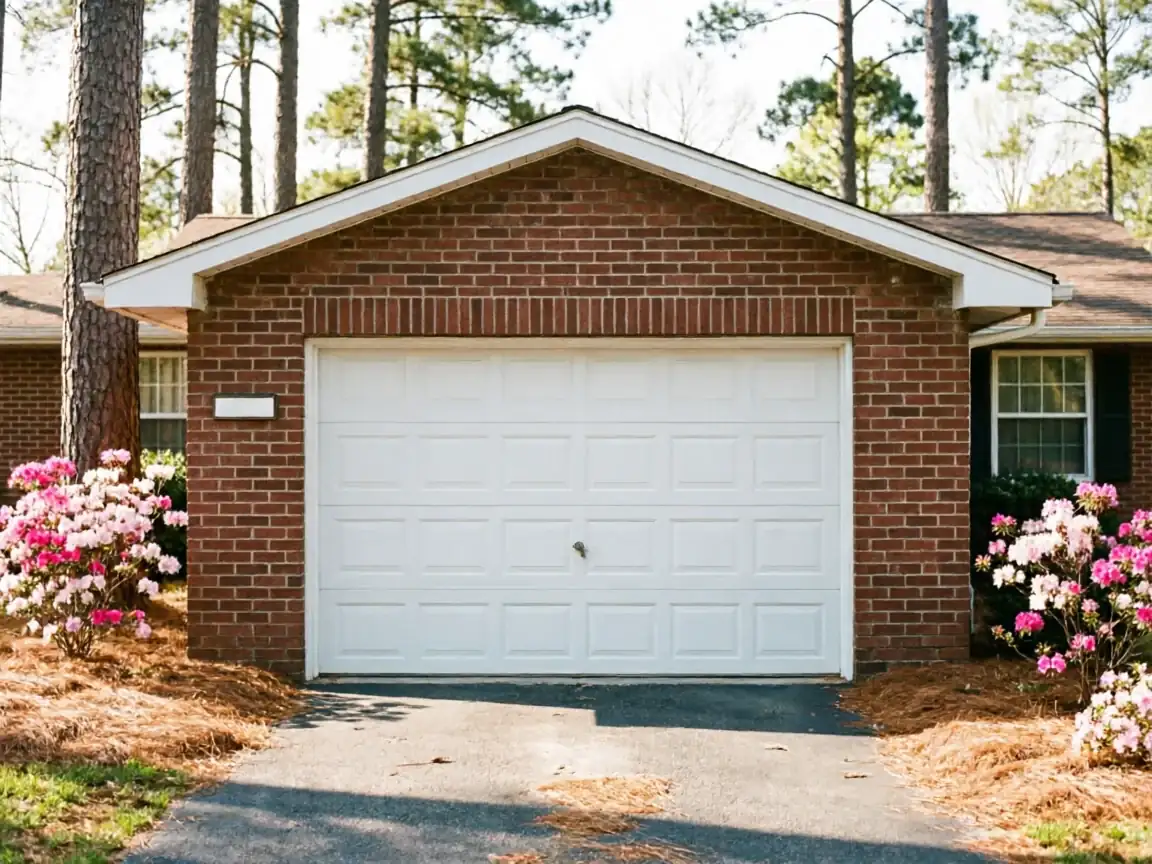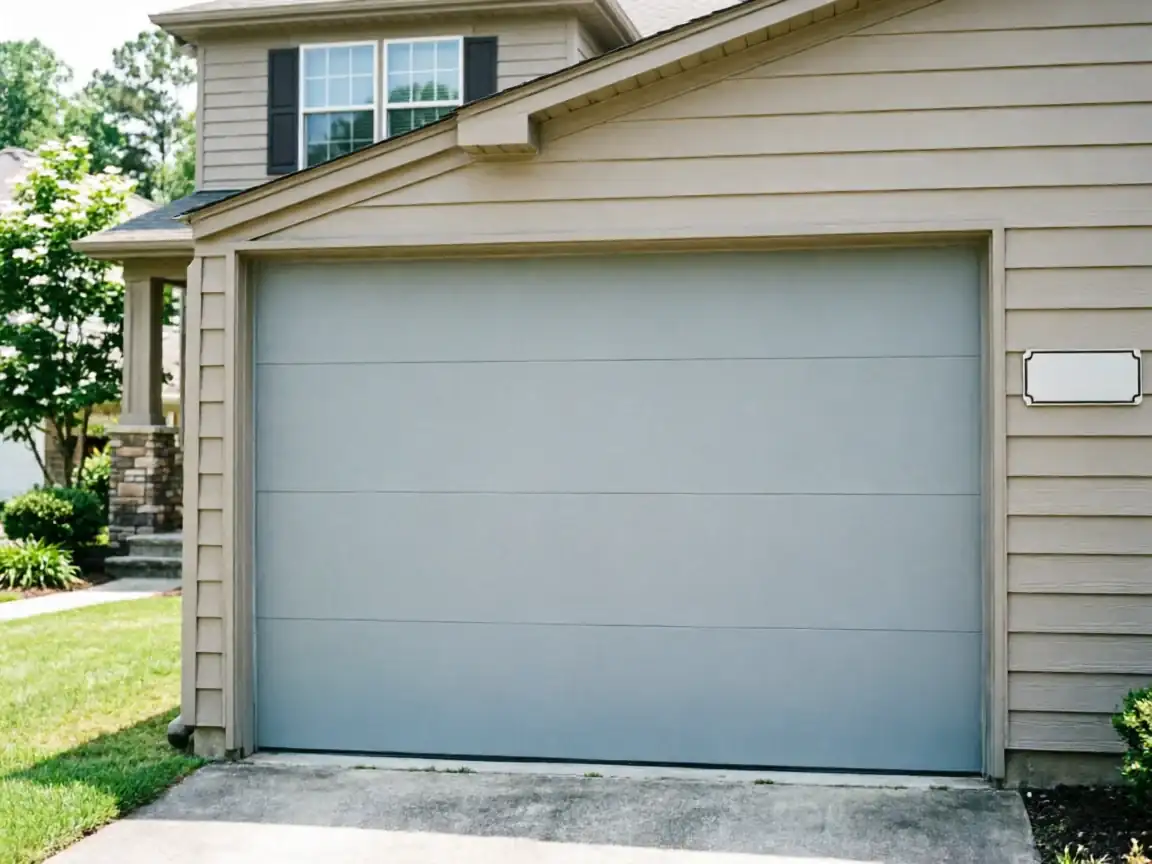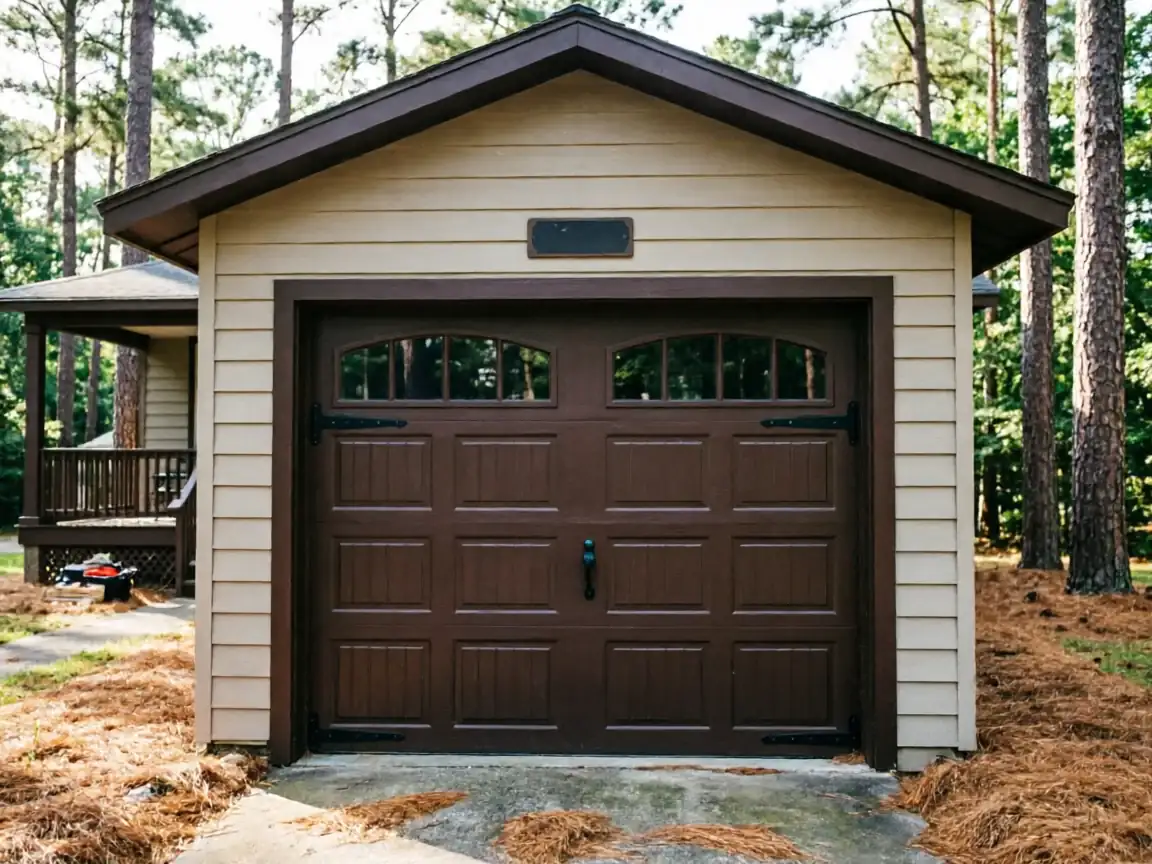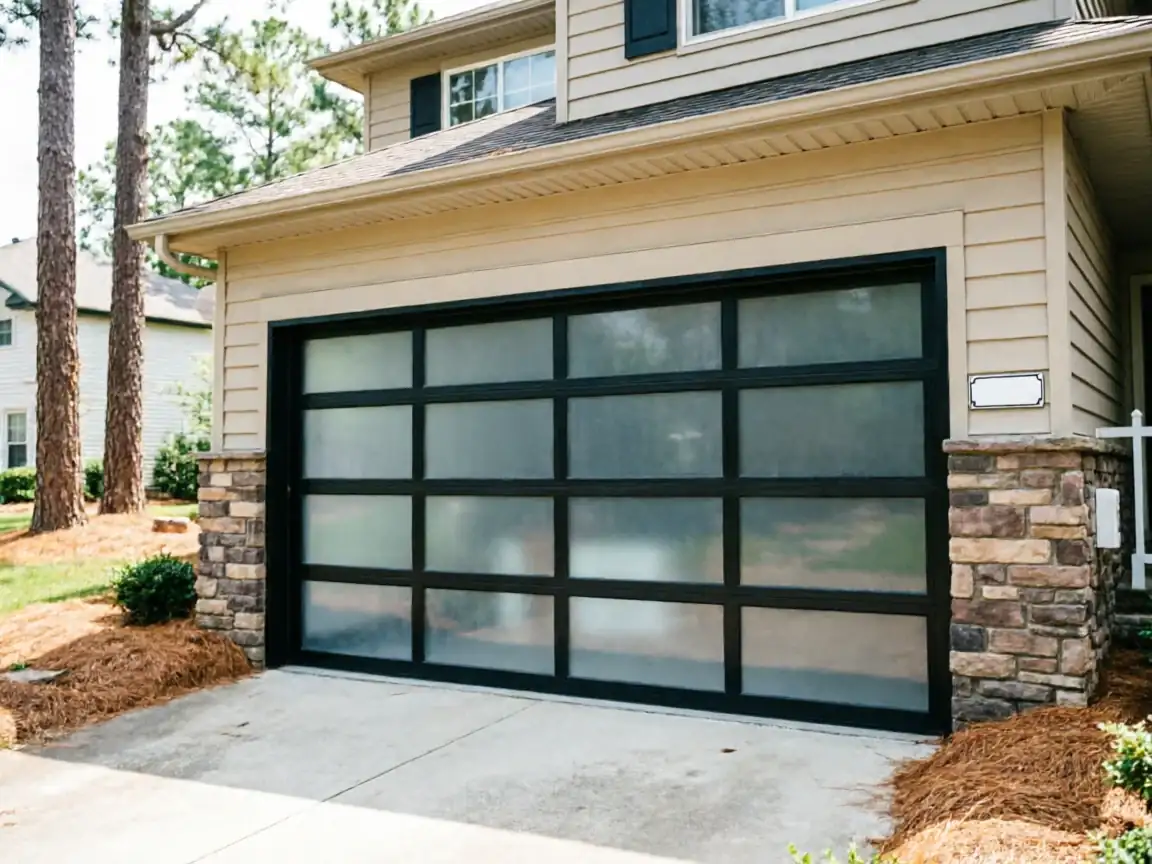
Why It Happens Here
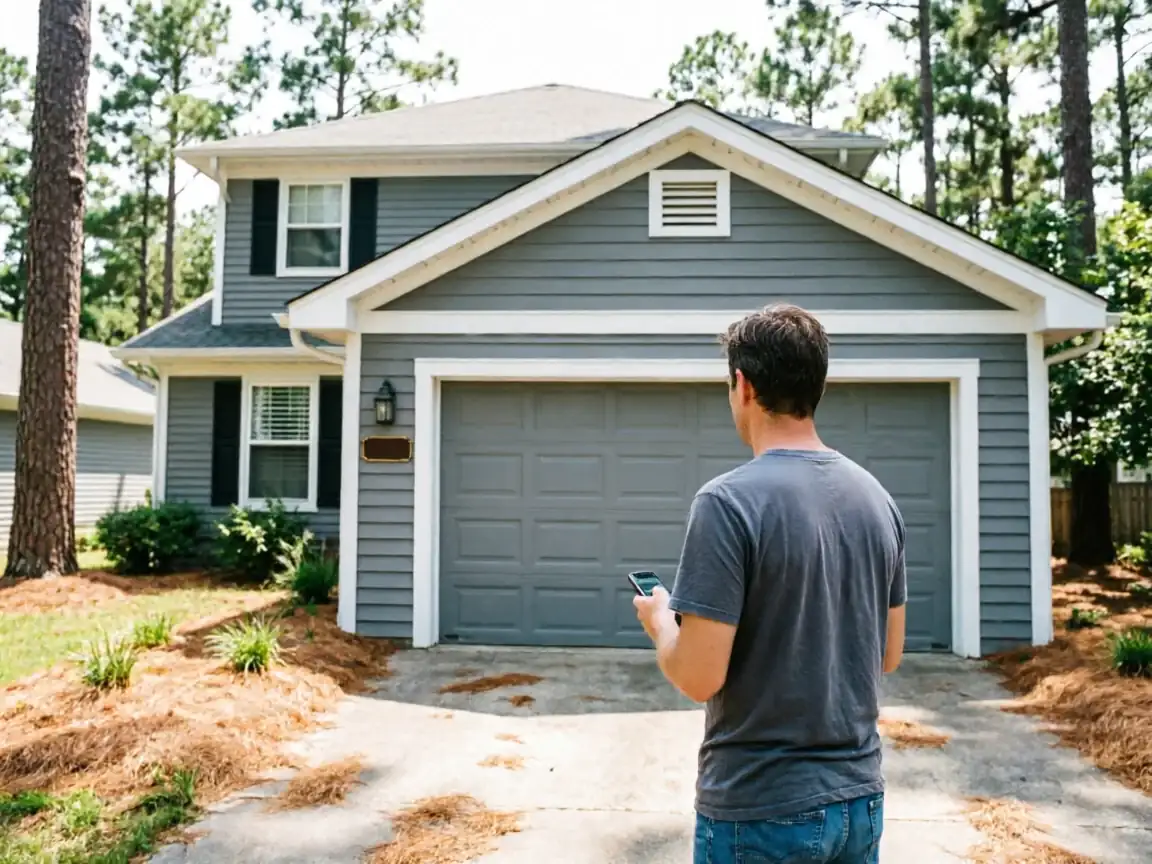
Most of the housing around Cornelius went up between 1959 and 2011
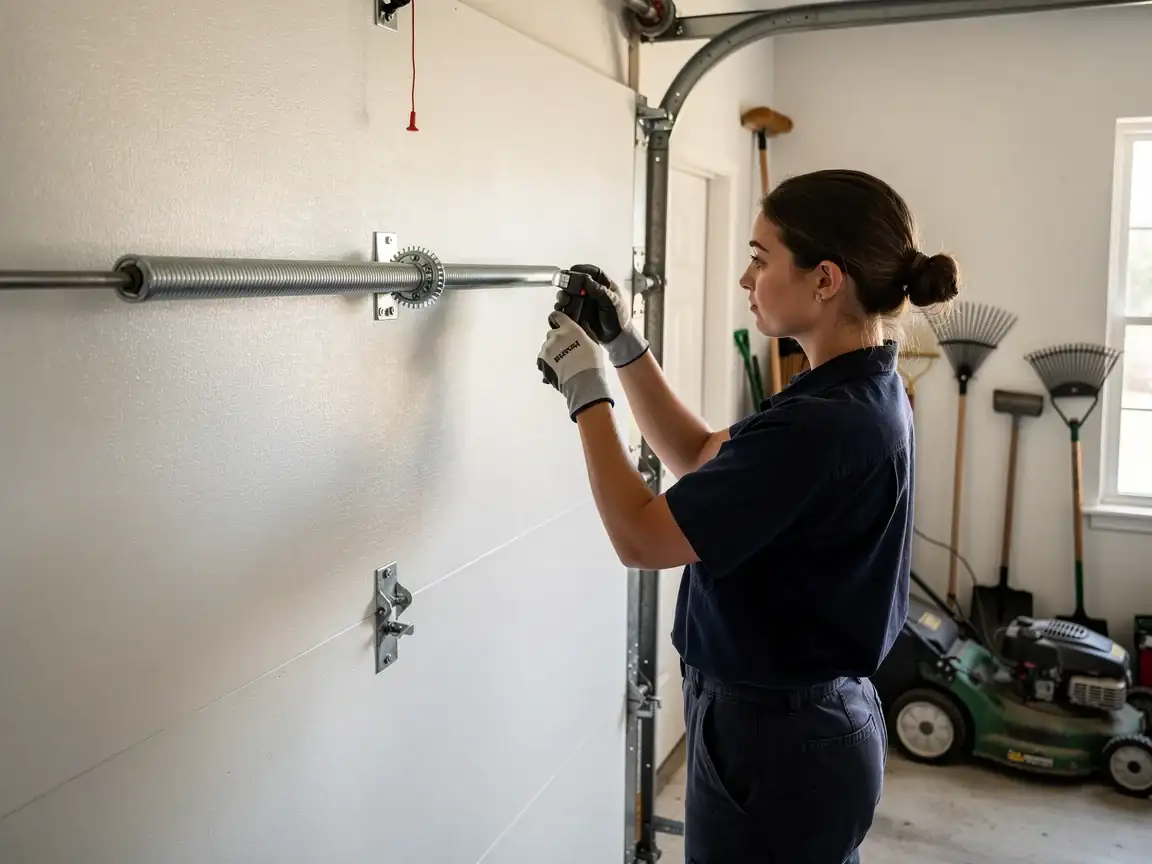
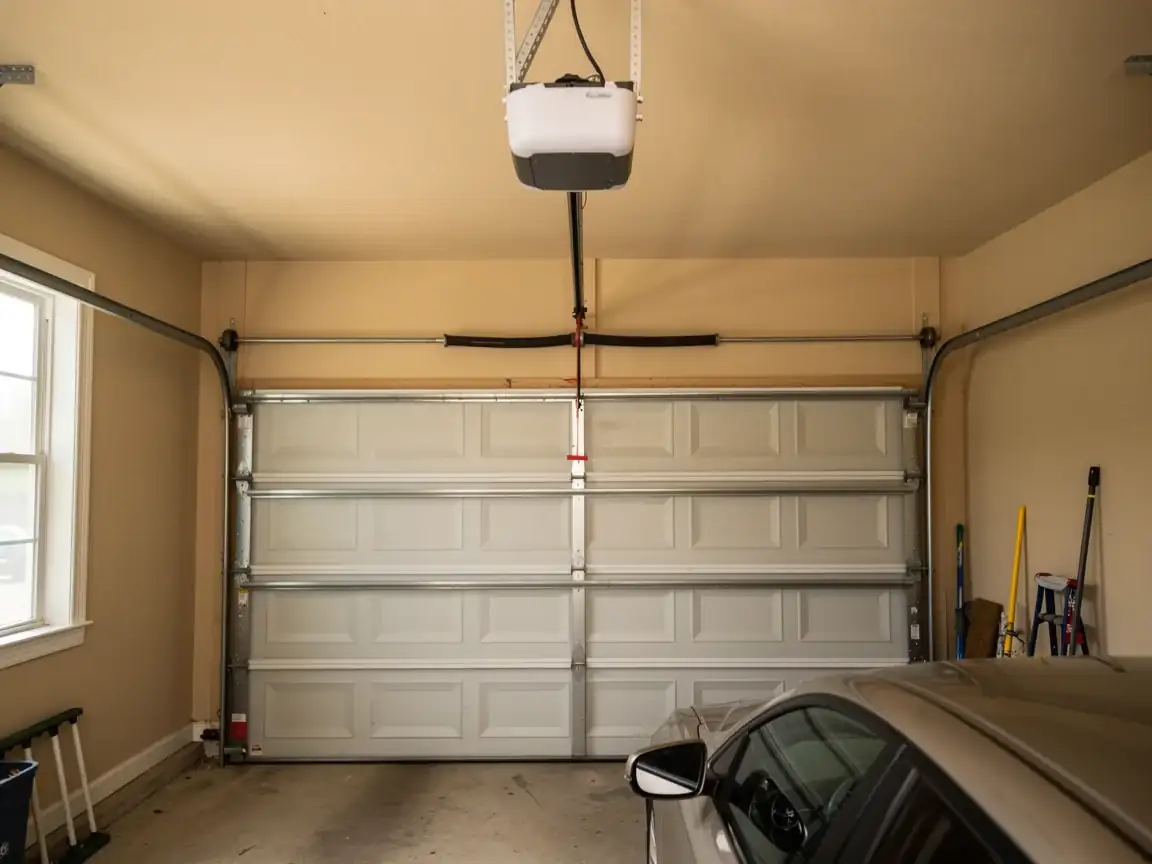
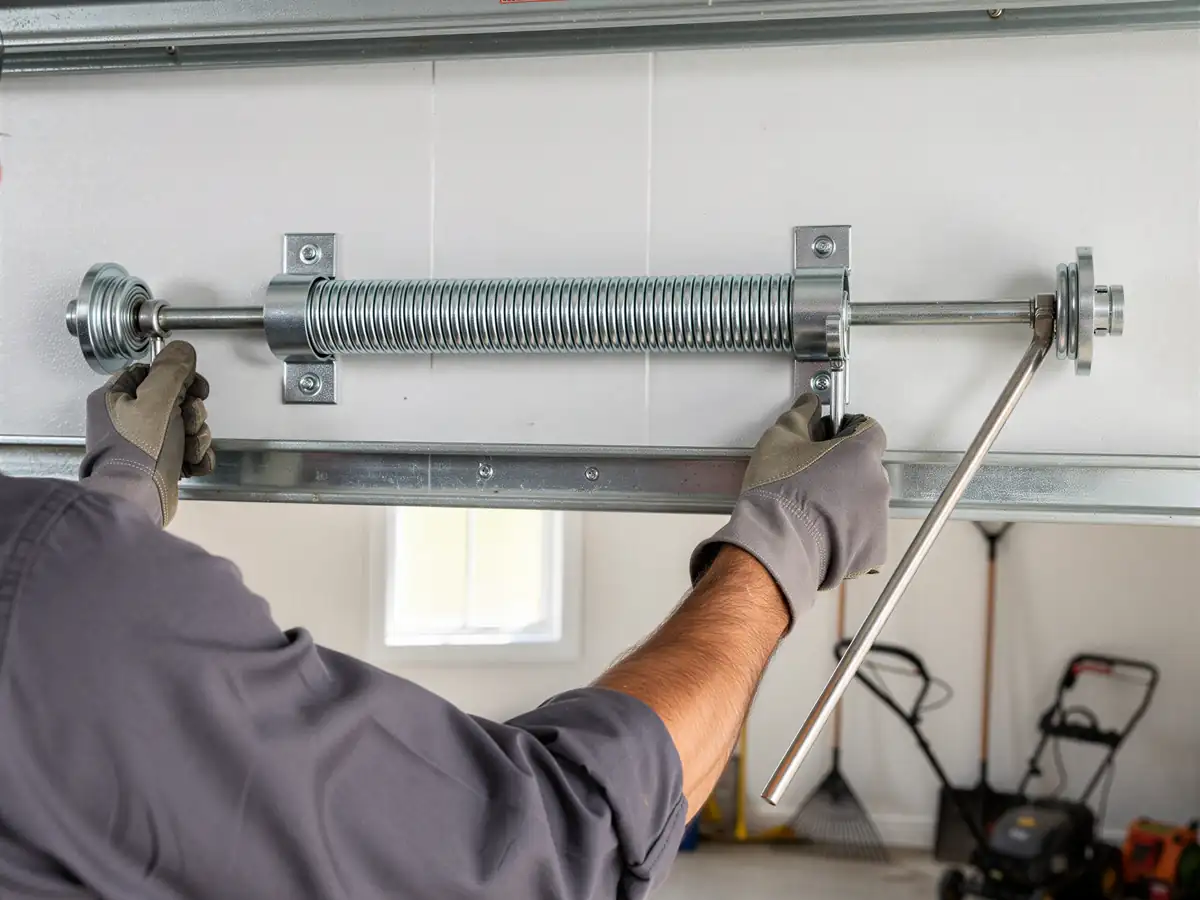
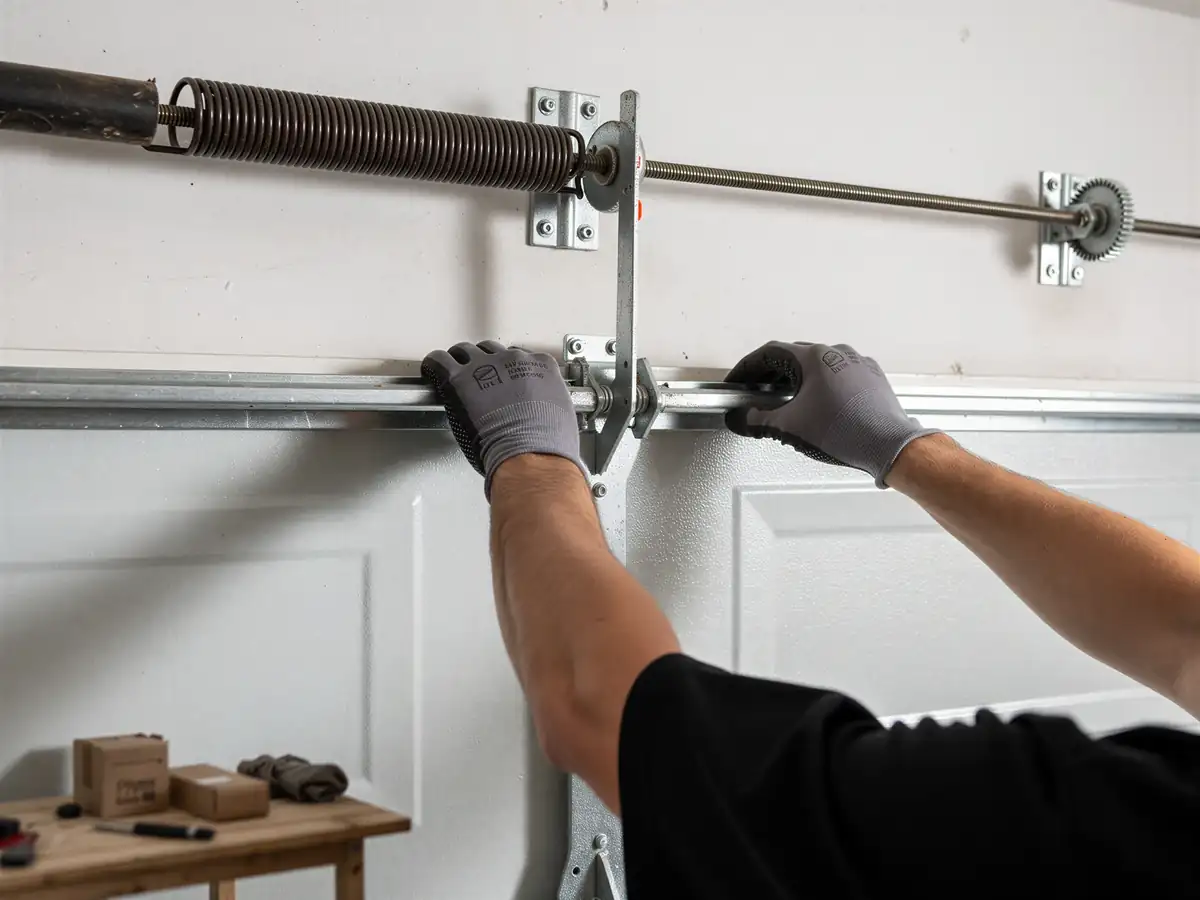
With the median build year sitting at 1998. That means a lot of garages still have the original opener and torsion spring setup that came with the house, and those parts are rated for a service life that's running out right about now across the 1980s and 90s stock that makes up the bulk of the 18 named areas we work in.
Those builds came with steel tracks and openers sized for the cars of that era
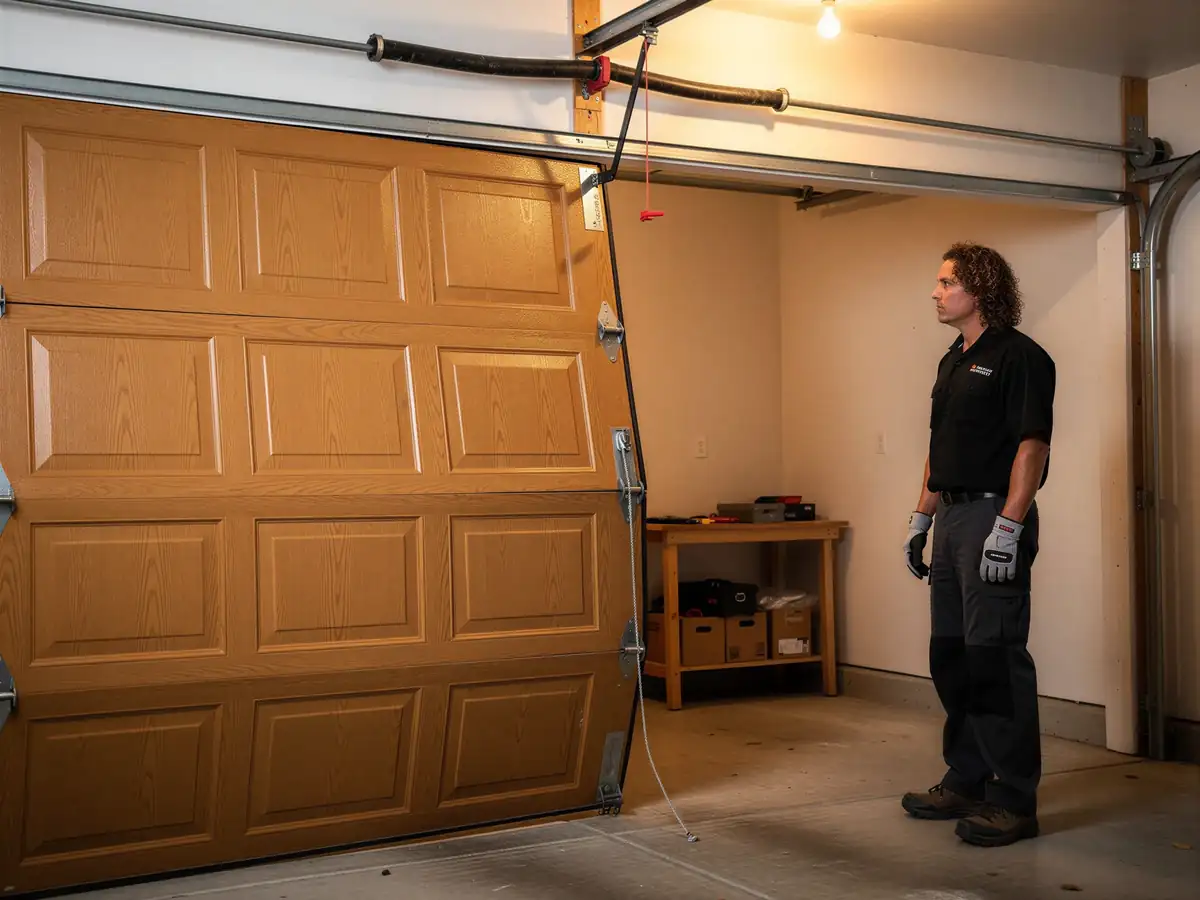
Not the taller SUVs and insulated upgrades owners want today. When a spring finally lets go or a track bends past straightening, replacement starts to make more sense than another patch repair.
Cornelius sits in a moderate cold climate band, which matters more than people expect
A door without real weatherstripping and an insulated panel lets cold air sit against whatever's on the other side of that garage wall - laundry room, workshop, sometimes a finished room. On a house from the late 90s, the gasket and panel foam are usually long gone, and that's often the actual reason someone calls us about a new door rather than a fixed one.
What It Costs
We don't post a flat number here because it isn't honest - door width, track type, insulation level, and whether the opener gets replaced too all move the number, and we'd rather measure your opening than guess at it. What we can tell you is how the decision usually breaks down on a house in this area.
A single door replacement costs less than a double, obviously, but a double door carries two torsion springs instead of one, and that's where a quote climbs. Insulated steel panels cost more up front than uninstalled thin-panel doors, but given the cold-moderate winters here, most owners replacing a door from the 80s or 90s stock choose the insulated option rather than matching the old uninsulated panel they're removing.
Opener age matters too. If your opener is original to a house near that 1998 median build year, we'll usually tell you straight that pairing a new door with a 25-year-old opener is a short-term fix, not a real one. We'd rather say that up front than sell you a door and have the opener fail a season later.
The Symptom
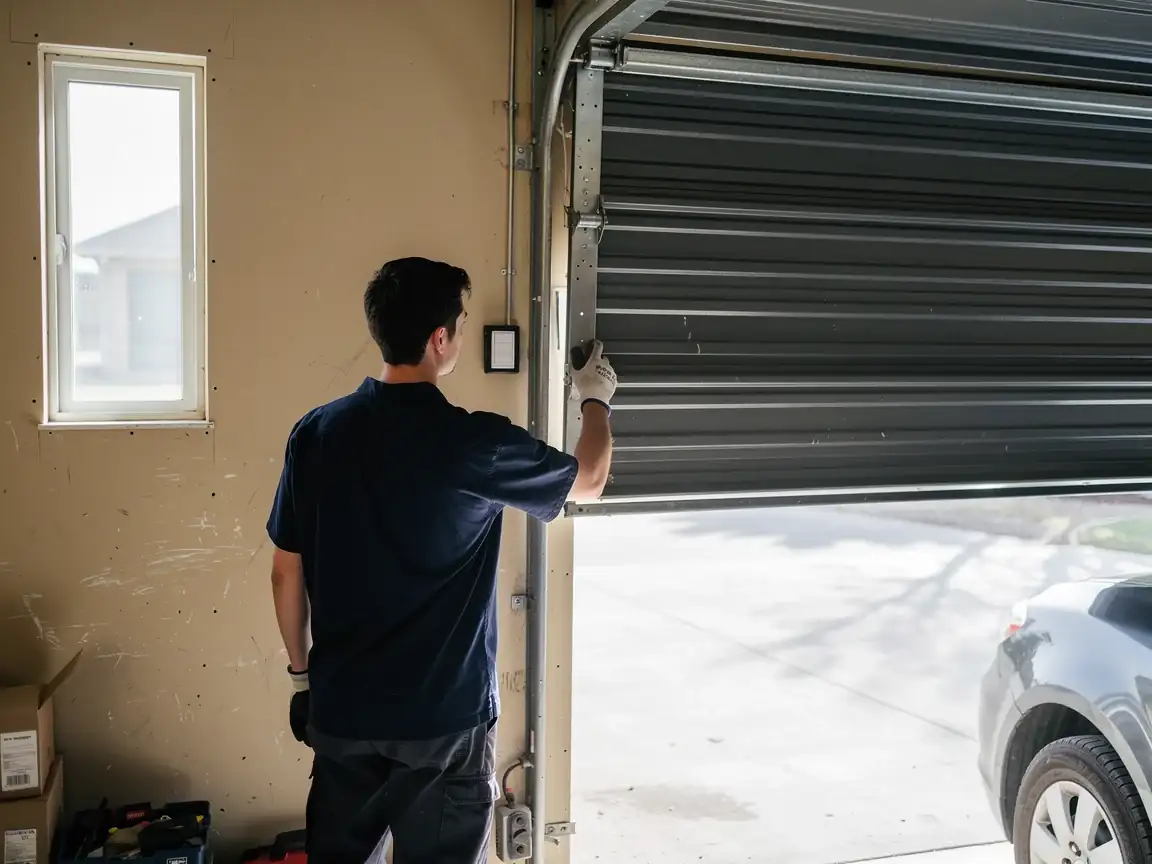
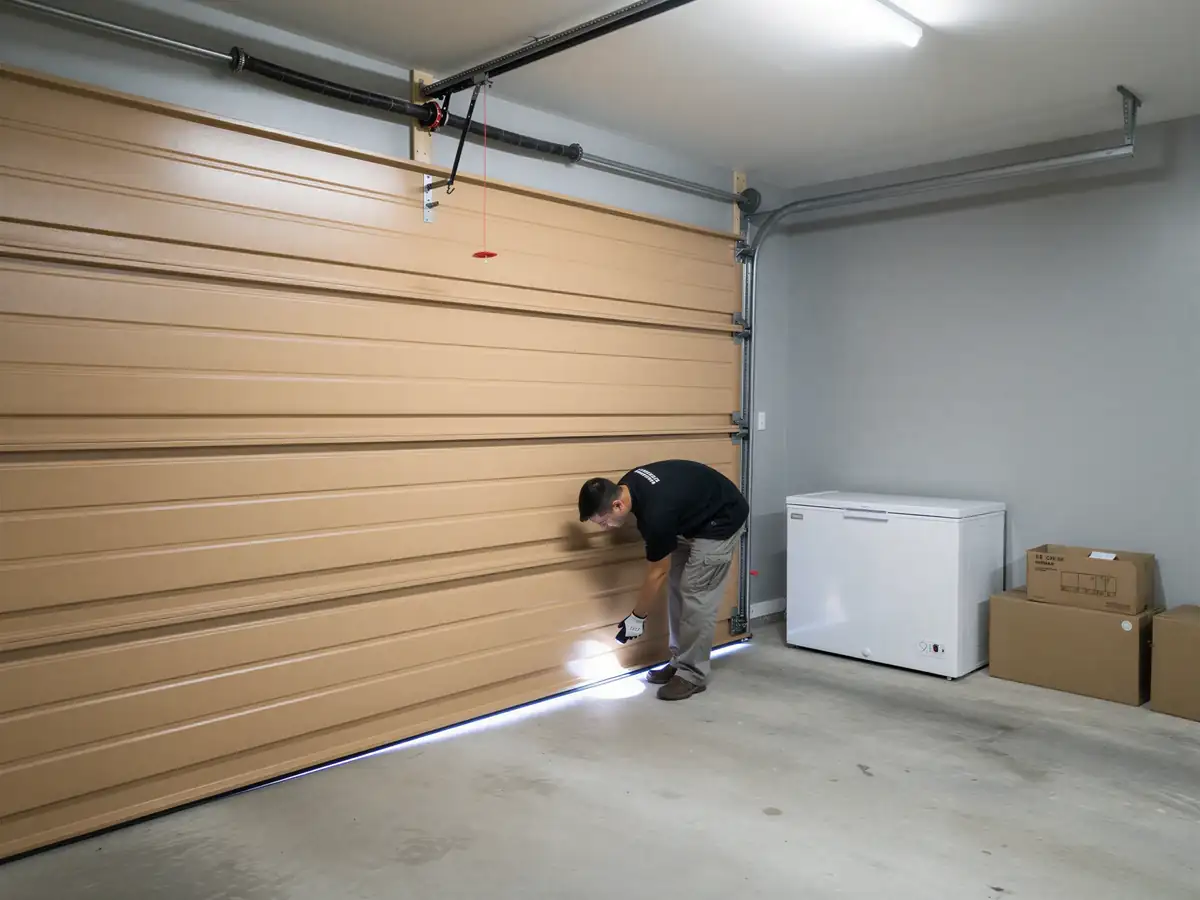
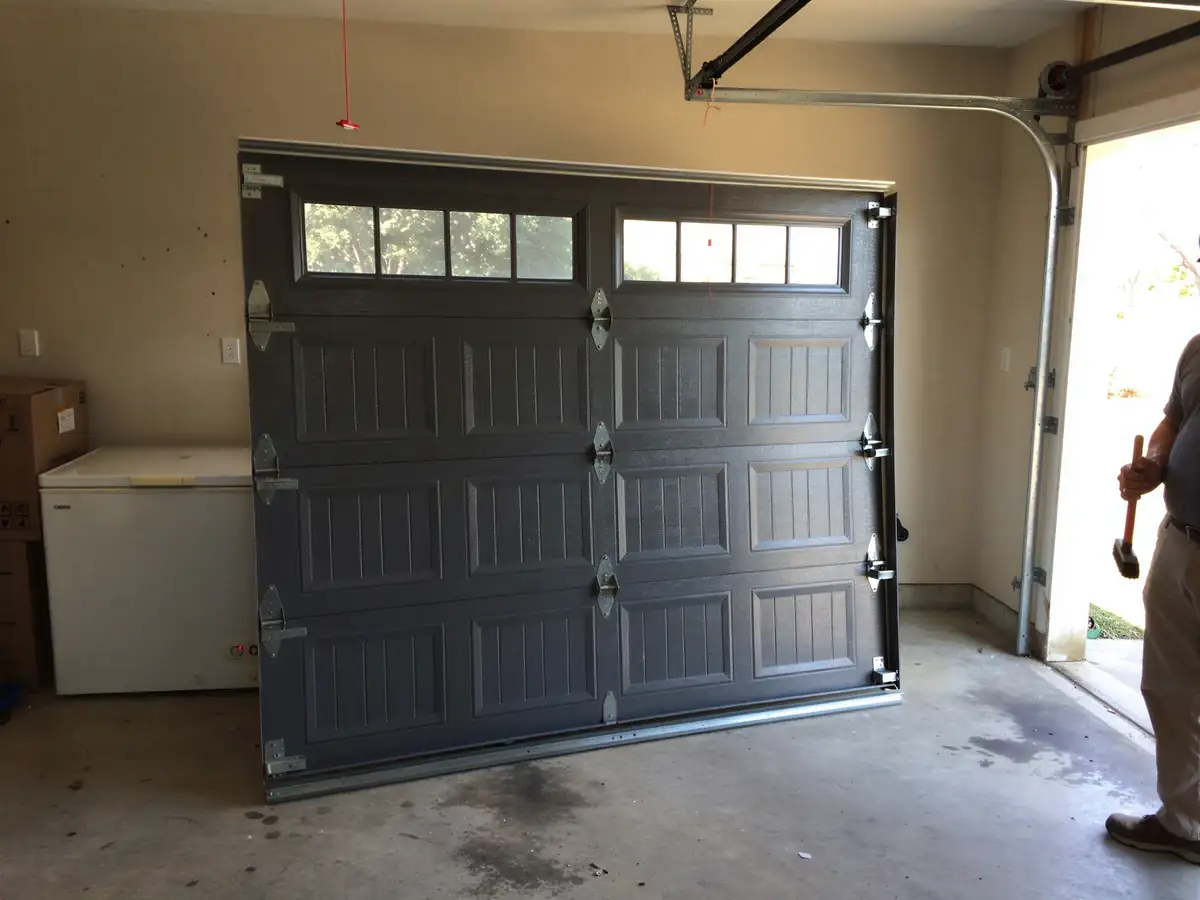
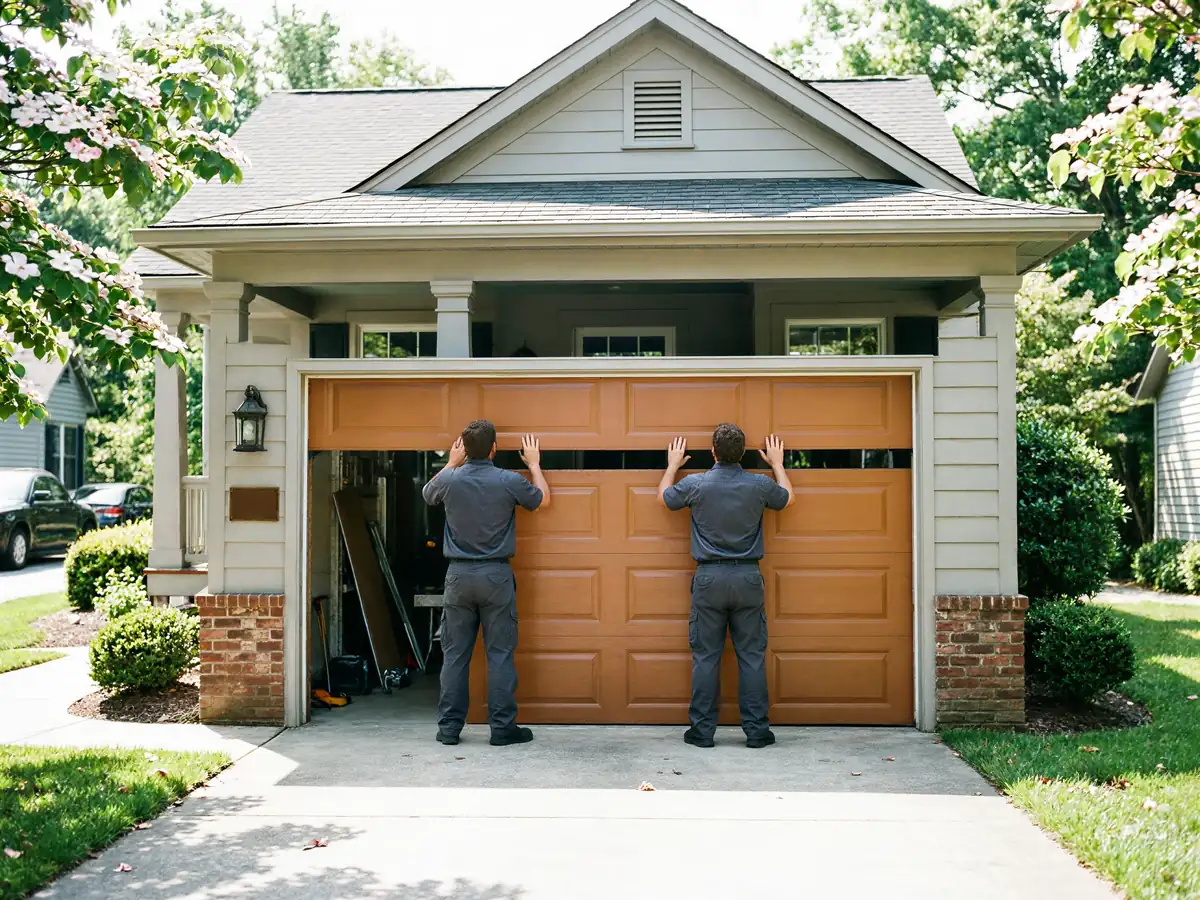
The call we get most from this area isn't a door that won't open at all - it's a door that still works but shows it's done. Panels sagging at the bottom corner. Rollers grinding instead of rolling. A visible gap of daylight along the bottom seal that wasn't there a few winters back.
On houses built in the 1980s and 90s window that dominates this service area, that gap usually isn't a installation defect - it's thirty-plus years of foam and rubber breaking down, plus a steel panel that's flexed enough times to bow. Add a cold-moderate climate and that gap turns into a cold draft along the garage floor every winter morning, which is usually the moment an owner decides to replace instead of patch.
If your door still opens and closes square and the track isn't bent, that's a repair call, not a replacement one, and we'll tell you that on-site rather than talk you into a new door you don't need yet.
What Is on the Truck
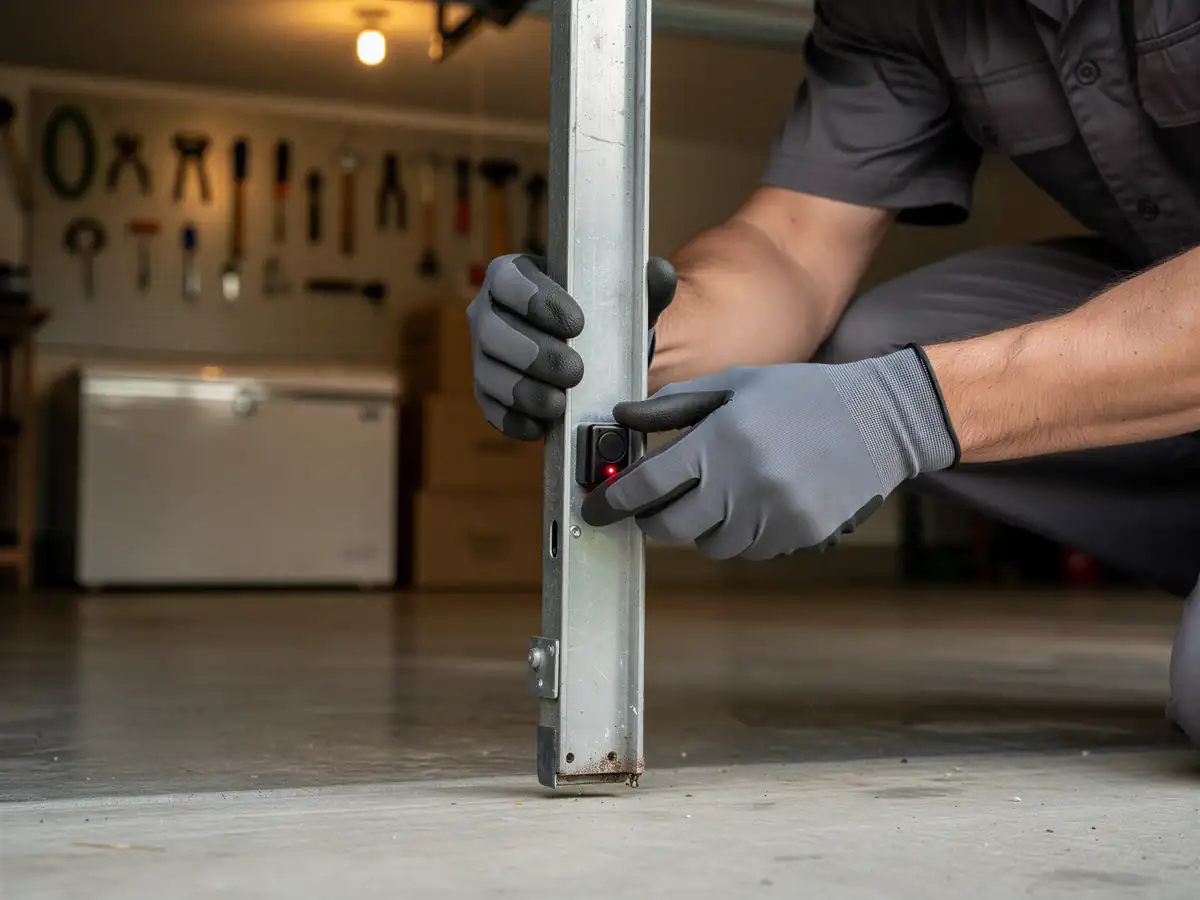
For an installation call, we carry torsion spring sets sized for both single and double openings, galvanized track sections
And insulated steel panel sections in the widths most common across this area's 1980s and 90s housing stock. We also stock weatherstripping and bottom seal kits built for a moderate cold climate, since that's the gap that sends most of our replacement calls in the first place.
What we don't carry on every truck is a full custom-order door
If you want a specific wood-look panel or a non-standard width, that's a special order with its own lead time, and we'll say so rather than promise next-day on something we don't have in stock. For the standard steel insulated doors that fit most garages in this service area, we can usually install the same day we quote.