What the Fix Involves
Start with the money, because it changes the conversation here
Belmont's median household income runs $86,442 - about $10,000 above the $76,158 median across the rest of our territory. That matters for one reason: at that income level, the math on a new door usually favors replacement over another round of patch repairs, sooner than it would in a lower-income pocket of the same county.
The houses back that up
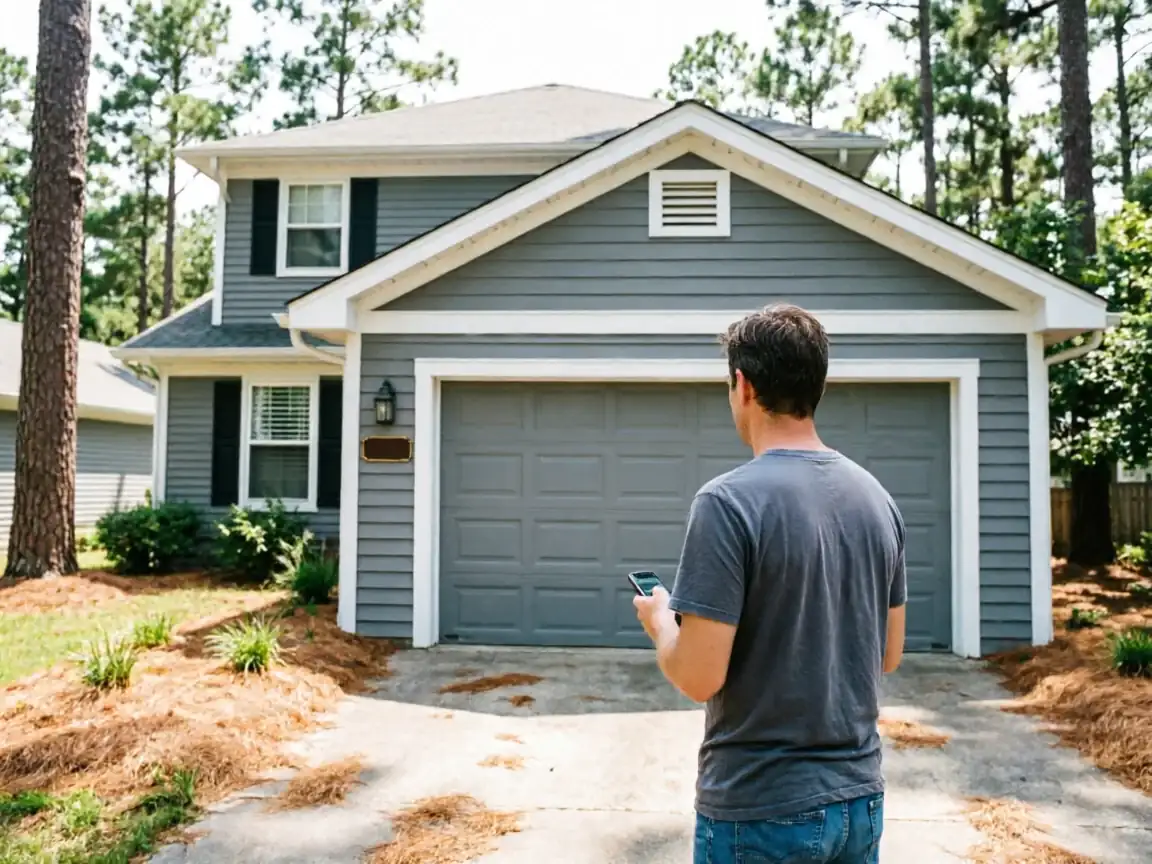
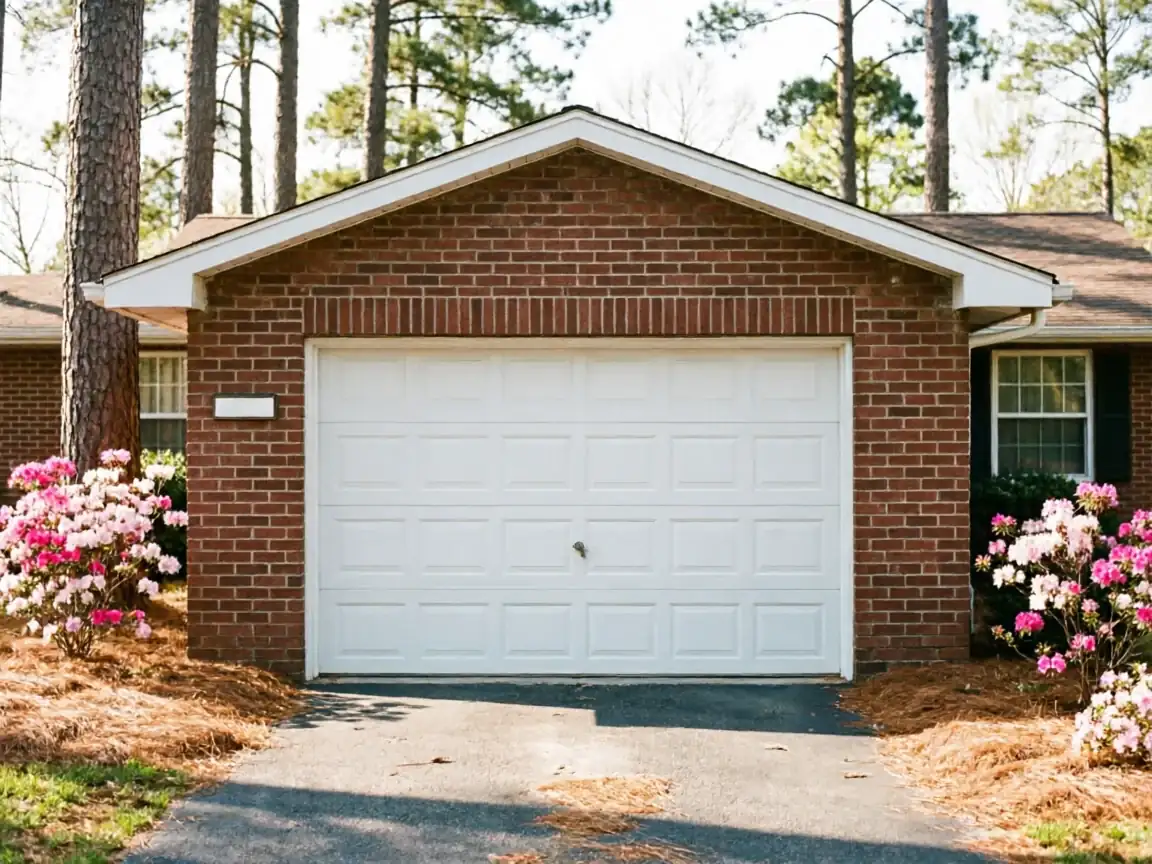
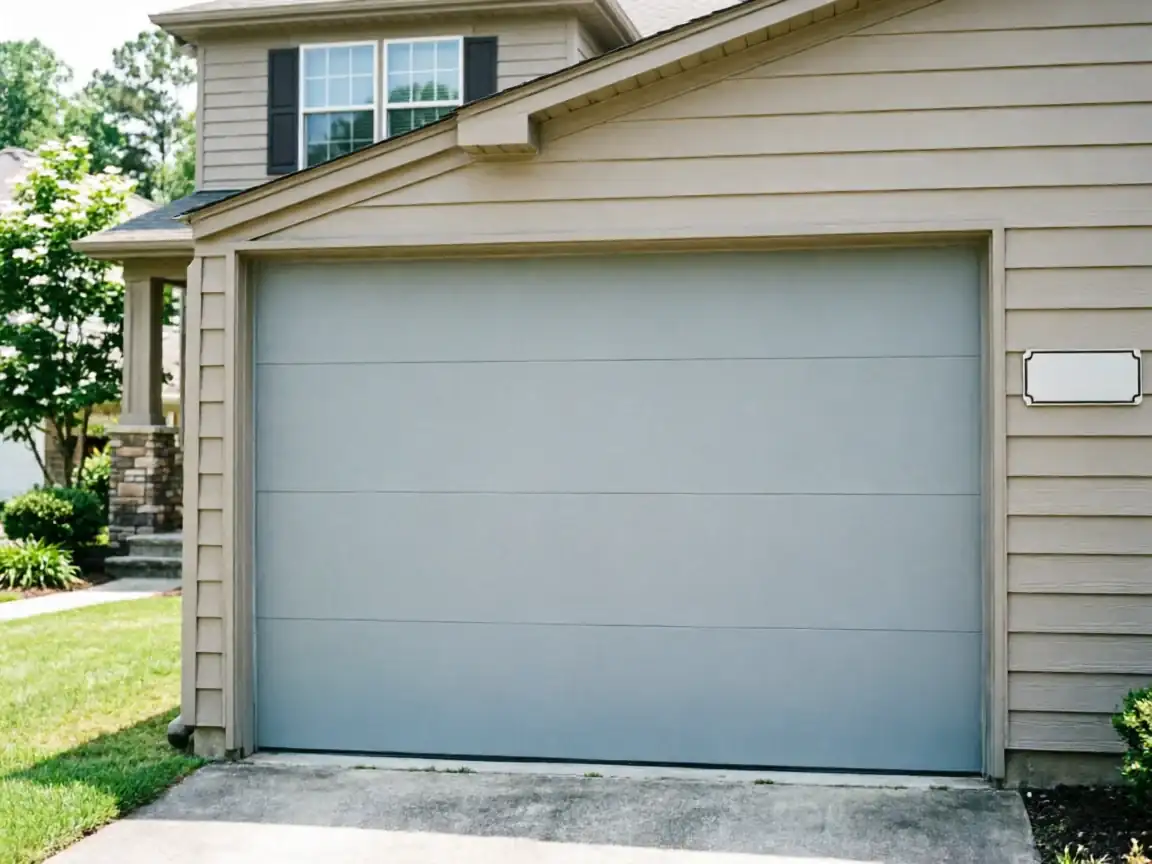
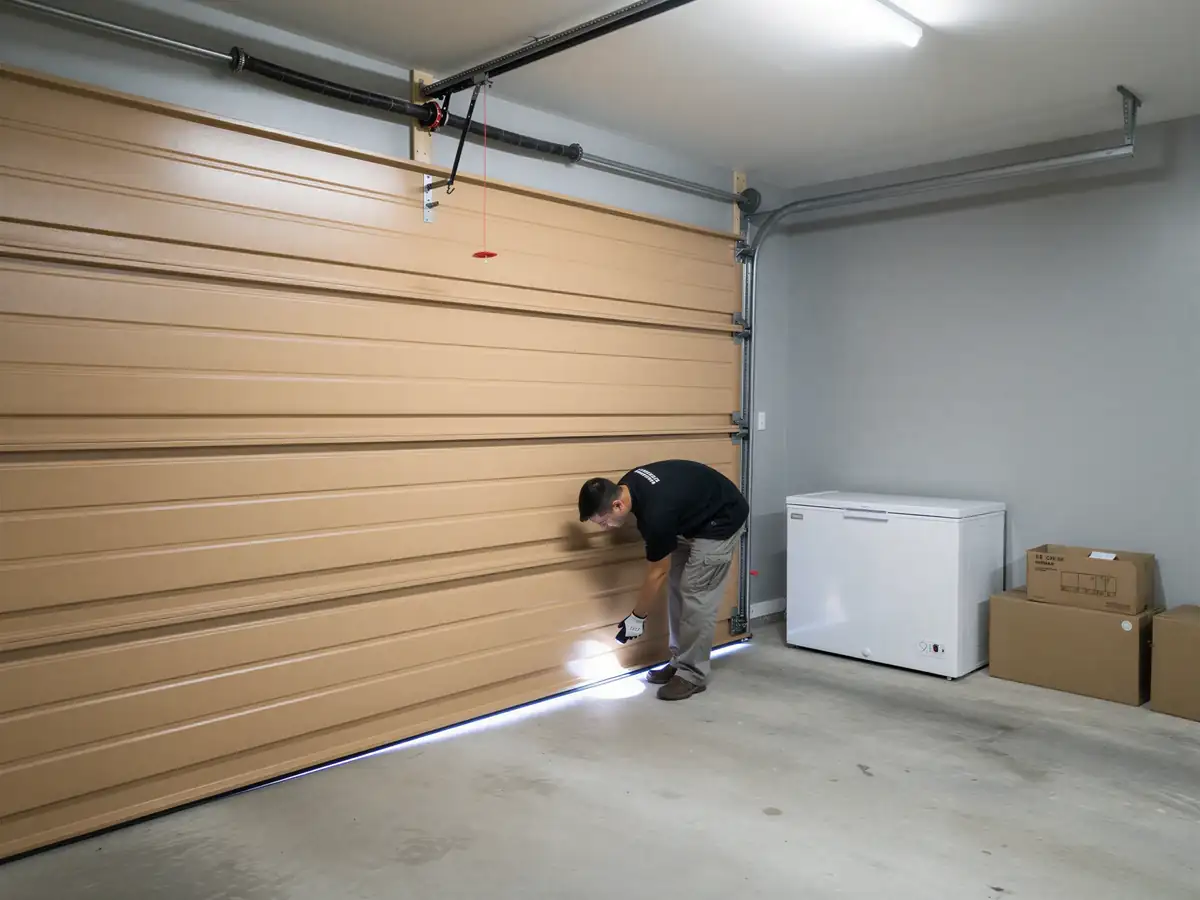
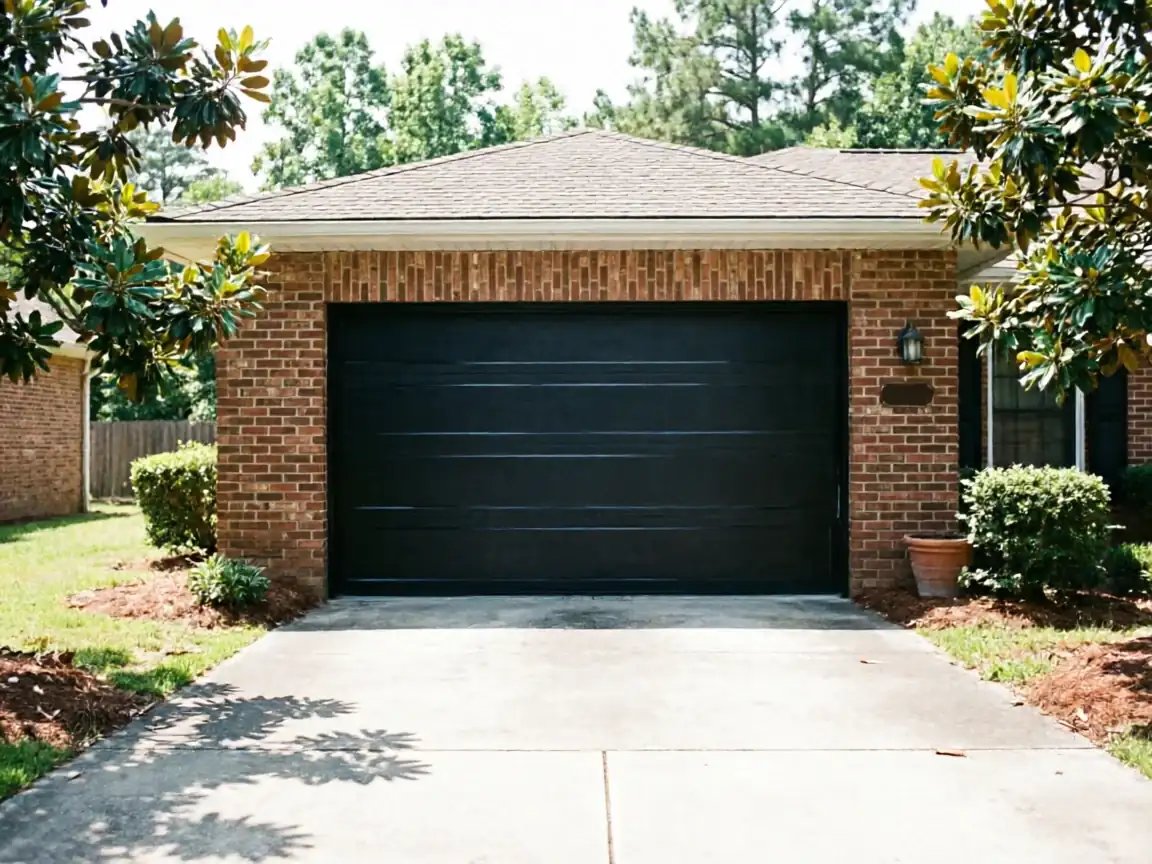
Most of Belmont went up in the 1980s and 90s, with the typical home now sitting around a 1998 build year - right in line with the broader pattern across our 18 service areas, but on the newer side of what we see day to day. That means steel sectional doors on extension or torsion springs, factory openers from the 90s or 2000s, and tracks that are mostly standard width. New installation here is rarely a fight with odd framing or ancient hardware - it's a straightforward swap of an aging door for one with better insulation and a quieter opener, on a house that was built to take it.
Can You Do This Yourself
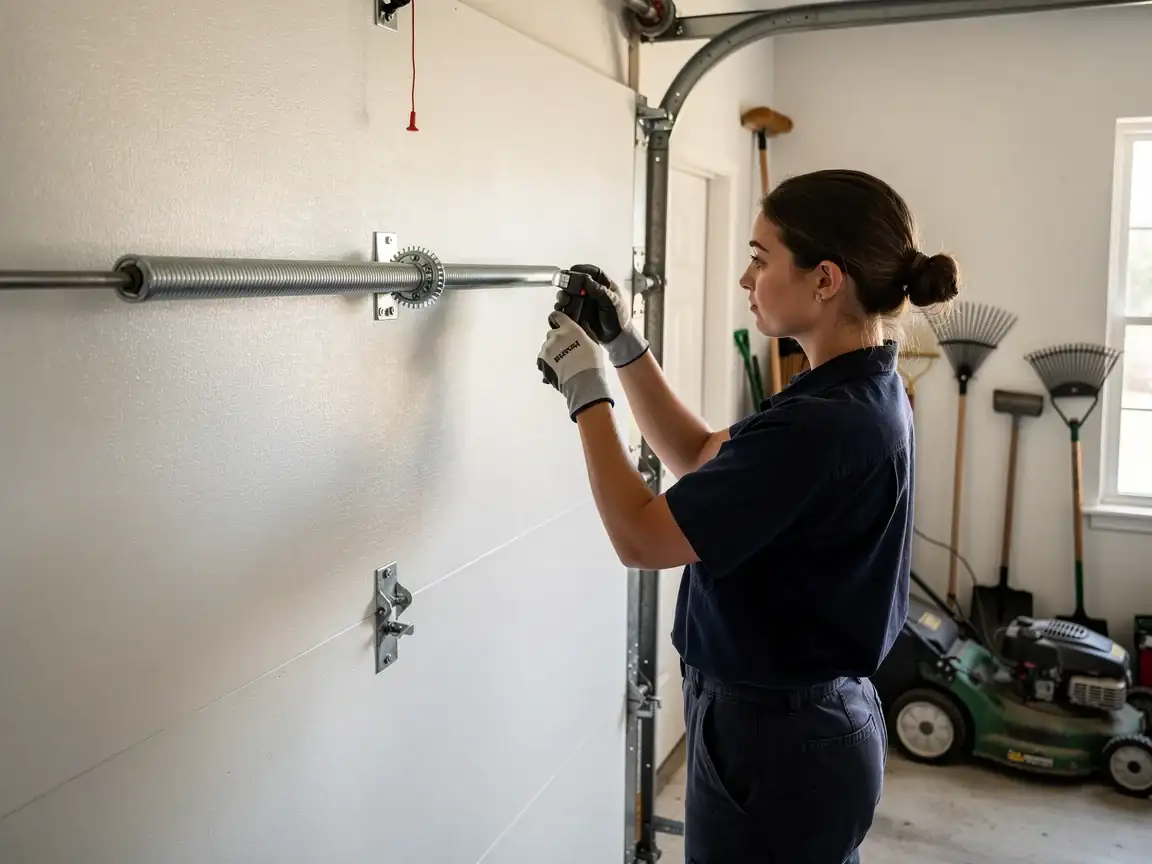
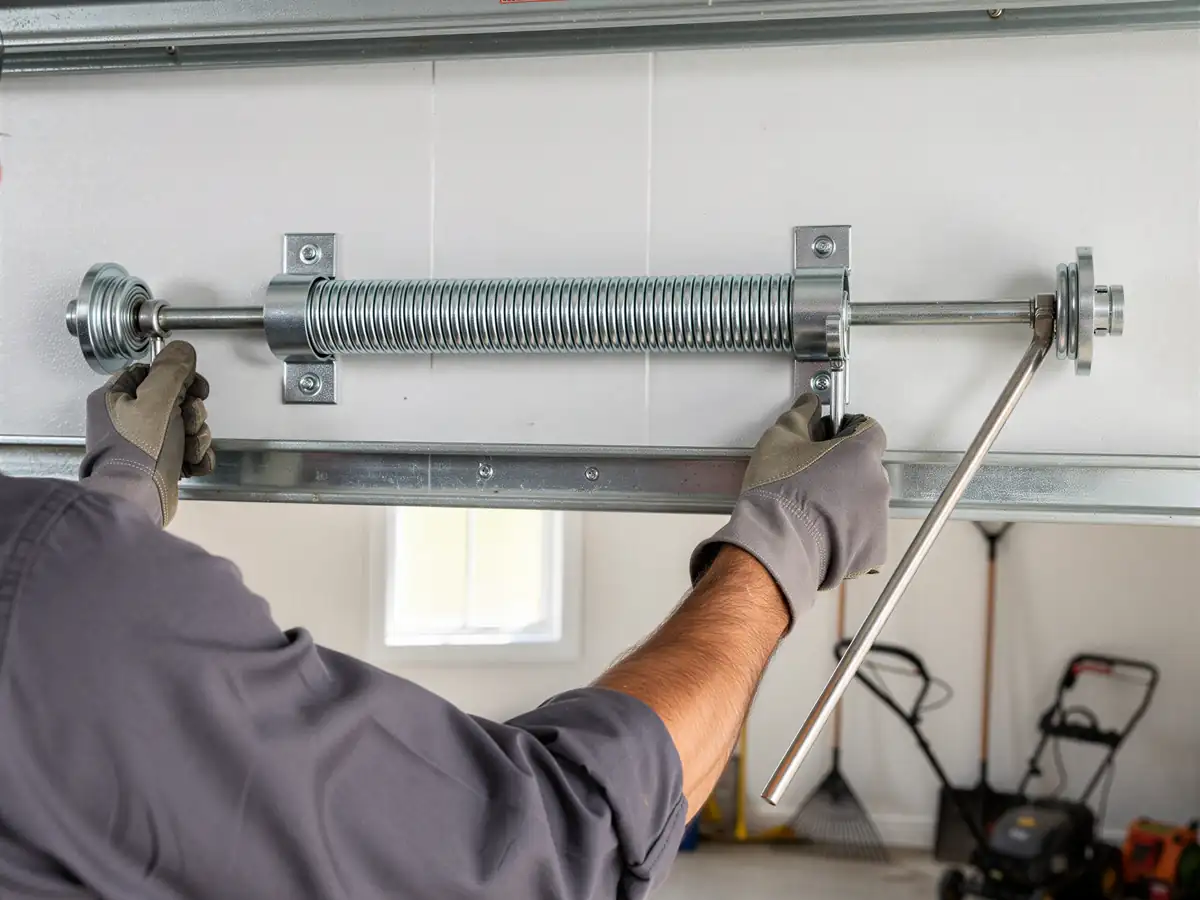
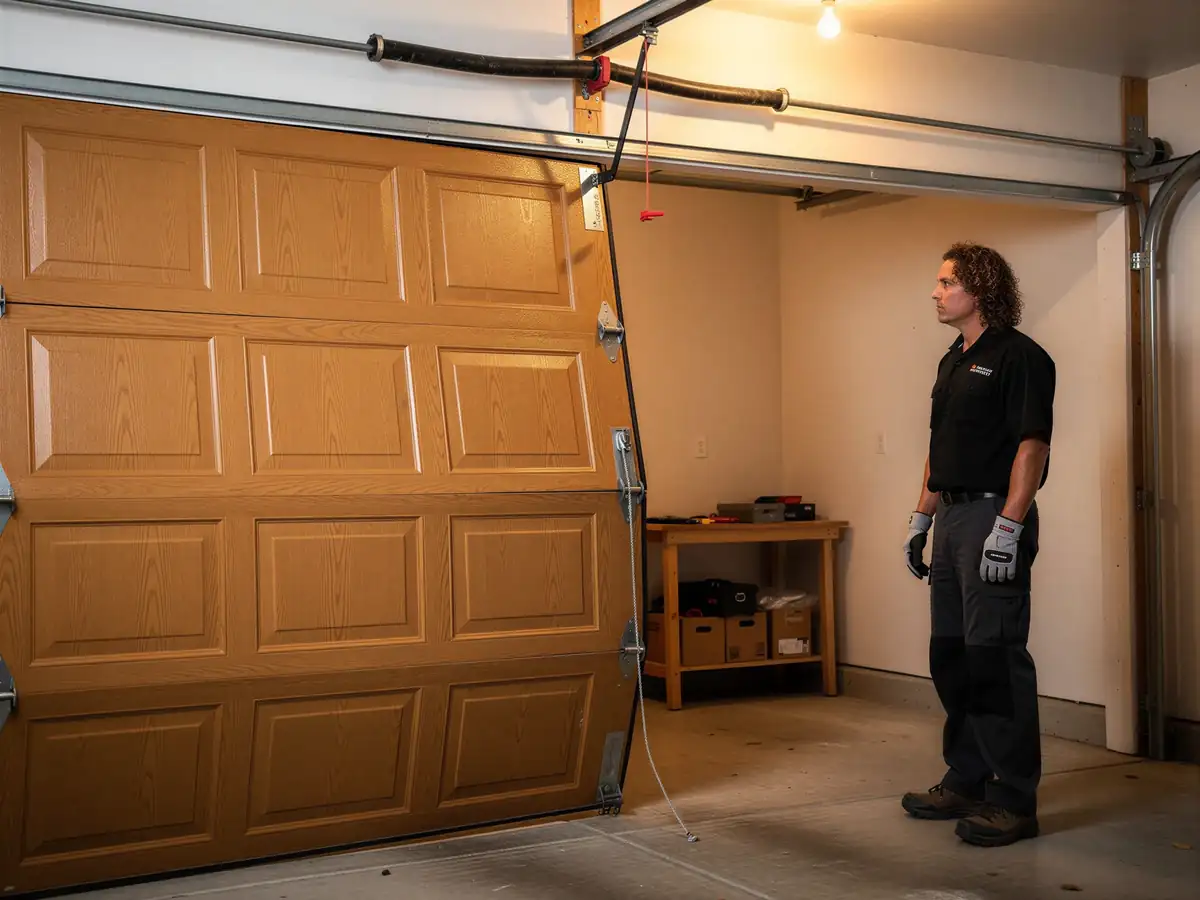
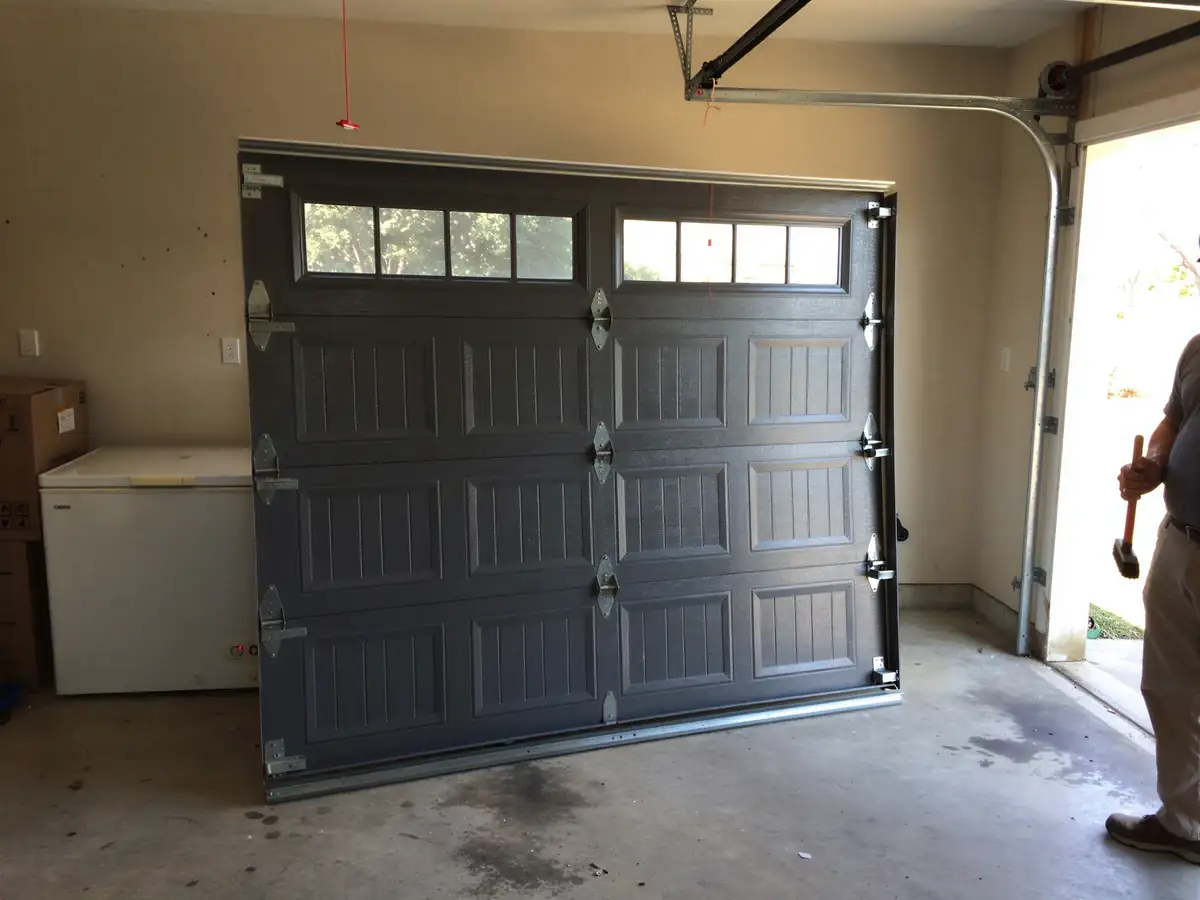
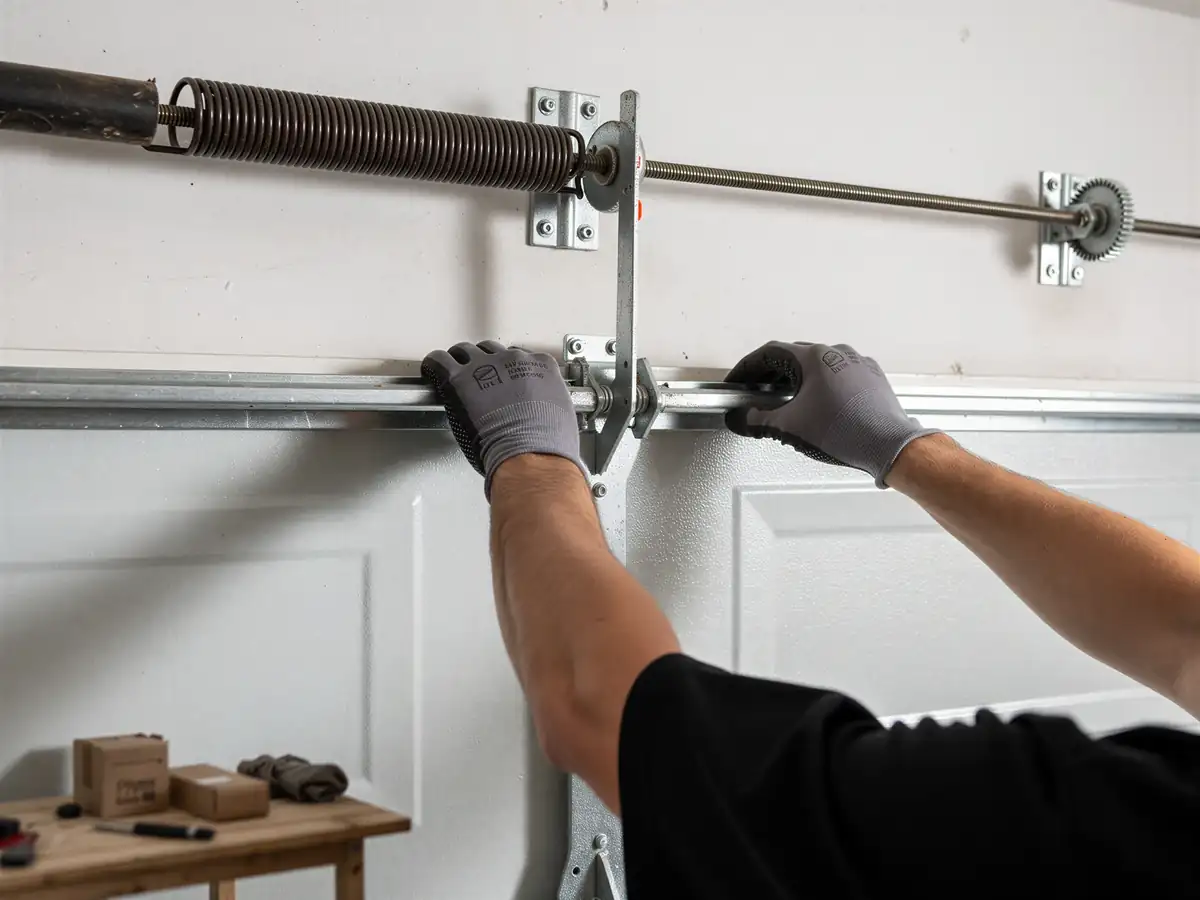
A garage door is a 150-to-400-pound panel held up by springs wound tight enough to break a wrist or worse if they let go wrong. We won't talk anyone out of swapping a broken roller or lubing a track - that's fine DIY territory. A full install is different: setting jamb brackets square, winding torsion springs to the right cycle count for the door weight, and balancing the opener's travel limits so it doesn't crush a bumper or a hand.
If you've done this before and own a winding bar, go ahead. If you haven't, the honest advice is to not learn on a spring under tension. That's the one limitation worth saying plainly: we don't talk people through spring work over the phone, because it's the single most common ER visit in this trade.
What Is on the Truck
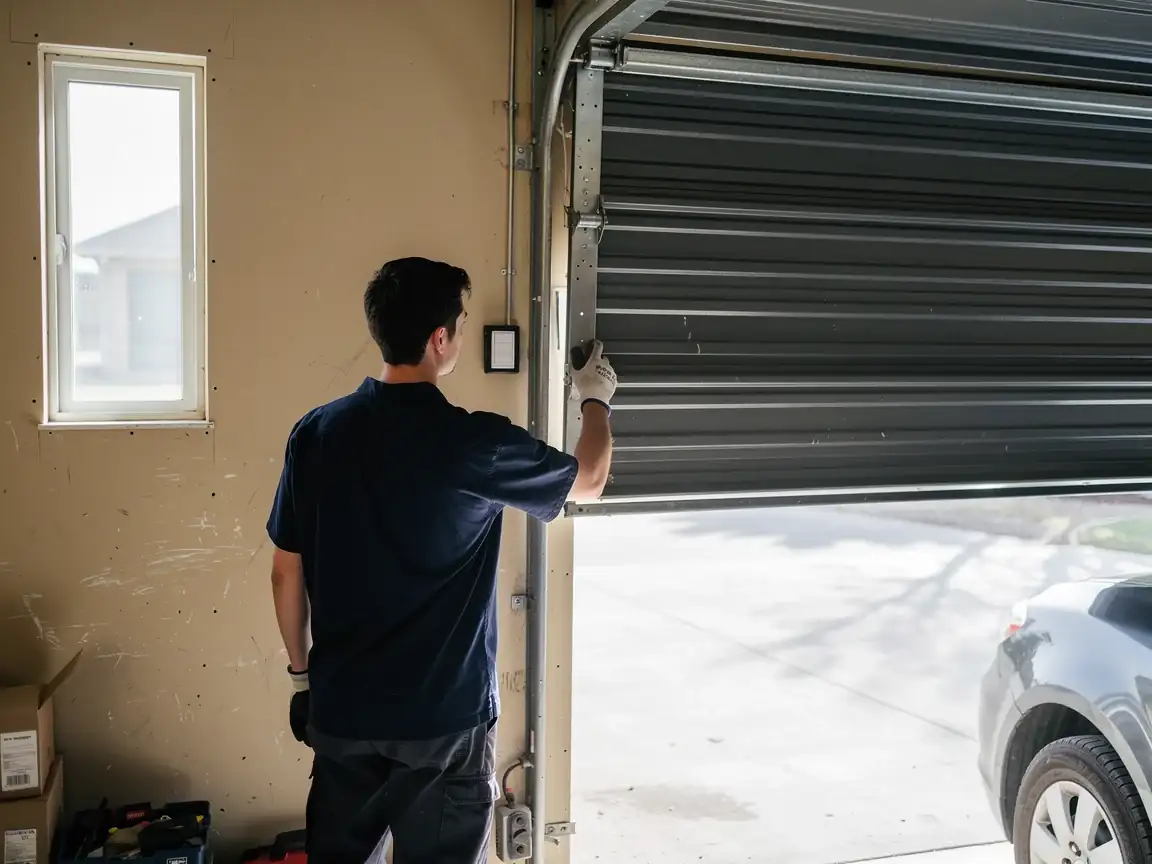
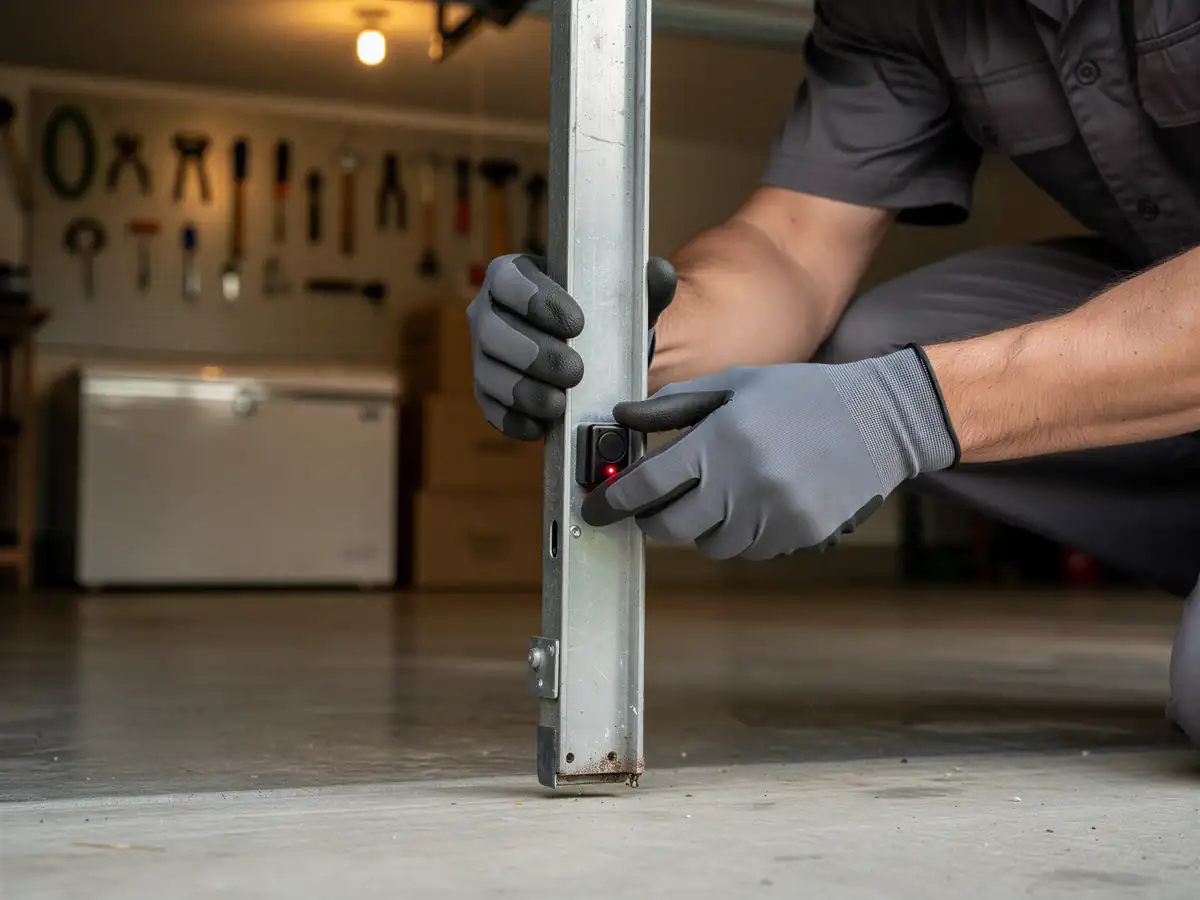
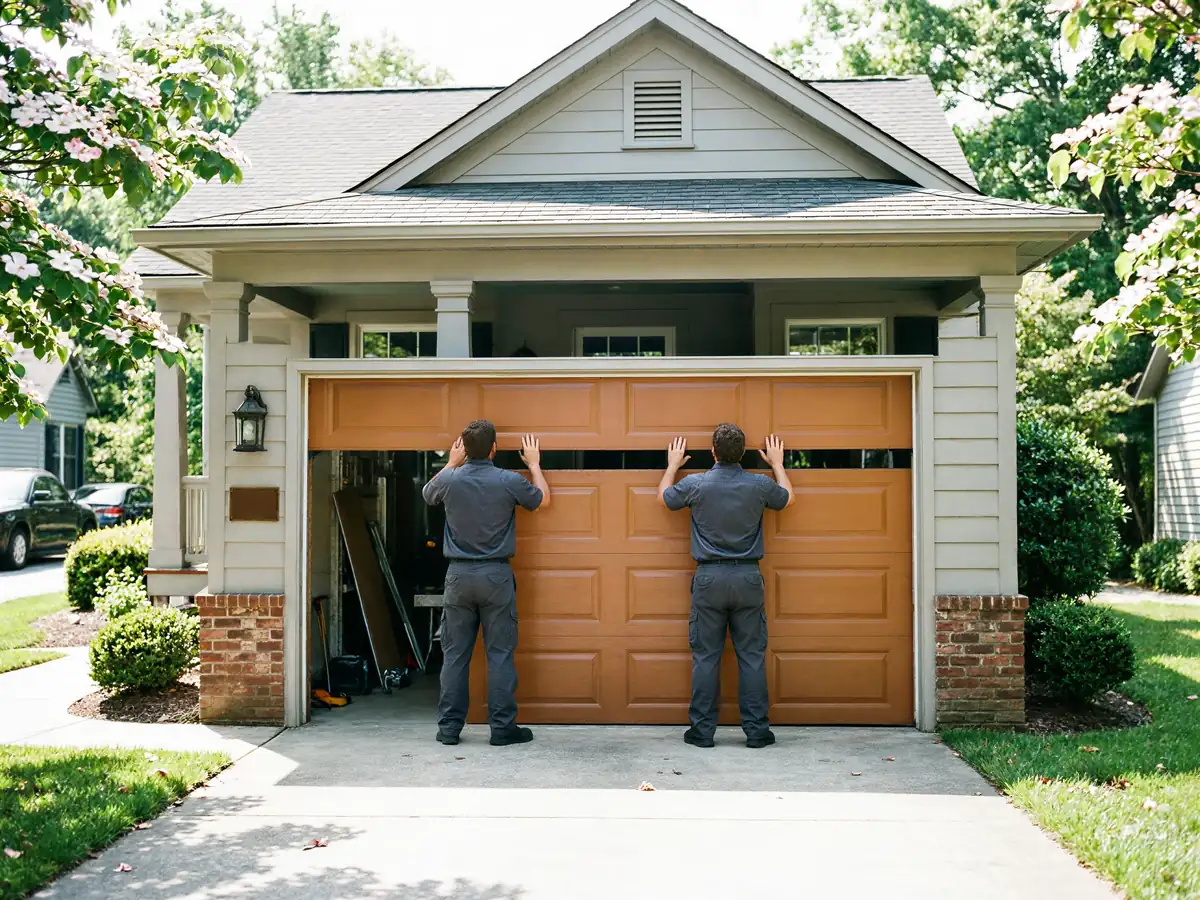
For a new install in a Belmont home from this era, the truck carries steel sectional panels in standard residential widths, torsion spring sets sized to door weight rather than guessed, galvanized track and rollers, and openers with modern safety sensors - the kind of thing a 1990s factory door usually doesn't have. Given the cold-moderate climate band this whole region sits in, we also carry insulated panel options as standard stock, not a special order, since a non-insulated door on an attached garage loses real heat through that one wall.
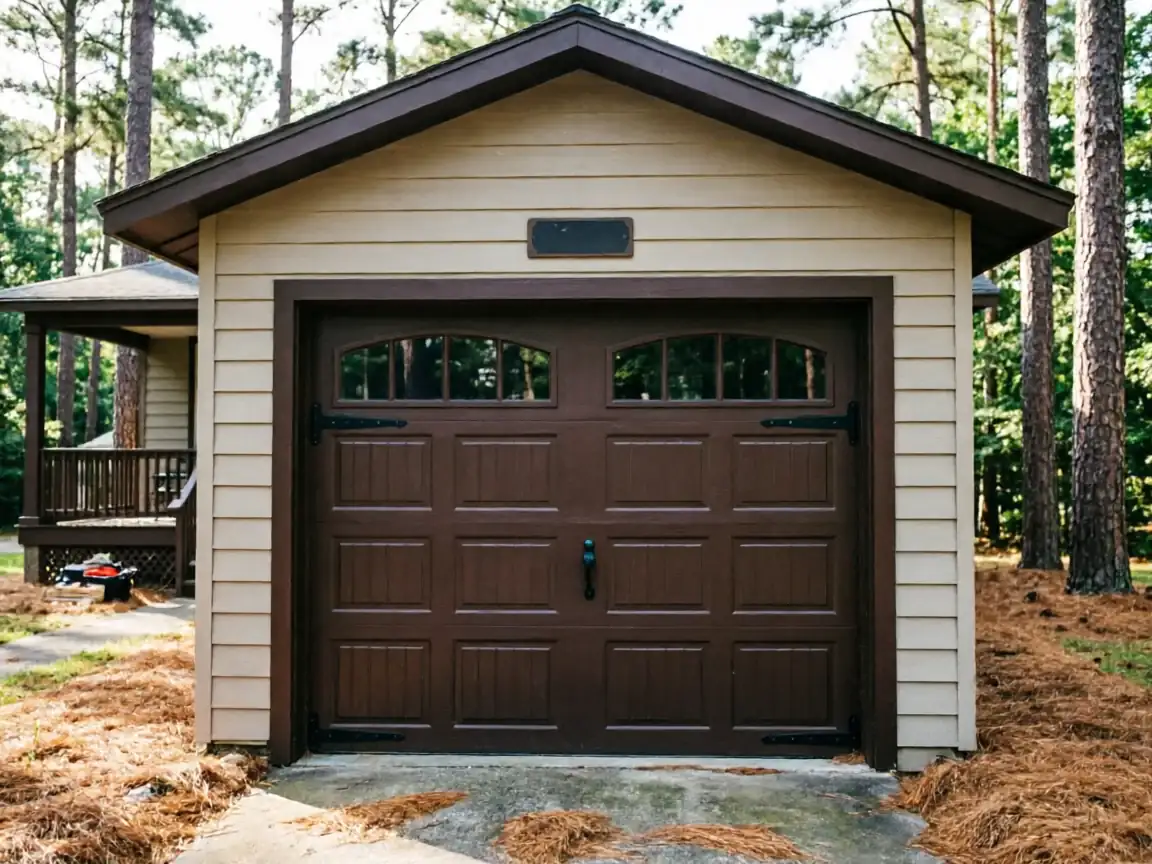
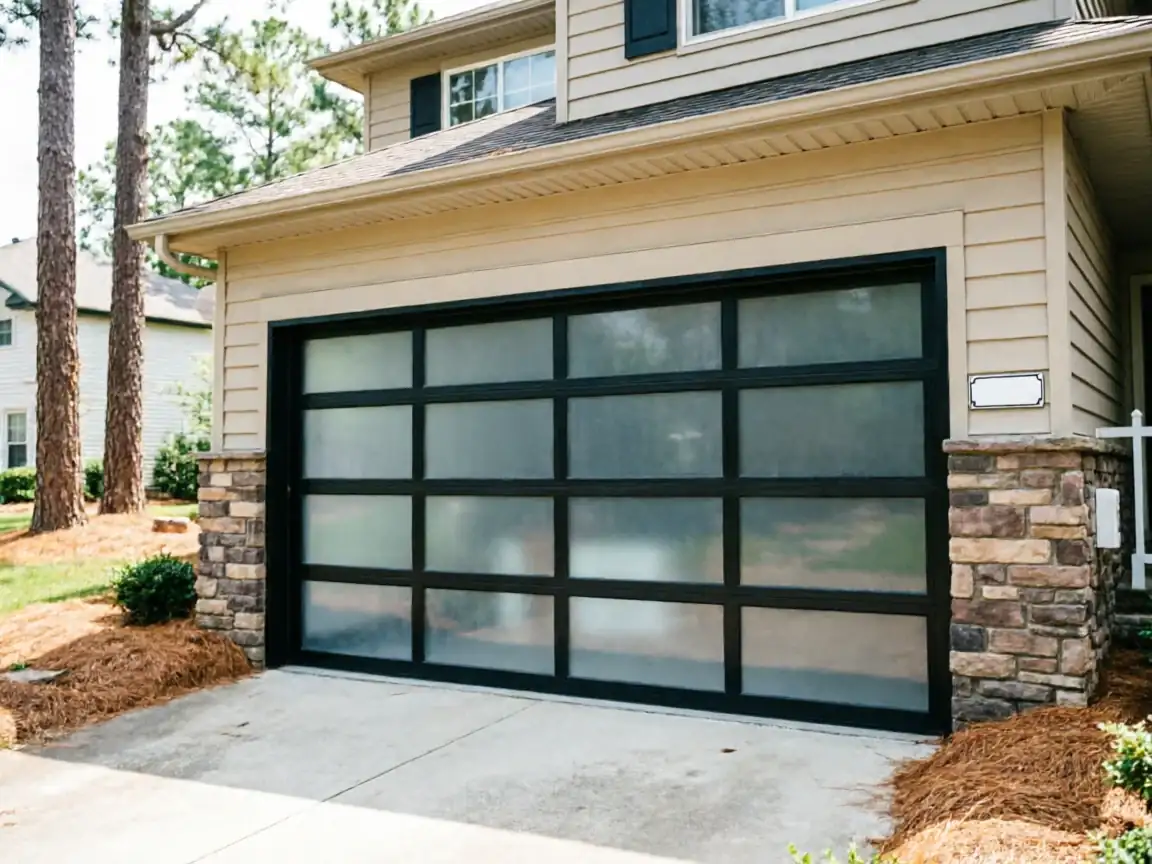
We don't carry custom wood-clad doors or oversized commercial track on the truck - those get special-ordered and scheduled separately, which is the kind of lead-time detail worth knowing before you set your heart on a look.
What It Costs
We don't post a flat number here because door width, insulation level, and opener choice move the price more than anything about the town does. What we can say is how the decision usually falls in a place like Belmont: at a median income of $86,442, replacing a worn door with a better-insulated model usually pencils out faster than sinking money into patching old tracks and a tired spring set. That's not true everywhere in our territory - in lower-income pockets we're often making the case for repair first. Here, the math tips toward new sooner. Get a number by walking us through the door size and whether you want insulation and a quiet-drive opener; we'll give you a real figure for your exact door, not a range pulled from a brochure.