Why It Happens Here
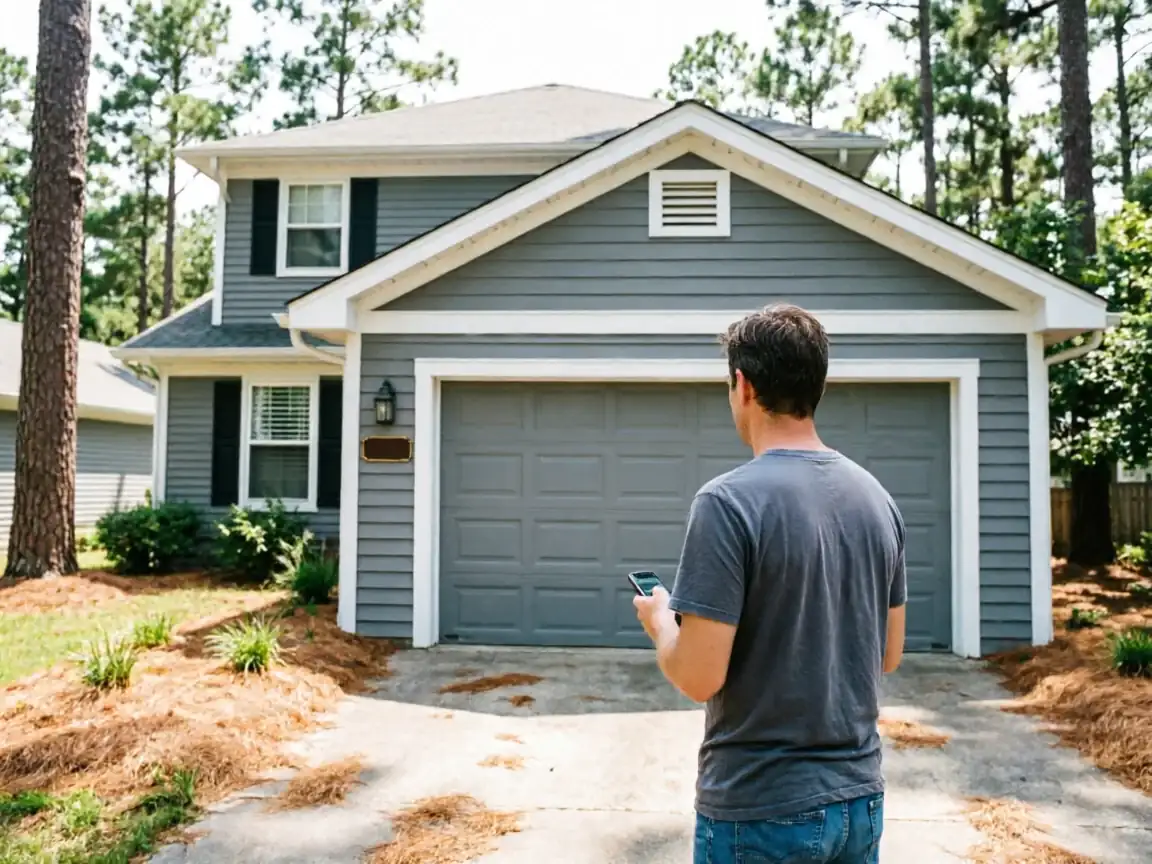
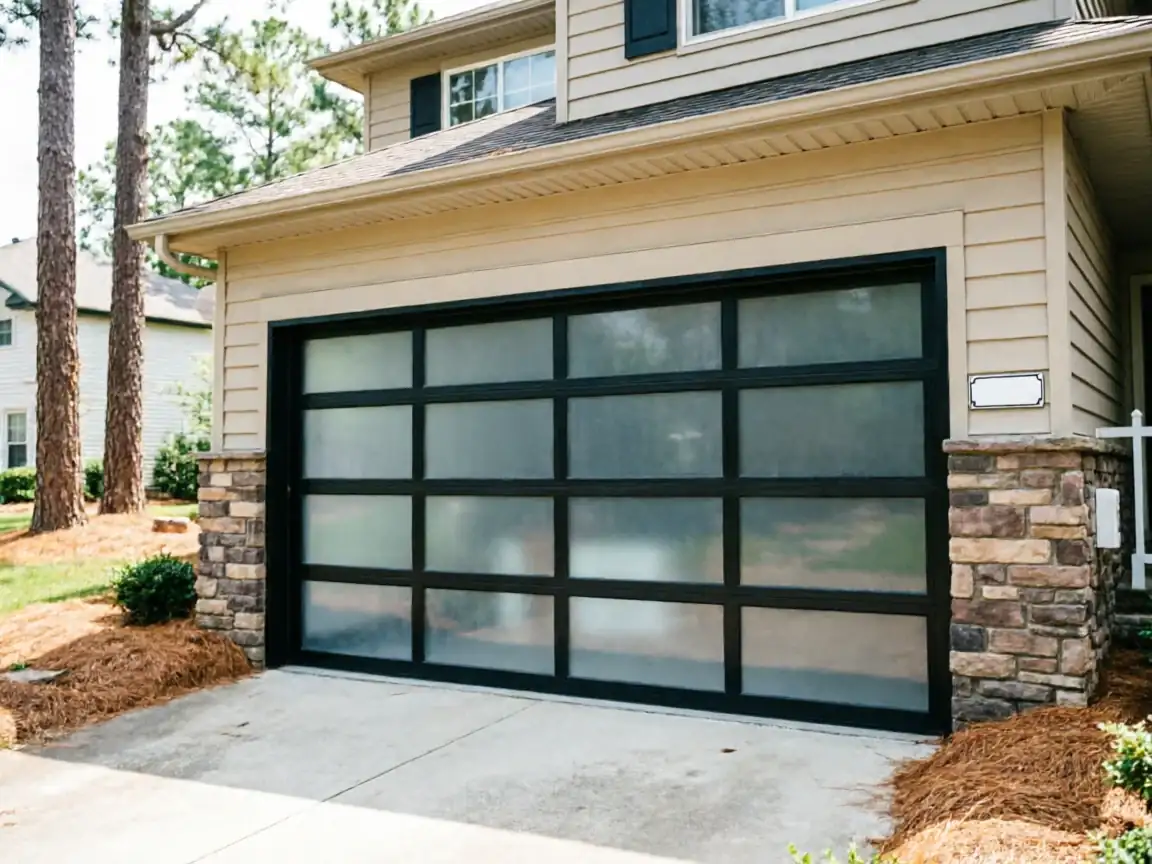
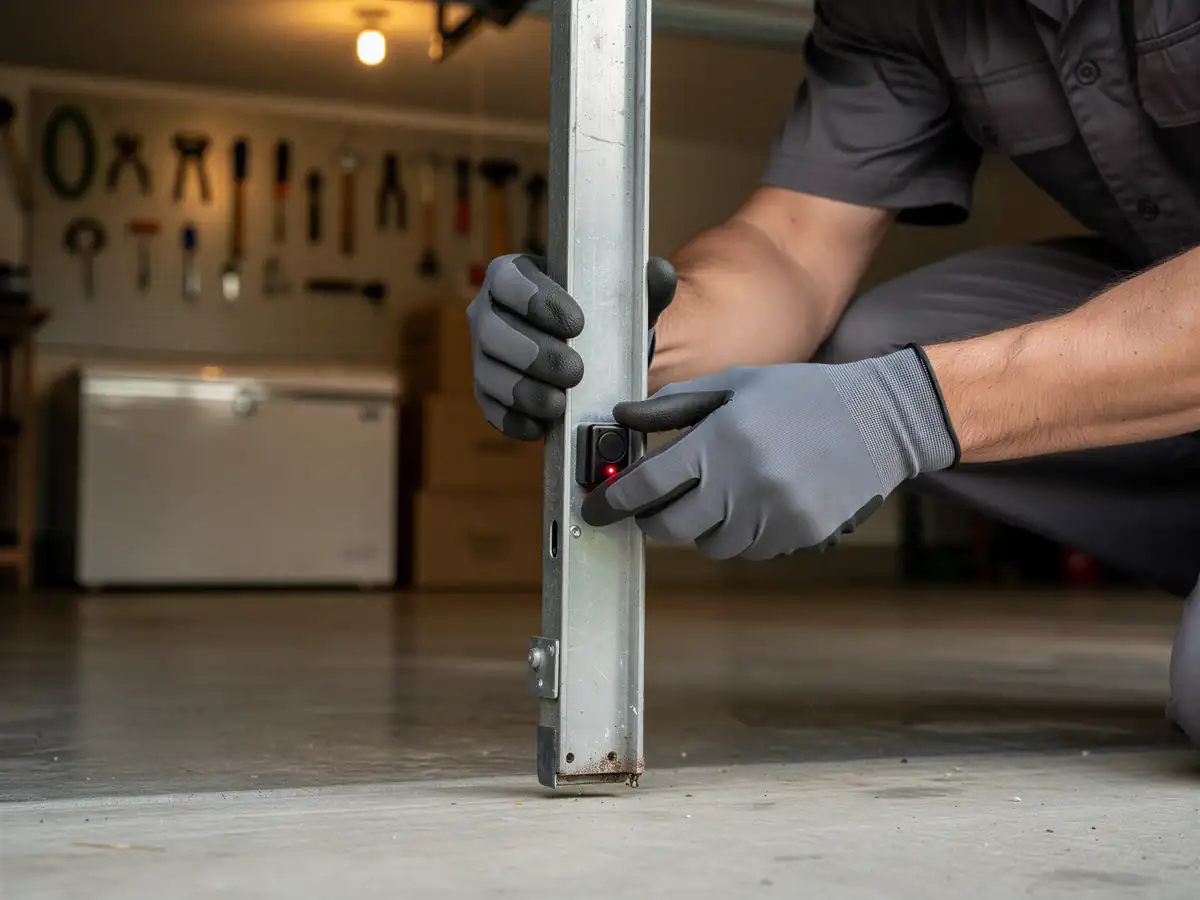
Westport's housing stock centers on a 2005 median build year, newer than the broader Cornelius service area's 1998 median across the wider 1959-2011 range. That matters because doors going up in the mid-2000s almost all shipped with factory-set galvanized steel tracks and nylon roller carriers rather than the heavier steel track-and-roller setups found on older homes nearby. Nylon rollers run quieter and need less lubrication, but the track itself is lighter gauge sheet metal, and it bends out of plane more easily from a single hard knock - a car bumper, a stored bike, a gust that catches an open door. Once that track takes a bow, even a slight one, the roller rides up and out of the channel instead of just binding in it. With 1,990 households in this pocket and a median income of $132,206, we also see more double-wide insulated doors here than single steel panels, and a wider door puts more leverage on each track bracket when it goes off-square.
Time on the Job
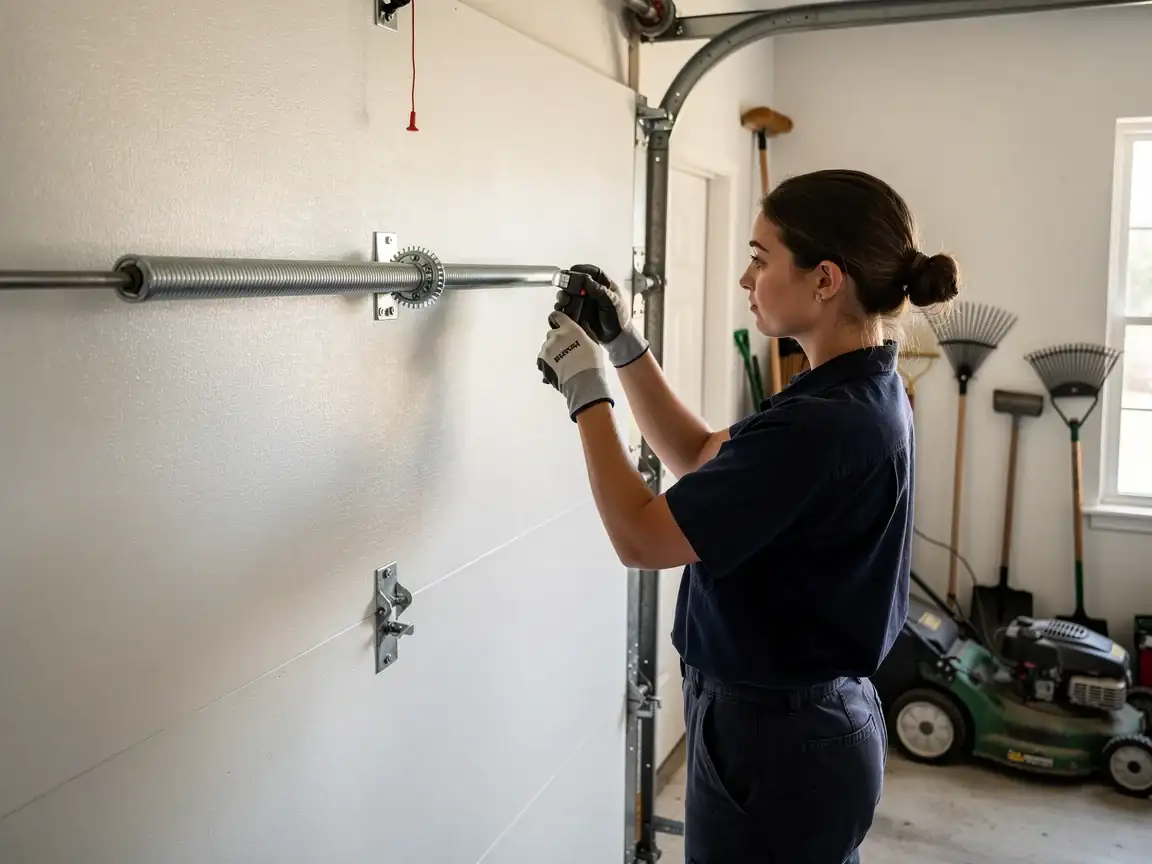
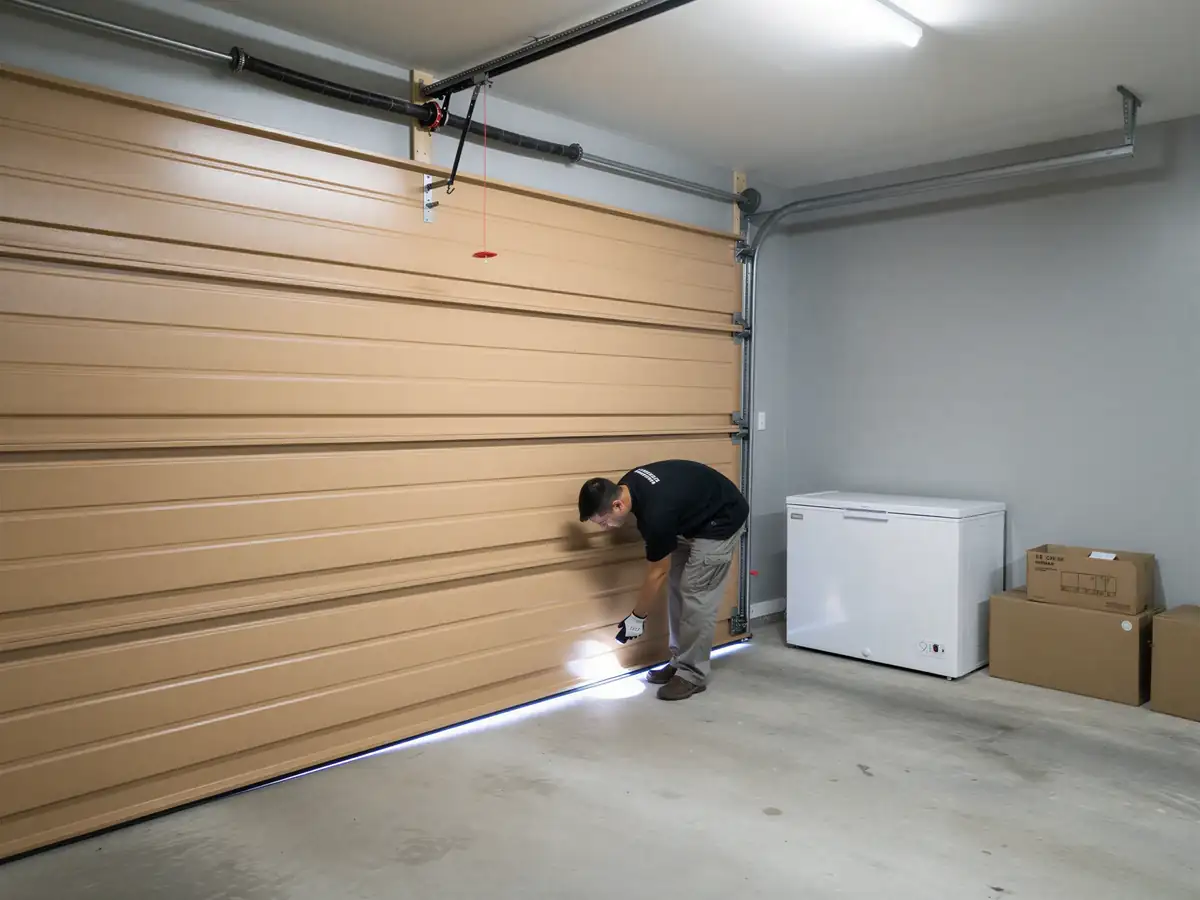
A straightforward off-track call on this style of door - track bent back into plane, rollers reseated, brackets retightened - usually runs under two hours once we're on site. If the track itself is kinked badly enough that it won't hold alignment, we replace the section rather than keep fighting it, which adds time for us to source a matching galvanized track rather than patch a bent one. We don't carry every track length on the truck for every door width, so if your opening runs wider than standard, there's a chance we're back out a second time with the right piece. That's the honest limitation: we'd rather tell you that up front than force a repair that won't hold.
The Symptom
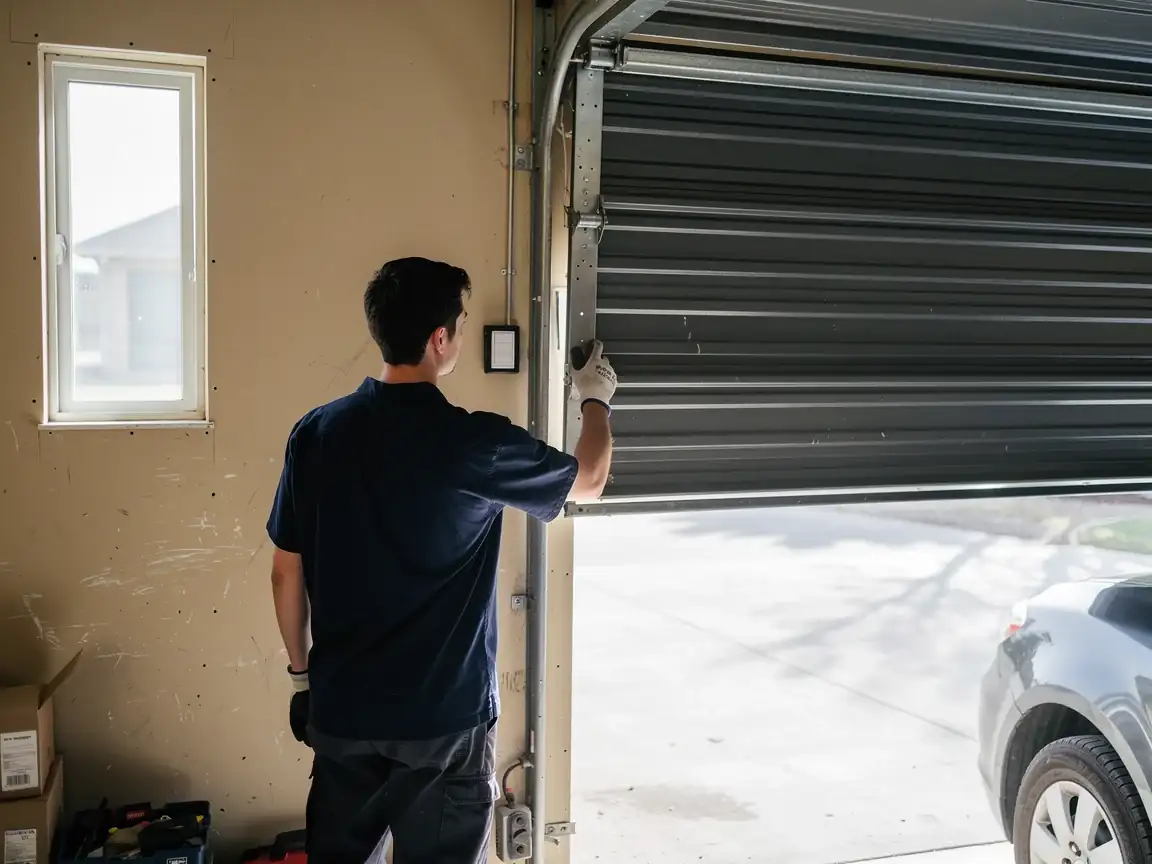
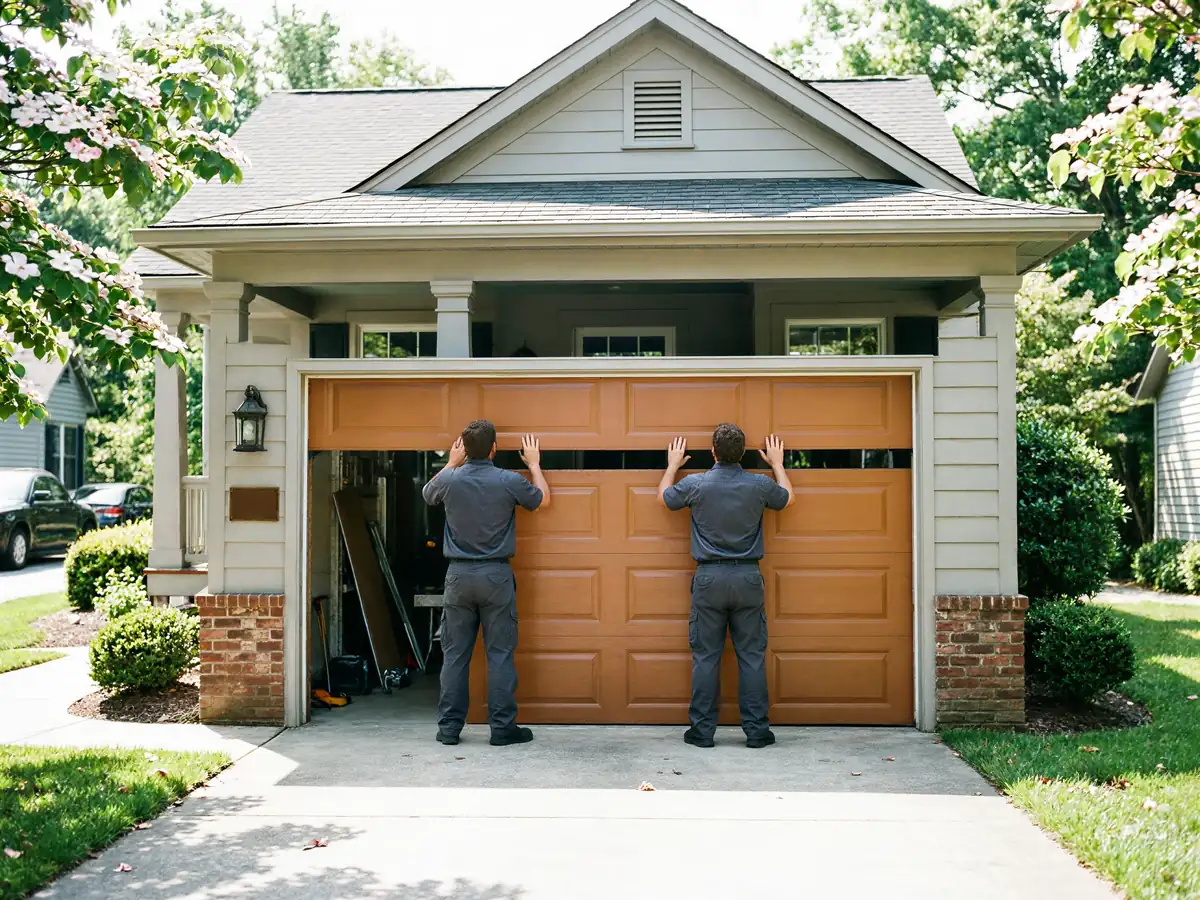
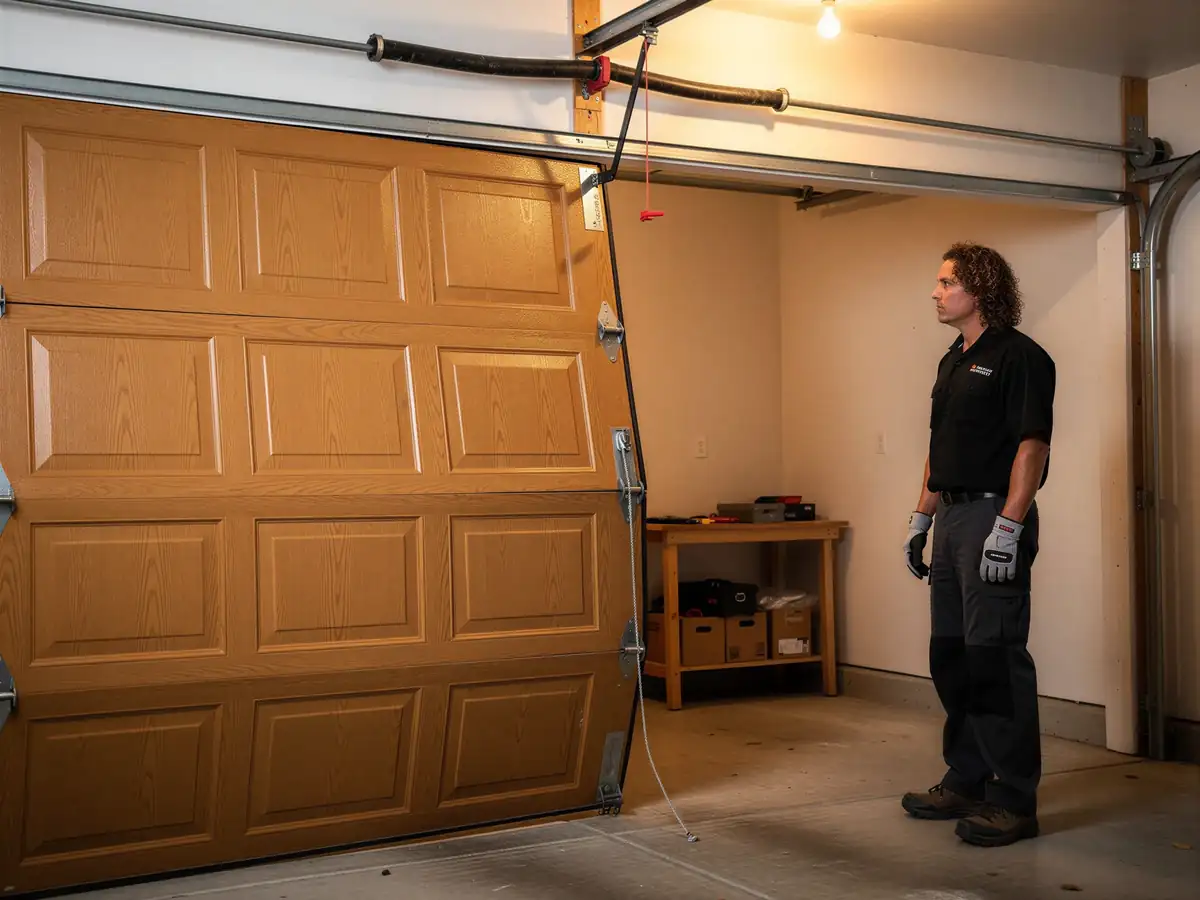
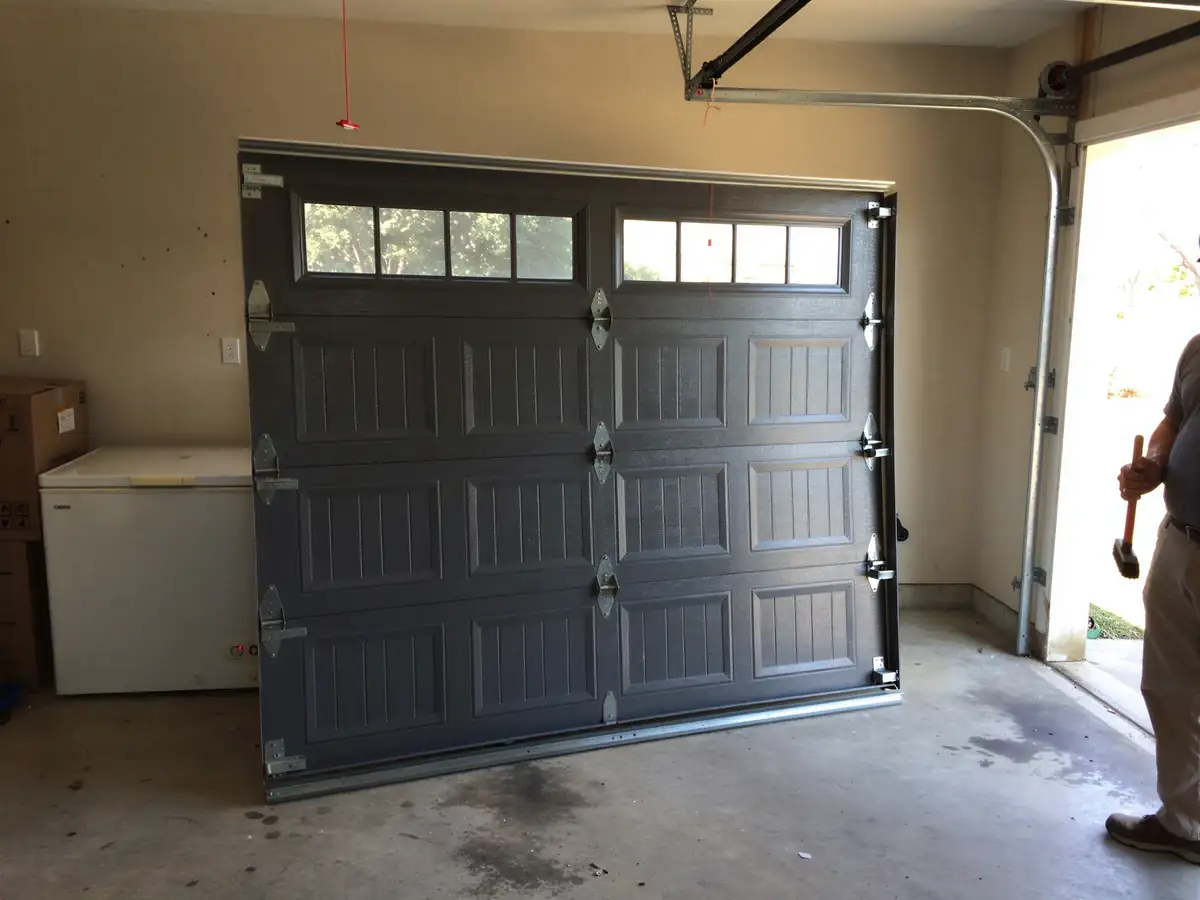
Most calls start the same way: the door stops partway, sits crooked in the opening, or one corner visibly hangs lower than the rest. Sometimes there's a grinding or popping sound right before it happens - that's usually the roller catching the edge of the track before it finally jumps clear. If the door is still partly engaged on one side, don't force the opener again; running it repeatedly against a jammed track is what turns a roller-and-track fix into a track-and-bracket-and-spring fix. Leave it where it stopped and call. If the door is a wide double and it's sagging unevenly on both sides rather than just one, that's worth mentioning when you call too, since it usually means more than just the track bent.